
Saving Hawaiian Species, One Bird at a Time
Hob Osterlund, Safina Center Conservationist in Residence
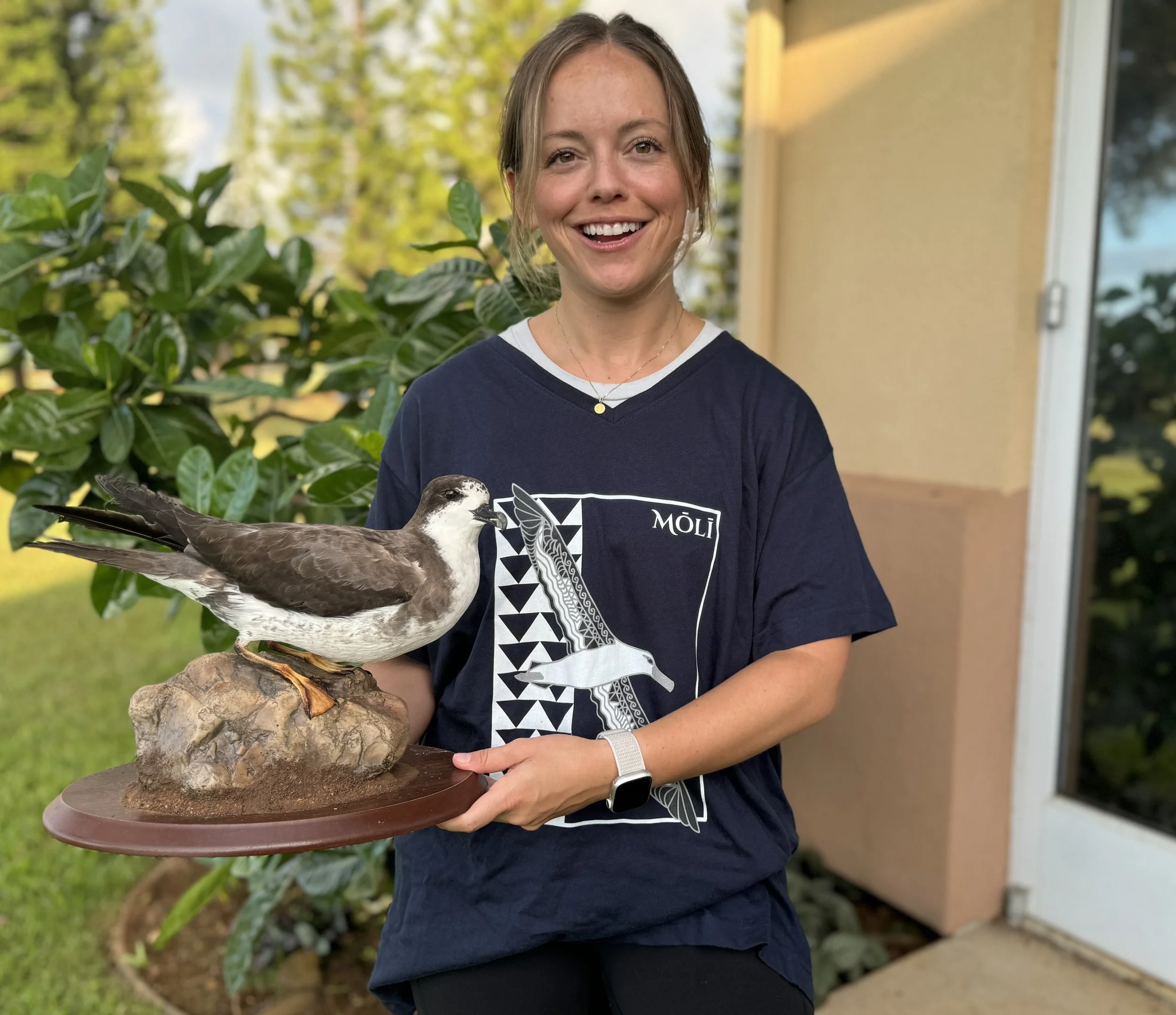
Molly Bache, Program Director, Save Our Shearwaters PC Hob Osterlund
For nearly a decade Molly Bache has been the Program Director for the Save Our Shearwaters (SOS) organization. She and her team run the only licensed facility permitted to rehabilitate native seabirds/wetland birds (not to mention the occasional Hawaiian hoary bat) on Kaua‘i. The work SOS does is vital for the survival of several species, and it’s done in quite challenging circumstances.
_________________________________________________________
Hob Osterlund: Molly, I really must start off by tooting your horn. All of us who work with native seabirds and wetland birds know SOS to be literally life-saving when we find injured, orphaned, ill or malnourished birds. You’re open every single day of the year. Not to mention we just came through a powerful hurricane. How in the world do you pull all that off?
Molly Bache: Thank you! There really isn’t an “off” season for wildlife emergencies, so SOS must operate year-round. We have a small, specialized team and veterinary support trained to handle everything from critical care stabilization to intensive treatment, conditioning and release. We maintain facilities that meet state and federal wildlife rehabilitation requirements for the species we treat. We do our best to remain prepared for admissions across a wide range of ailments and species-specific needs. I can’t remember the last time we had no patients in care; it’s been at least ten years.
There are lots of moving parts, and our capabilities are also a reflection of the network around us. We work closely with government agencies, wildlife biologists, conservation partners, local businesses and community members so that when someone finds a native bird in need, there is a clear pathway. We might not have the resources to assist with capture and transport after hours, but anyone can reach a staff member on the SOS Hotline 24/7, 365.
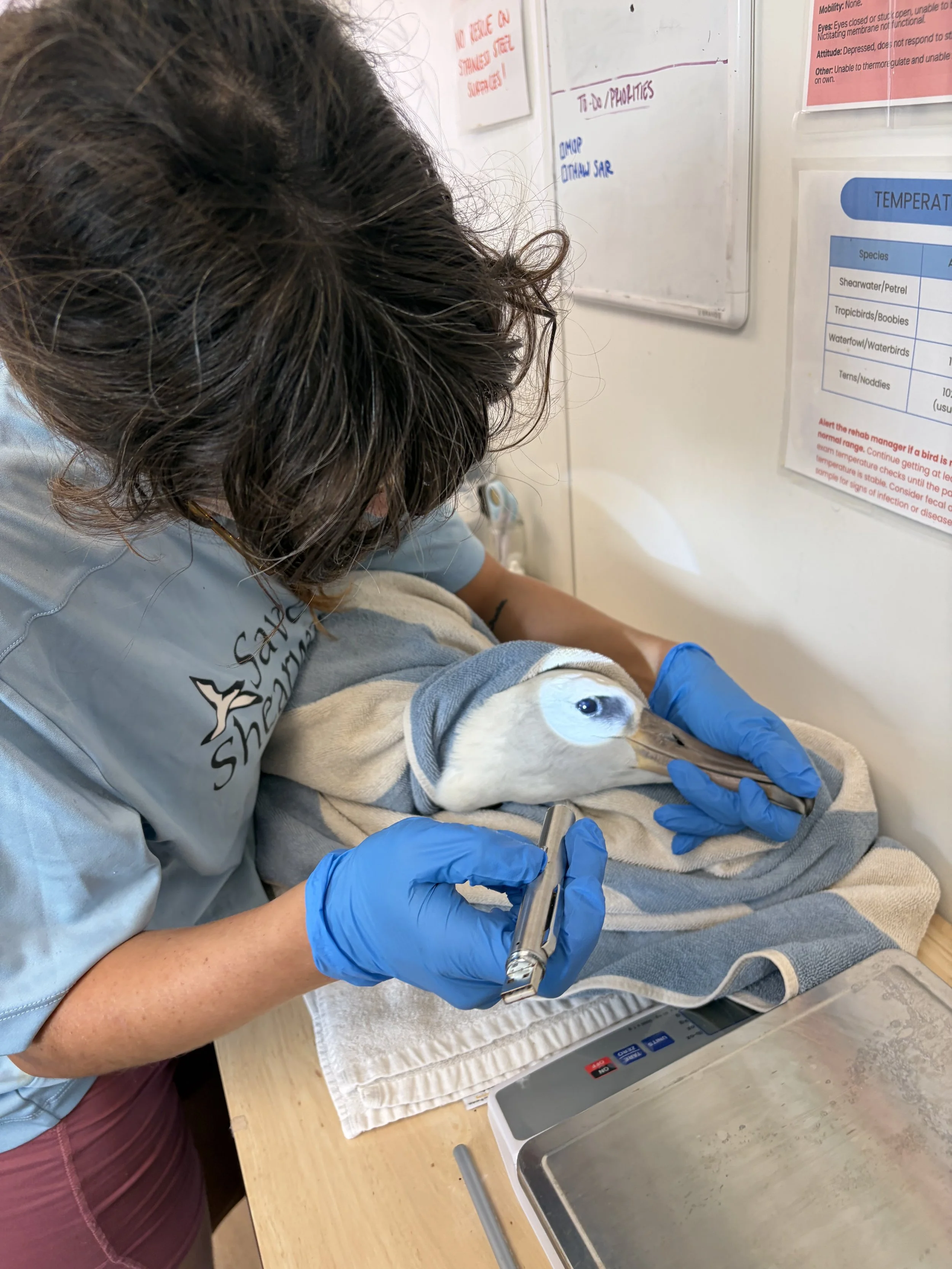
Moli (Laysan albatross) examined during admission intake at SOS PC SOS
HO: You folks manage to accomplish your work in tiny spaces. What kind of square footage do you have now and what would be ideal for your staff and patients?
MB: We currently operate in a surprisingly small footprint for the admission volume and variety of species we care for. Three modified cargo containers provide our only “indoor” spaces for wildlife, with a total area of less than 540 square feet. We have a handful of outdoor enclosures, as well as an old greenhouse that was modified to become our pool yard, but no other areas to house and treat wildlife that are protected from the elements. The challenge is that wildlife rehabilitation requires a variety of spaces: patient quarantine and critical care, species-specific enclosures, flight pen, medical and diagnostic equipment, food preparation and storage, laundry, wash pad, lawn equipment, tool storage, and more. You also want enough space to separate wildlife from noise and activity, as environmental stimuli adds stress and can negatively impact recovery. What we have now is unsustainable for Kauai’s native bird and bat rehabilitation long-term needs.
Our goal is a purpose-built facility on roughly one to two acres of land. The ideal facility would include enough indoor and outdoor space to accommodate our growing patient load, flight and conditioning enclosures that allow us to meet permit requirements for all native bird species, an admission lobby to foster more community involvement and education, and the infrastructure to reliably care for hundreds of native birds every year.
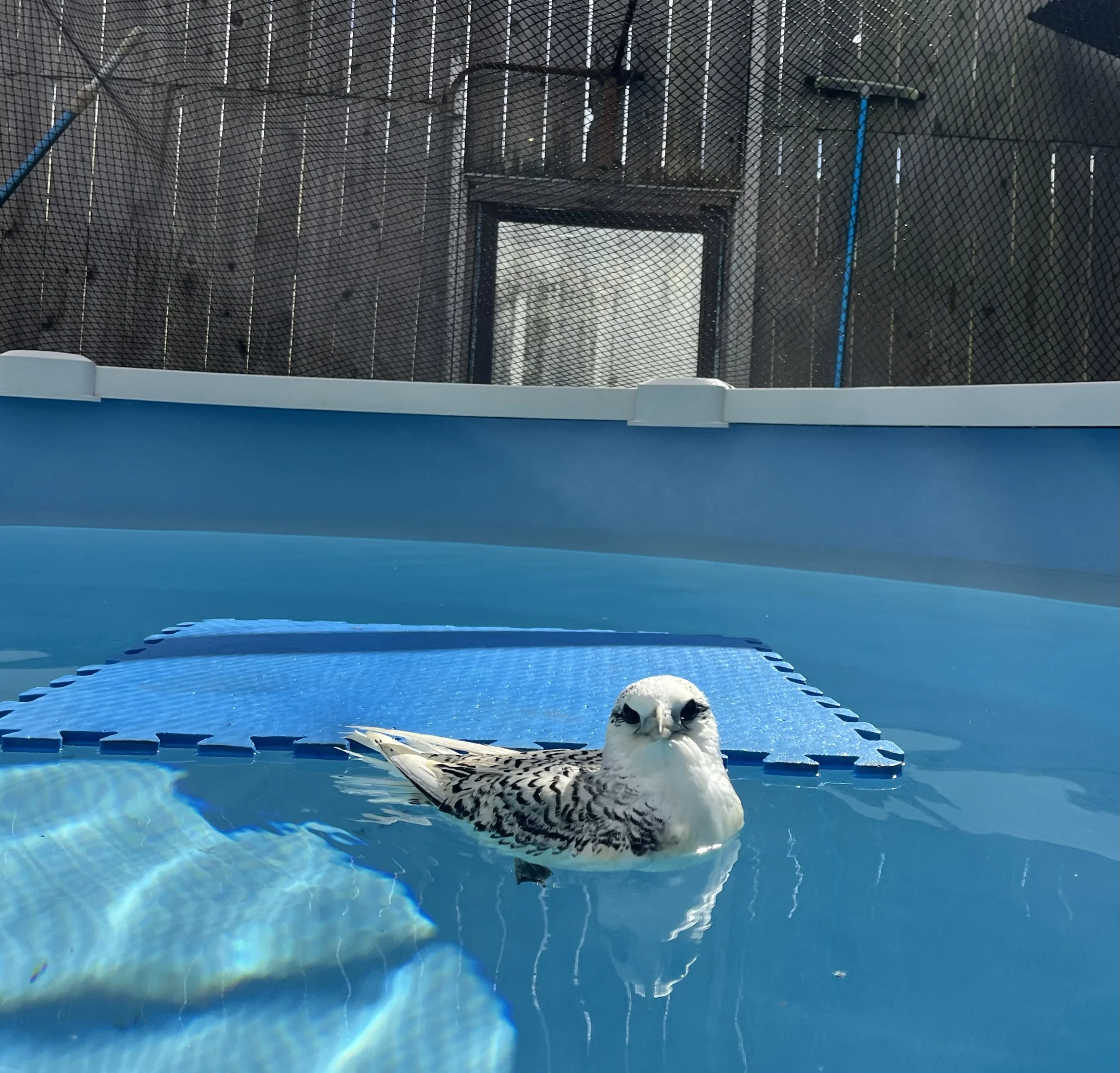
Koa’e kea (white-tailed tropicbird) fledgling in pool at SOS PC SOS
HO: In addition to your usual (amazing) team, you also have seasonal workers for fallout season. Please describe what “fallout season” means and how you find skilled employees during those months. Also how do you manage to get native birds from all over the island brought to you?
MB: Seabird fallout season runs from September 15th through December 15th. During this time some specific mountain-nesting seabirds are making their first flight out to sea, typically a few hours after sunset. They are instinctively guided by the moon but can be disoriented by artificial lights, causing them to circle over developed areas, collide with structures, or land on roads and other places where they are unable to take off again. Once grounded they become vulnerable to a wide variety of threats, like invasive predators, vehicle strikes, contamination, and more.
For SOS, that means our admissions increase dramatically for one quarter of each year. We bring on three seasonal Avian Technicians each September to help us manage these influxes. Finding people with the right combination of wildlife husbandry, attention to detail, and willingness to work long days for a seasonal position can be challenging, so we rely heavily on our professional and conservation networks.
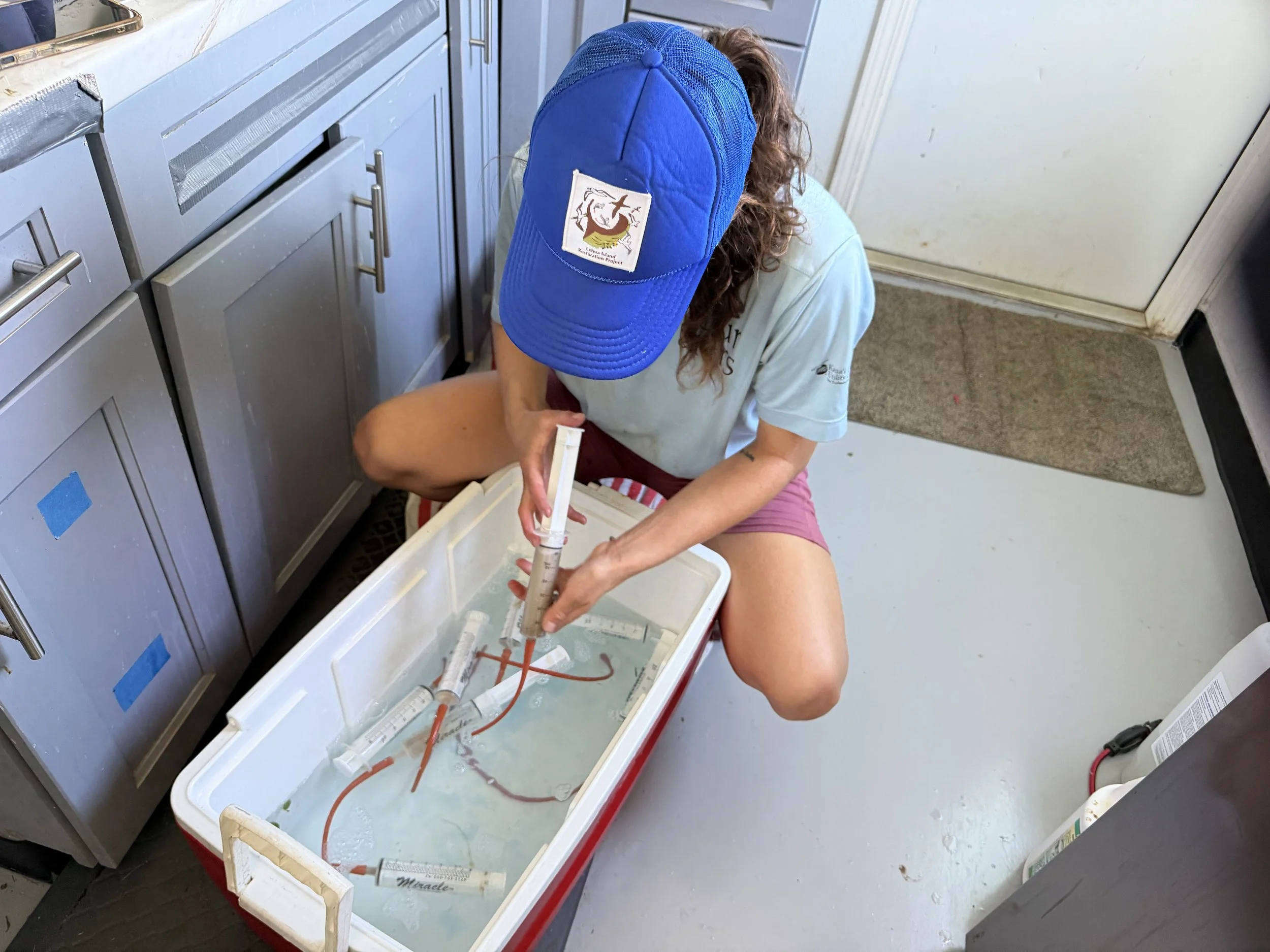
Seafood slurry on ice during hurricane power outage PC SOS
Getting birds delivered to us is an island-wide effort. People who find birds can bring them directly to SOS, or to our high-volume aid stations deployed across Kauaʻi for fallout season. SOS staff or volunteers check each aid station daily. Birds collected from aid stations receive a full examination at our facility and a care plan is set. Thankfully, most seabirds admitted due to fallout are quick turnarounds.
The system works well, but it still takes a lot of people recognizing that a grounded fledgling may need help and knowing how to provide that help. As fallout season ramps up, we encourage people to keep a ventilated box and towel in their car, identify their nearest aid station, and review rescue tips so they feel prepared. Our aid station and rescue information can be found on the “Rescue 101” page of our website.
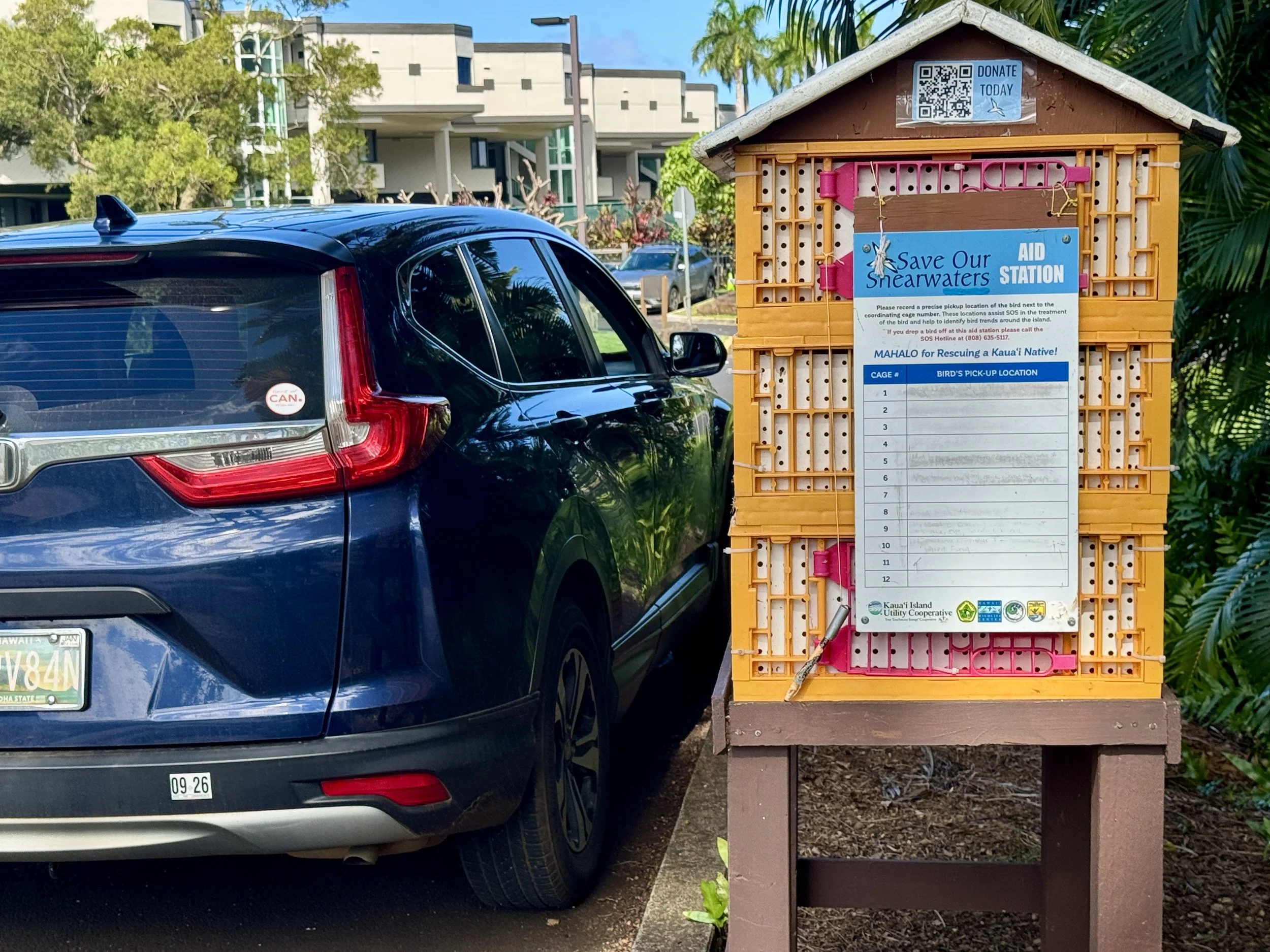
One of many drop-off boxes for rescued seabirds during “fallout" PC Hob Osterlund
HO: Parts of Kaua’i got slammed by hurricane Lowell early in September. What was the impact on your team and on the number of your admissions?
MB: Like much of Kauaʻi, we lost water for several days and were without power for almost two weeks. The roof of an outdoor enclosure was compromised, aviary siding got ripped away, a wash-pad table snapped in half, and more. We experienced more flooding than we ever have before, but thankfully our washer, dryer, refrigerators and freezers survived, all located under an open shed with minimal protection.
At the same time, our admissions spiked. We went from nineteen birds in care to forty-plus during the immediate aftermath, and patient care can’t wait until the power comes back. The birds still needed exams, fluids, food, medication, splint and bandage changes, pool conditioning, crate changes, etc. And even though our friends and community were dealing with personal hurricane impacts, we experienced an outpouring of support. They brought us water, donated funds and supplies, transported birds, loaned generators, volunteered time, and more. A friend allowed us to clean essential care items at their house when we were without water, another let us store our freezer and frozen fish supply on their property until our power returned. We felt the generosity of so many when we needed it most.
Hurricane Lowell certainly humbled our perception of how prepared we are for severe weather. Our container-based facilities are inherently fragile. We have patient diets and medicines that must be kept within specific temperature ranges, but no enclosed space to protect our fridges and freezers. Many of our most critical components of care require electricity (pool system, supplement heat support, radiographs, etc.) and we only have one small generator right now. While we are thankful to be where we are, particularly since fallout season began the week after Lowell, we are not overlooking the vulnerable parts of our operations that the storm exposed.
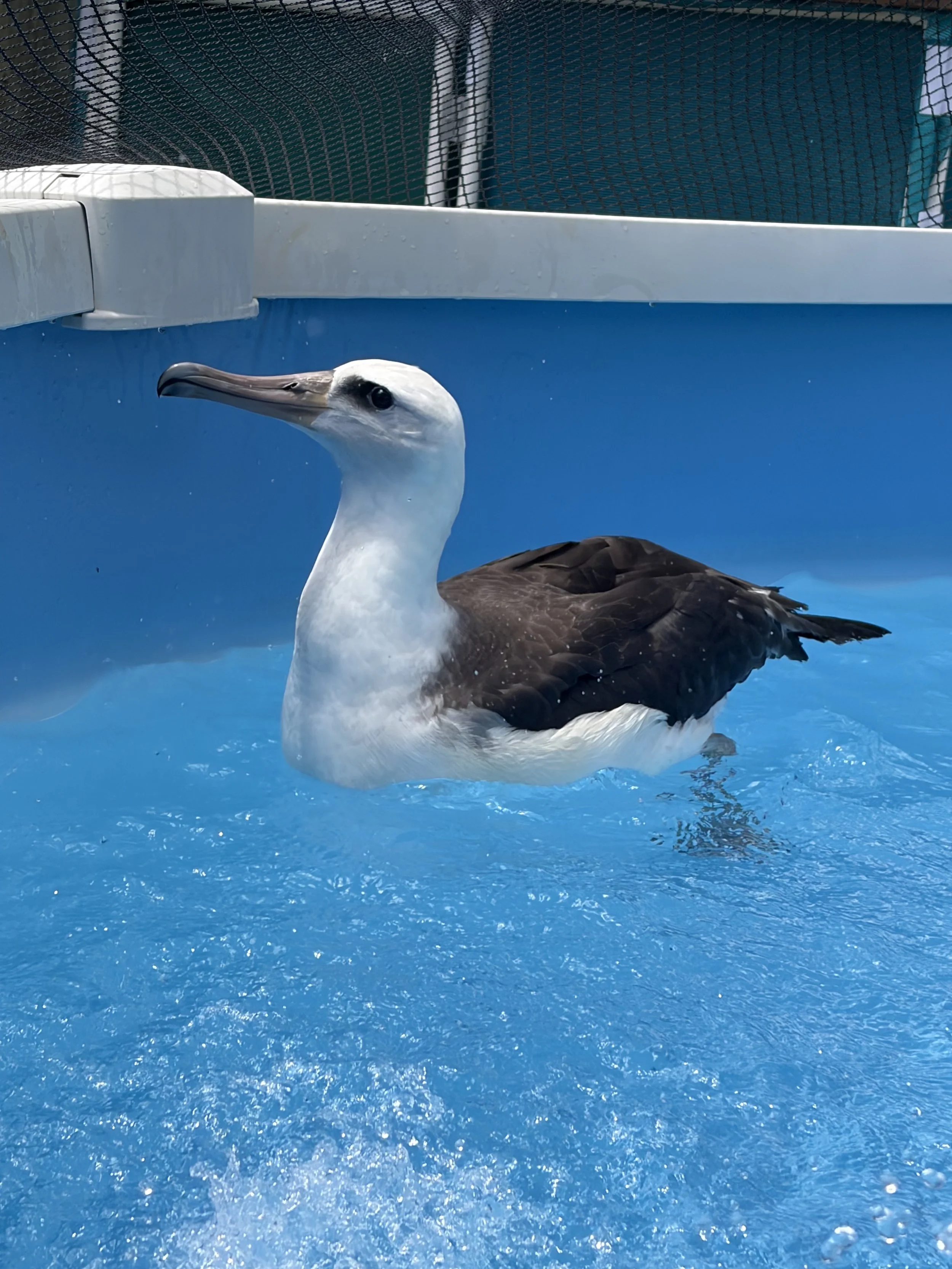
Moli (Laysan albatross) benefits from pool at SOS PC SOS
HO: SOS works closely with the Hawai’i Wildlife Center on Hawai’i Island more than three hundred miles away. What kind of support do you give each other?
MB: SOS has come a long way since its initiation in 1979. Hawai‘i Wildlife Center, and their founder/CEO Linda Elliott specifically, played a big role in helping us become the rehabilitation program we are today. Although we're on different islands, we deal with many of the same challenges of native Hawaiian wildlife rehabilitation. HWC also serves as our fiscal sponsor, which provides fiduciary infrastructure that allows SOS to focus its energy on wildlife care and related projects. While much of our daily operations are autonomous, we are in frequent communication due to the nature of our work. We have an annual contract in place that provides the critical resources necessary for their veterinarian to assist us with patient consults, permitting needs, radiation licensing, and more. We’re also able to assist each other with large-scale wildlife response needs.
Endangered A’o (Newell’s shearwater) released back to the wild PC SOS
HO: If you could wave a magic wand, what would SOS have to operate at full capacity and for the long term?
MB: As I mentioned, we would have purpose-built space with appropriate flight and conditioning areas, quarantine and isolation space, sufficient indoor areas for patient care, increased veterinary and diagnostic capabilities, a designated area for laundry and cleaning, food preparation and storage, reliable utility connections, an admission lobby that provides more opportunities for public education, and enough space for staff to run a functioning wildlife hospital every day of the year.
We would also have the financial stability to adequately compensate and retain highly trained wildlife rehabilitators that specialize in the medical care of native Hawaiian species. A well-designed facility requires knowledgeable and experienced staff. Due to the range of species and ailments we treat, it takes about two years to become a fully trained rehabilitation technician. We have over twenty-three years of experience among our three senior staff members.
HO: What gives you hope?
MB: I find hope in the fact that these birds are still here, and that people across Kauaʻi continue to show up for them.
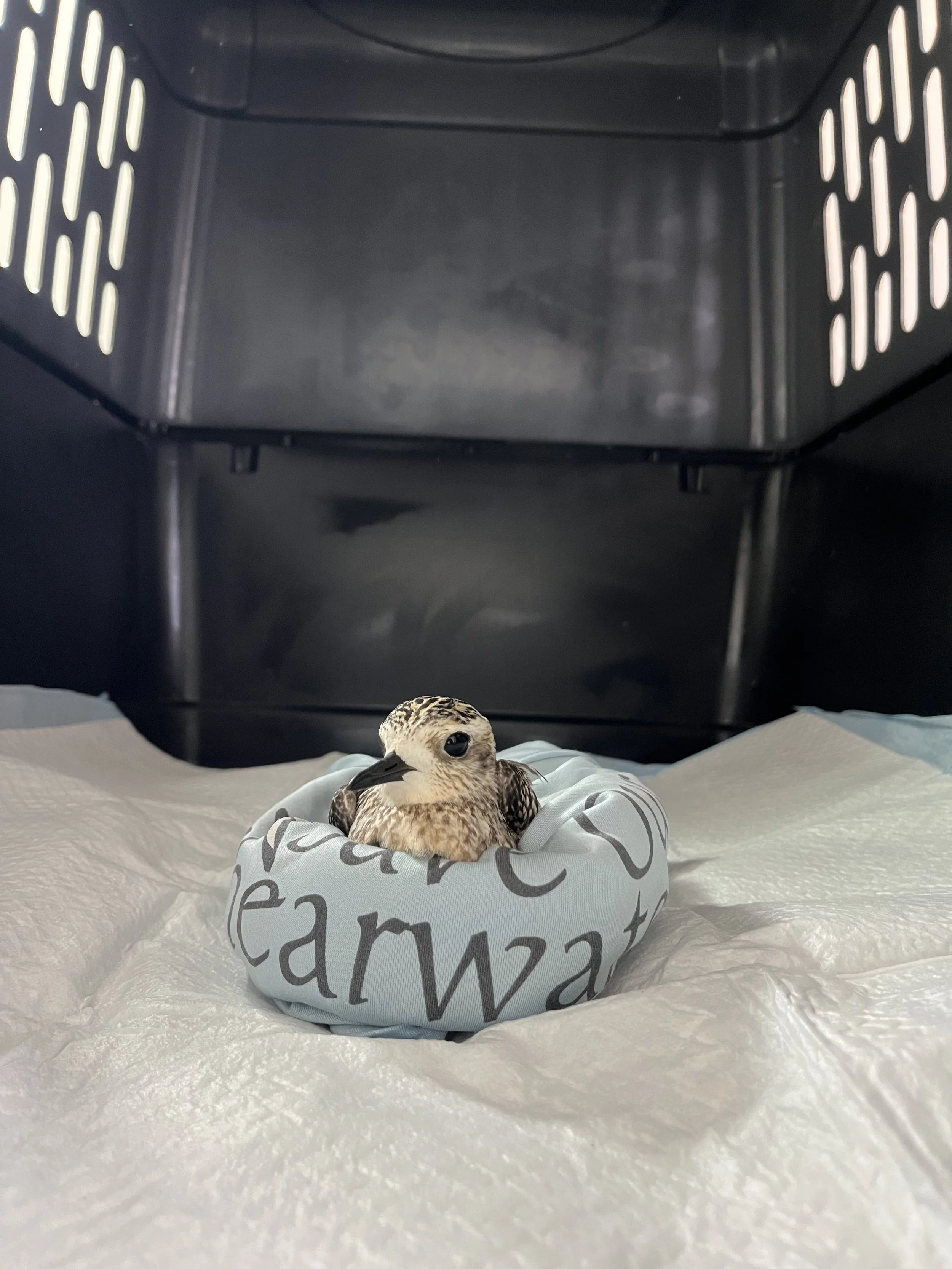
A rescued kolea (Pacific golden plover) in care at SOS PC SOS