
We’re Not Doing One Health Right
One Health will not be successful if it doesn’t include all humans.
By Junior Writing Fellow, Nia Williams
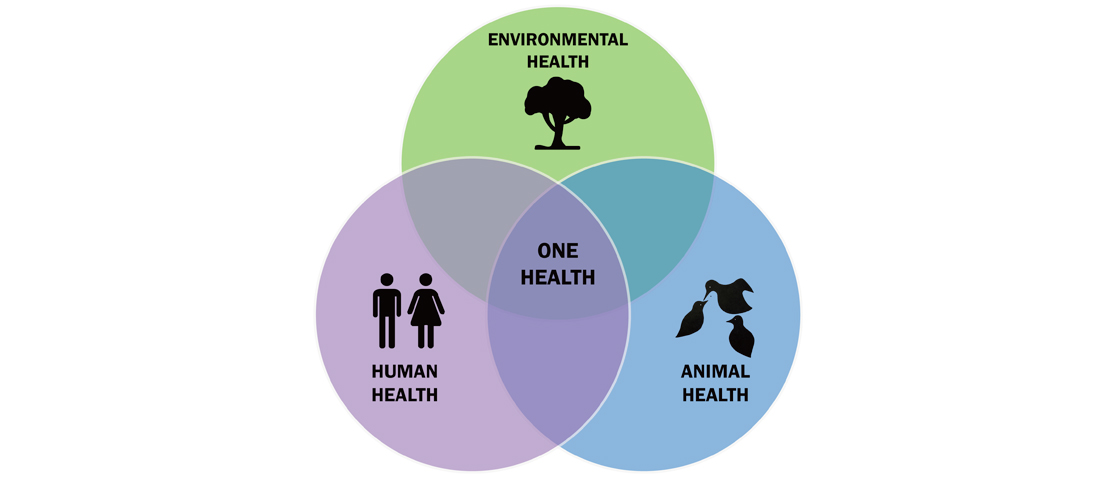
Image Source: Food and Agriculture Organization of the United Nations (FAO), 2024.
Adapted from: Advancing the One Health Agenda in Egypt: A Success Story
A new viral outbreak looms. In India, the Nipah Virus – a respiratory disease with a mortality rate upwards of 40% – has crept back up after a decade-long global hiatus. Though the emerging threat seems currently minimal, folks are rightfully pushing for a coordinated One Health response. But do we know what that looks like?
One Health is an approach that recognizes the interconnectedness between human, animal, and environmental well-being. Its purpose is to unite medical, veterinary, and ecological health professionals to tackle biological threats, such as viral outbreaks. I am a strong proponent of One Health because of its ability to fix the complex problems facing our biosphere, but I am also critical of it. This is because One Health, despite its wide-reaching nature, is not implemented to its fullest extent.
Take COVID-19, for example. Despite the pandemic’s role in bolstering support for One Health, our nation’s response to the virus demonstrated a failure to execute. Over one million Americans died of COVID-19, and twenty million more were left with debilitating, long-term complications. We neglect to control this disease because the prevailing narrative is that infection is only a concern for those with “pre-existing conditions” — in other words, those who are disabled. Here, when it comes to One Health’s dimension of human wellbeing, disabled people are excluded.
Highly Pathogenic Avian Influenza (HPAI) illustrates another failing chance to implement One Health. Since 2024, HPAI has infected hundreds of millions of farmed and wild animals on every continent. Despite the danger of uncontrolled HPAI – the Gates Foundation estimates that a flu pandemic could kill 33 million people within six months – this global outbreak has not spurred much action from federal agencies. For example, undocumented livestock workers, who are the most at-risk for infection and for becoming human-to-human transmission reservoirs, do not receive proper PPE on the job. Worldwide animal death and growing virulence among undocumented workers, it seems, are not enough to induce a robust One Health response.
These examples show that the reason why an increased interest in One Health hasn’t amounted to sufficient crisis prevention is that the humans, animals, and environments most harmed by these threats don’t matter in our society. To truly act on One Health, we cannot just seek to prevent animal-to-(socially-acceptable) human zoonosis. Instead, we need to expand our scope of human-animal healthcare to include everyone – especially the most marginalized.
So, what could that look like?
Here are some ideas:
Encouraging masking and proper ventilation in populated spaces, such as public transit, to curb the spread of respiratory illness
Providing quality labor protections for those who work with animals, especially farm workers (even if this requires a decrease in livestock production)
Expanding our definition of ‘pandemic’ to include animal or environmental disease burden
Implementing community disaster preparation training that tackles both human and animal emergency needs, especially in low-income neighborhoods
Subsidizing human and veterinary healthcare to make lifesaving necessities accessible
Most crucially, if we are to take human health into account with animal and environmental health, we must address human health inequities. And if we are to address human health inequities, we must resolve the socio-political structures that lie at their core. If we are serious about coordinating One Health responses to COVID-19, to HPAI, to the Nipah Virus, or to future biological threats, we need solutions that target social injustices, and we need to value the lives of all humans, not just some.