
The Backbone of Heaven: Kuaihelani (Midway) Atoll
By Safina Center Conservationist in Residence Hob Osterlund
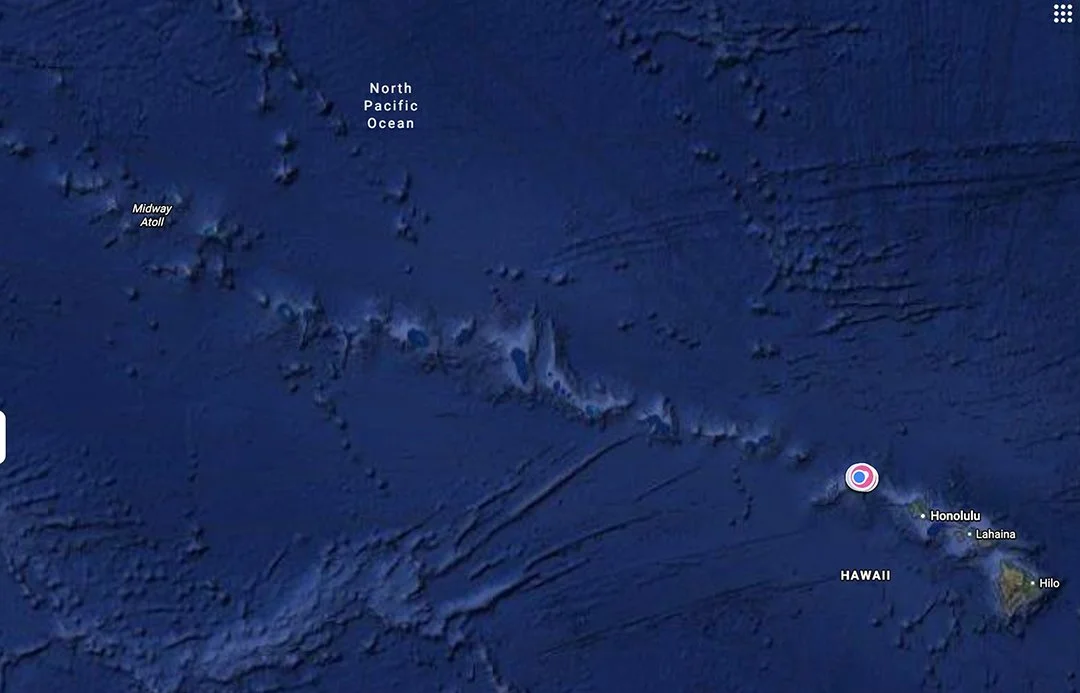
Map depicting Midway Atoll location
Krystal Winn likes puzzles, which is fortunate. In her role as Executive Administrator of Friends of Midway Atoll (FOMA), she and her board have multiple puzzles to solve. Key among them are these questions: how to bring to life such a remote atoll in the imaginations of people who cannot physically visit? How to inspire people to care about one of the most vital seabird habitats on the planet? Where does the money to support Midway come from? And how to stay mindful and respectful of the Hawaiian cultural perspective of Kuaihelani?
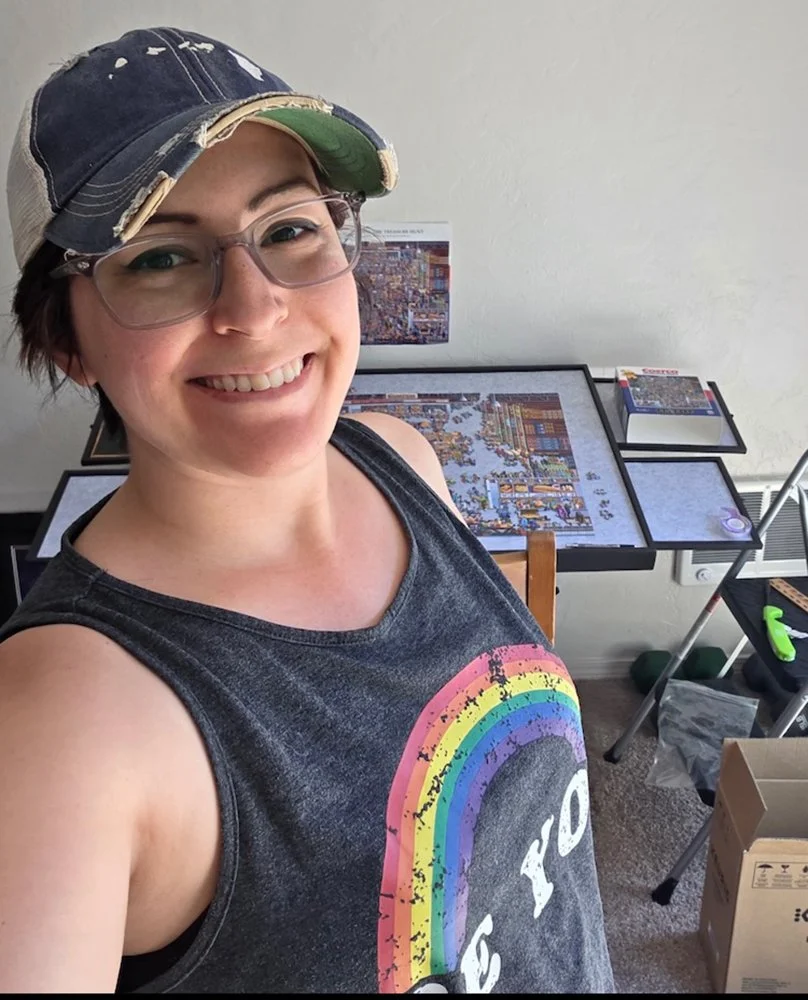
Krystal Winn. Photo credit FOMA
Hob Osterlund (HO): FOMA has been involved for decades at Kauaihelani (Midway Atoll) in support of the wildlife there. Letʻs talk about whatʻs going on specific to the Mōlī (Laysan albatross) and Kaʻupu (black-footed albatross). First things first: you launched a live-streaming camera this year after many years of effort. Howʻs that going?
Krystal Winn (KW): The Mōlī and Kaʻupu are thriving. We know this from the annual bird counts that take place every year. Thanks to the last decade or so, there has been a steady increase in numbers as a whole. Many people don't know FOMA exists or even know about the beautiful island that is Kuaihelani. Thanks to our new live camera, we're able to give the world a glimpse of just how special Midway is, focusing on a sector specifically showcasing the Mōlī and their new chicks (a few weeks old at the time of this interview). The live camera was decades in the making. Just this last October, thanks to new internet technology, the dream became a reality. Utilizing new technology was one piece of the puzzle; the other was financing. Without the support of our generous donors and members, the live camera would not be operational today. Not only did we receive monetary donations, but we were also lucky enough to receive donated equipment. I've seen live view counts on our YouTube channel go from thirty all the way over two thousand at a time. People have checked in from all over the world - Norway, South Africa, England, and Portugal. There's a great chat feature, which has some fantastic conversations regarding all things Midway. And we encourage people to watch during the evening as well. Bonin Petrels are active at night, and you can see them filling the night skies, landing in the sand, and furiously digging their burrows.
HO: The big annual event known as “the count” was able to happen again this year, despite increased costs and decreased government funding. How did FOMA manage?
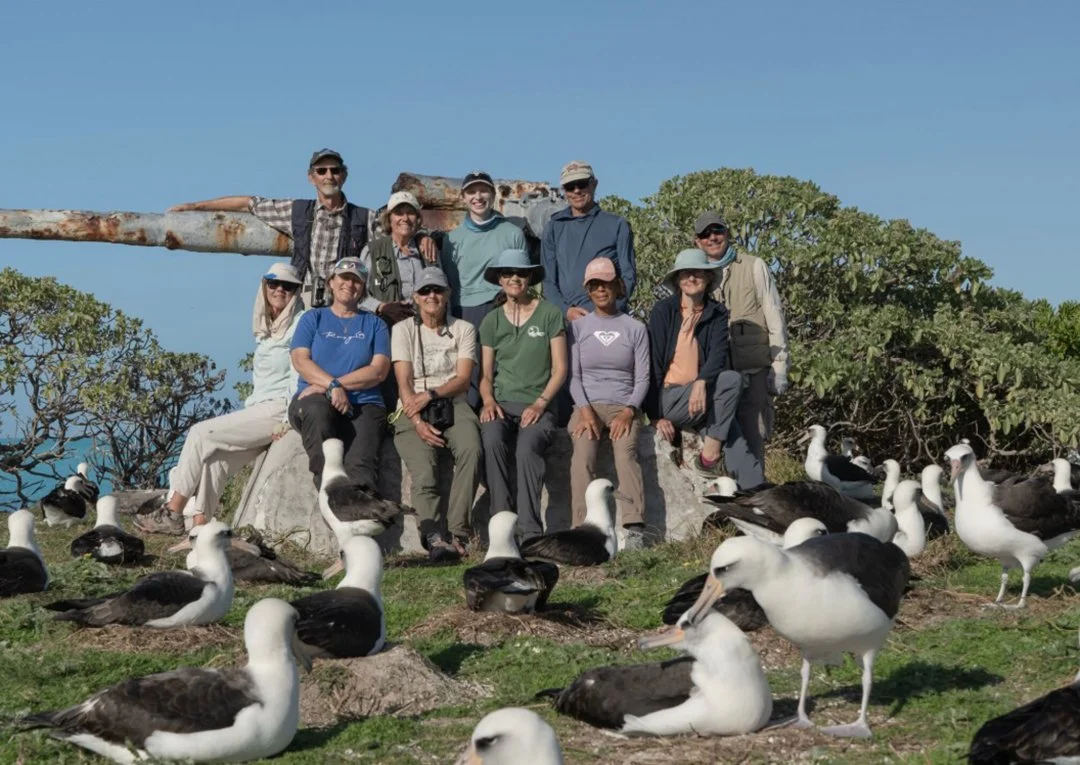
Midway count team, 2025-26. Photo credit FOMA
KW: Again, thanks to the generosity of our donors and members last year, the 2025-26 annual albatross count proceeded as planned. Over $100,000 was raised. Donations not only helped our volunteers but also enabled the drone project to extend into its second year. Started in 1999, our support for the counters is FOMA's longest-running effort. Since 2023, I've joined their fundraising campaigns, and each year, I am amazed at the generosity FOMA receives from all over the world. It is because of the public's support that conservation and scientific research continue. The albatross numbers vary somewhat, which is expected, but there is also an overall growth in their numbers. This year, the numbers are as follows:
28,246 Ka’upu (Black-footed albatross: 2nd highest count)
589,623 Mōlī (Laysan albatross: 4th highest count)
617,869 total nests counted
Imagine only having ten volunteers who are counting nests by hand— along with two drones collaborating the count overhead—all in a few short weeks.
HO: Itʻs great to read about the increasing use of drones for the count, and the complex ways the drone accuracy is improving. How did drone counts compare to human counts this year? Is there a goal to convert to a fully drone-driven count?
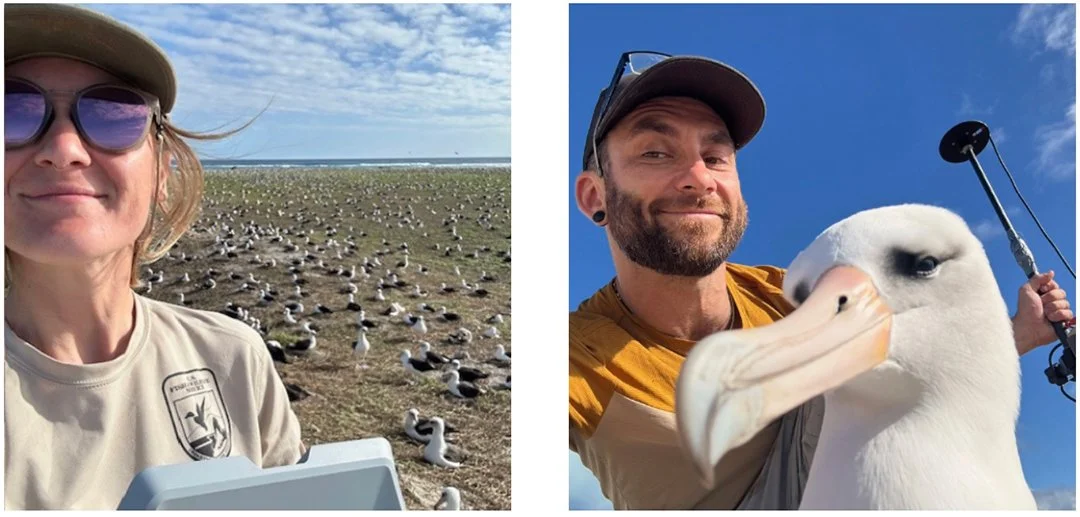
Drone operators, 2025-26 count team. Photo credit FOMA
KW: We do not have the drone count numbers yet, but they will be available later this year. According to US Fishand Wildlife Service (USFWS) staff on Midway, there is no set plan to replace the hand counters. I believe there will be a third year using the drones along with volunteers, which we hope to see in 2026-27, depending on our financial situation. The price of flying volunteers from Honolulu to Kuaihelani has more than doubled in just one year. An additional year for the drone project would be incredibly helpful for experts to compare drone count numbers with the hand-count numbers. I spoke with one of the drone operators, biologist Anna Vallery, who has worked for USFWS. She said if the drone project on Midway Atoll is successful, there are many other isolated islands that would benefit from this technology. Anna is interested in doing a live webinar to discuss her work on the drone project. More information will be coming shortly, so be sure to sign up for our newsletter, follow us on Facebook and Instagram to stay in the loop!
HO: Of course, we cannot talk about Kuaihelani without mentioning Wisdom, the oldest known wild bird in the world. We know that sheʻs at least 75 years old, that she took the year off from nesting this year, and that she has a new mate after the last one was (presumably) lost at sea. Tell us more about Wisdom and how you share her story with the world.
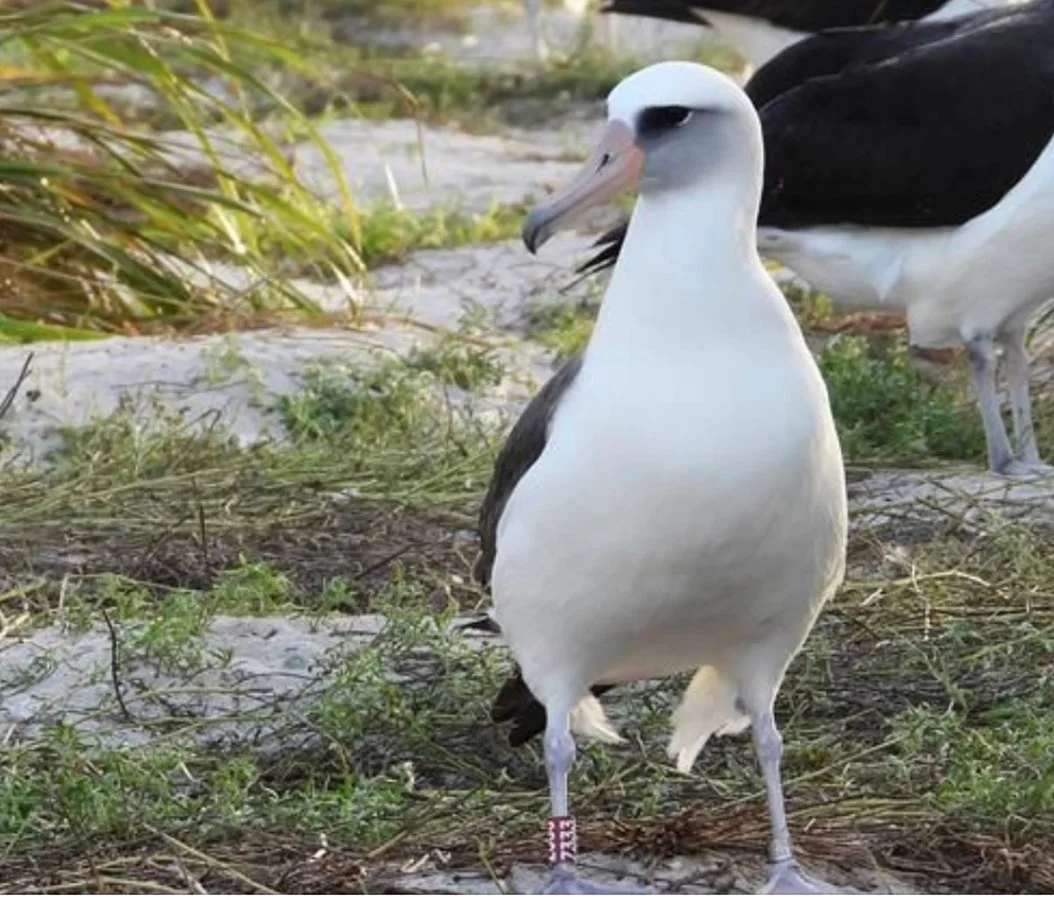
Wisdom, the oldest known wild bird in the world Photo credit FOMA
KW: Wisdom is a treasured icon in the birding world. I get messages every week from donors who love hearing about her. She is such a beacon of hope and continues to amaze us all every year when she returns to Kuaihelani. Thanks to the staff and volunteers on Midway, we get informed as soon as they spot Wisdom, so we can share the news on social media. USFWS Supervisory Biologist Jon Plissner has been the number one "informer” for the last eight years. We have also been lucky to receive videos and photos from USFWS biologist and volunteer, Dan Rapp. He started out primarily working on Midway, but thanks to former board member Ann Bell, became a paid volunteer for FOMA with his incredible photography skills. Without him and the staff on Midway, we wouldn't have first-hand information about Wisdom or other exciting news on the island. We're so very grateful for all their hard work and diligence in communicating with us so often.
HO: What do you see as FOMAʻs greatest joys and challenges in the next few years?
KW: There are wonderful opportunities coming up for Friends of Midway Atoll. The mission to support Midway, to include conservation of the island as a whole, plus the historical and cultural significance, is no small undertaking. Fortunately, there is a wonderful video that helps tell that story.
One of the challenges FOMA faces is how to grow its membership base. Our main form of networking is through social media and email, which is limited. Continuing to grow interest and welcome even more constituents to the FOMA hui (partnership) is so important, and one of our greatest joys, because we know there are so many others out there who will fall in love with Kuaihelani. We are also being vigilant about Midway's formal designation. Midway Atoll National Wildlife Refuge is located within the Papahānaumokuākea National Marine Sanctuary. We implore those who love and support Midway Atoll to follow PNMS on their social media accounts and sign up for their newsletters, which will inform you if the sanctuary needs public opinion or comments to demand its continued protection. We know that with steadfast support, we can continue to preserve and protect all that is sacred within the sanctuary. And most importantly for FOMA, the "backbone of heaven," otherwise known as Kuaihelani.