
Mycology and The World of Fungi
By Safina Center Conservation Videography Fellow Isaias Hernandez
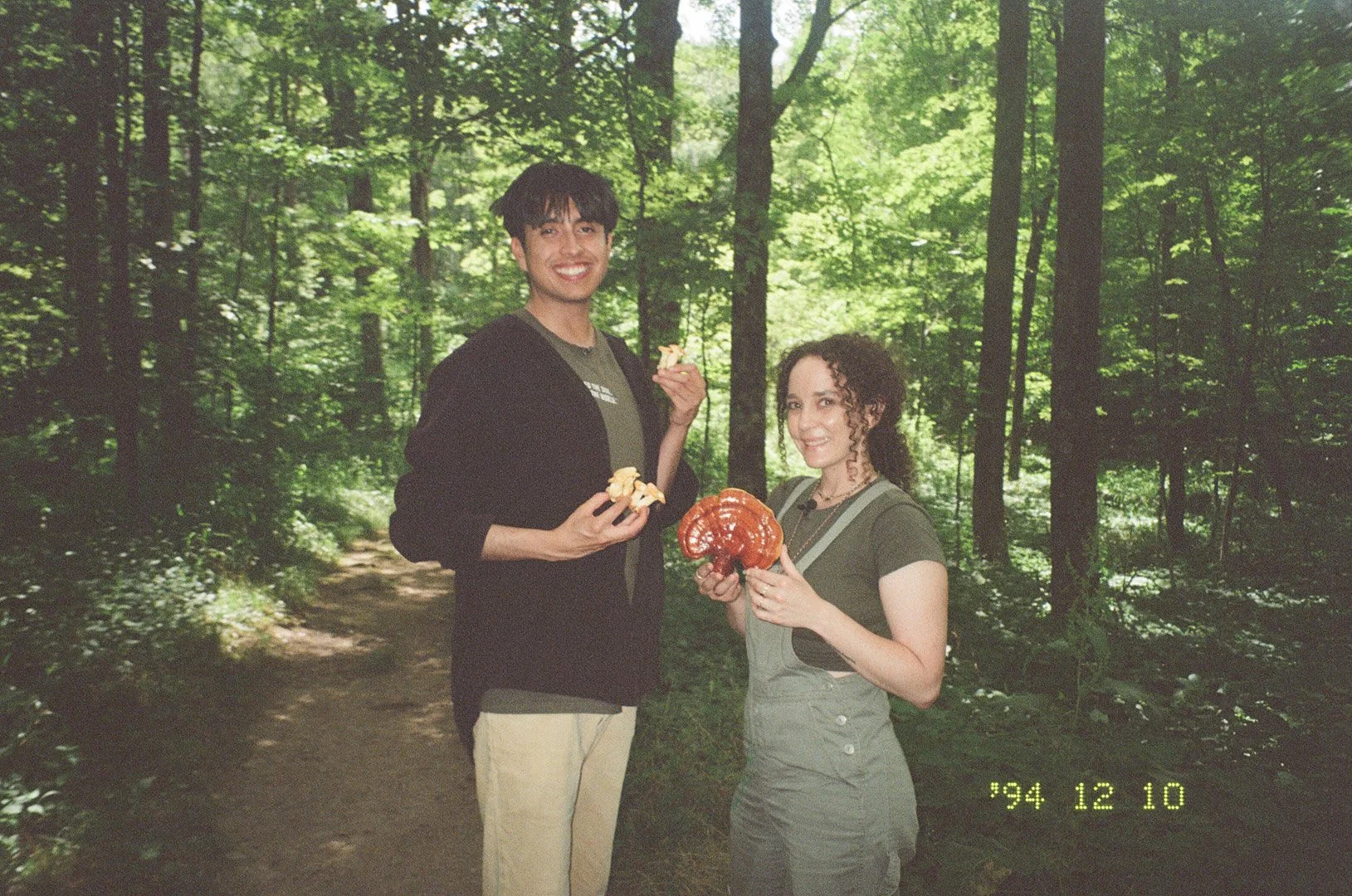
Isaias Hernandez and mycologist Dr. Patricia Ononiwu Kaishian with foraged golden chanterelle and reishi mushrooms.
The world of fungi is a vast kingdom that deserves its own flowers, or better yet, its own aisle of achievements, because fungi belong to neither the animal world nor the plant world. Mycology is the practice of paying attention to fungi and the worlds they build. It is the study of mushrooms, molds, and all the unseen threads beneath our feet. Fungi heal soil, recycle life, and stitch together the living world. They are teachers, architects, and the quiet decomposers that return everything back to earth.
For our latest episode of Season 2 of Teaching Climate Together—my independent web series—we traveled to upstate New York to learn about fungi through the lens of mycologist Dr. Patricia Ononiwu Kaishian. Her relationship with fungi and her research reveals how these organisms shape resilience and help us understand the ecology of transformation.
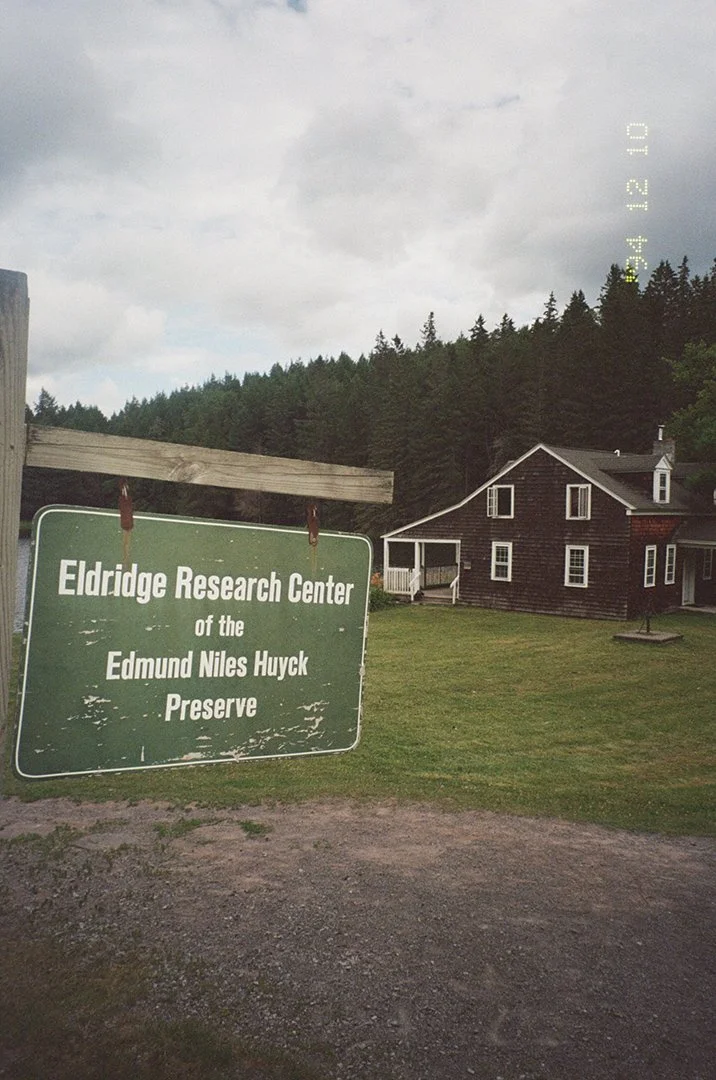
The Eldridge Research Center at the Huyck Preserve in upstate New York. ©Isaias Hernandez
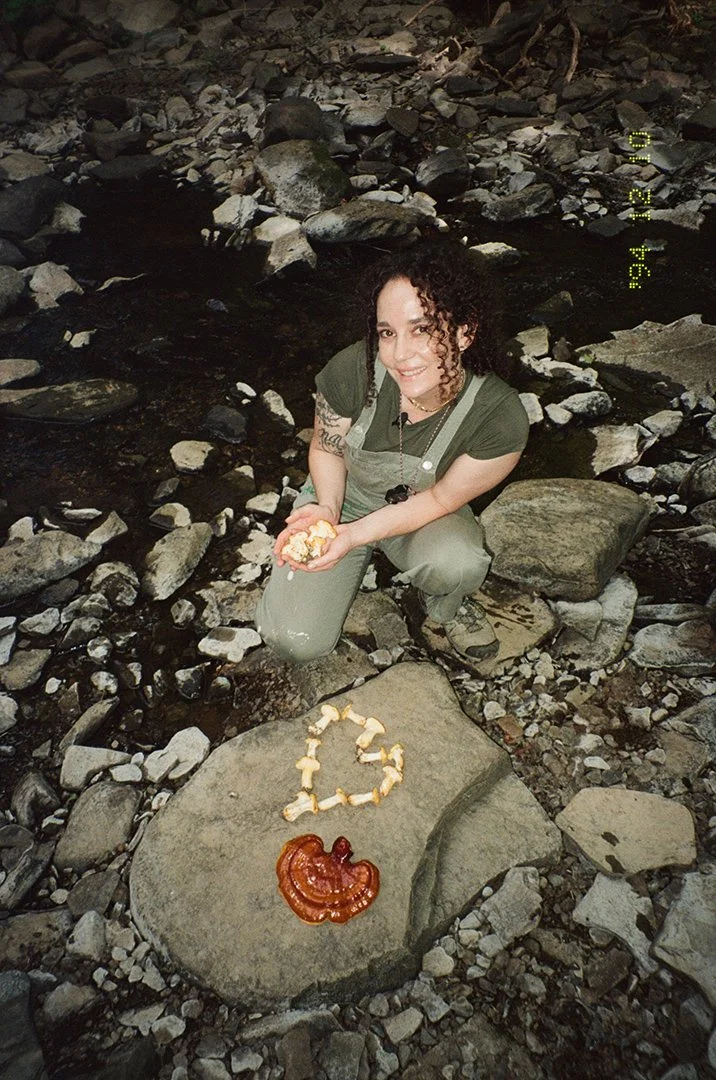
Dr. Patricia Ononiwu Kaishian poses with golden chanterelle mushrooms and a reishi mushroom. ©Isaias Hernandez
One of the first things I learned is that there is a national shortage of mycologists, largely because universities offer very few classes on fungi. Dr. Kaishian became fascinated with fungi in college after meeting a mycologist who saw fungi as a way to explore entirely different worlds. She found every mushroom book she could, took ecology and organismal biology classes, and pursued independent field projects to become a biologist who works directly with fungi. Some scientists estimate that more than two million fungal species have yet to be discovered.
Fungi are not plants. While plants produce their own energy, fungi are heterotrophs. They feed on trees and other organic matter by releasing extracellular enzymes that break down wood. Once a fungus establishes itself inside a tree or log, it can produce fruiting bodies again and again. Fungi have also shaped human health and innovation. Penicillin, one of the most important life-saving medicines, comes from the fungus Penicillium and has saved millions of lives. During our trip, we foraged reishi mushrooms, a species treasured for centuries in parts of Asia for its medicinal qualities.
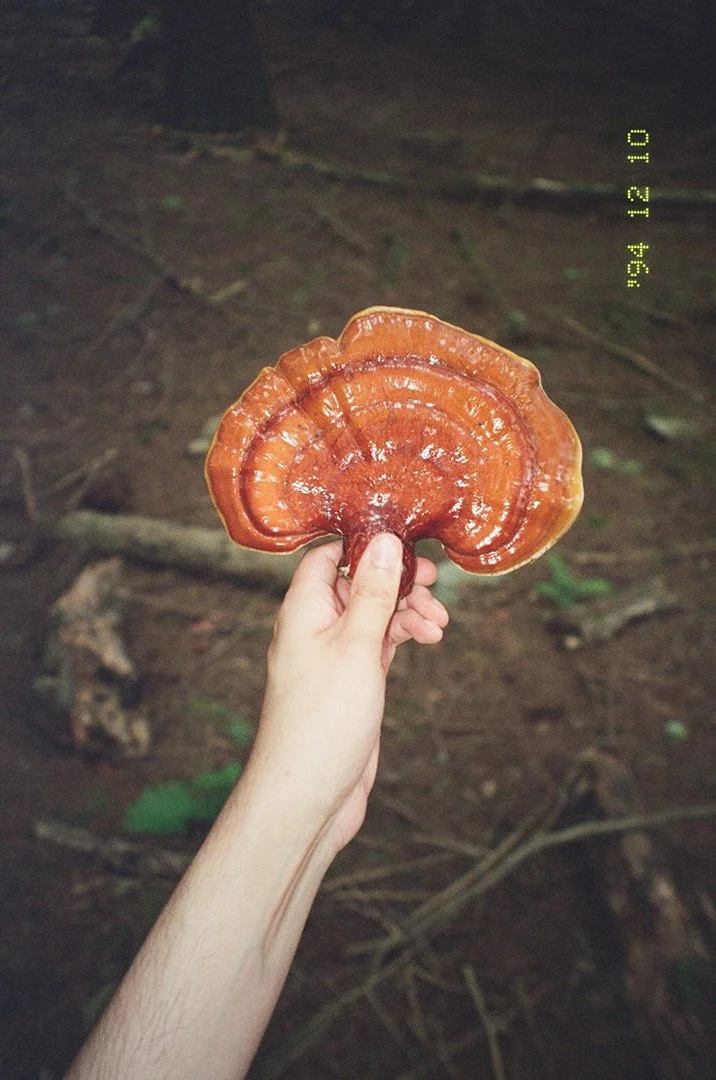
A reishi mushroom we foraged, up close. ©Isaias Hernandez
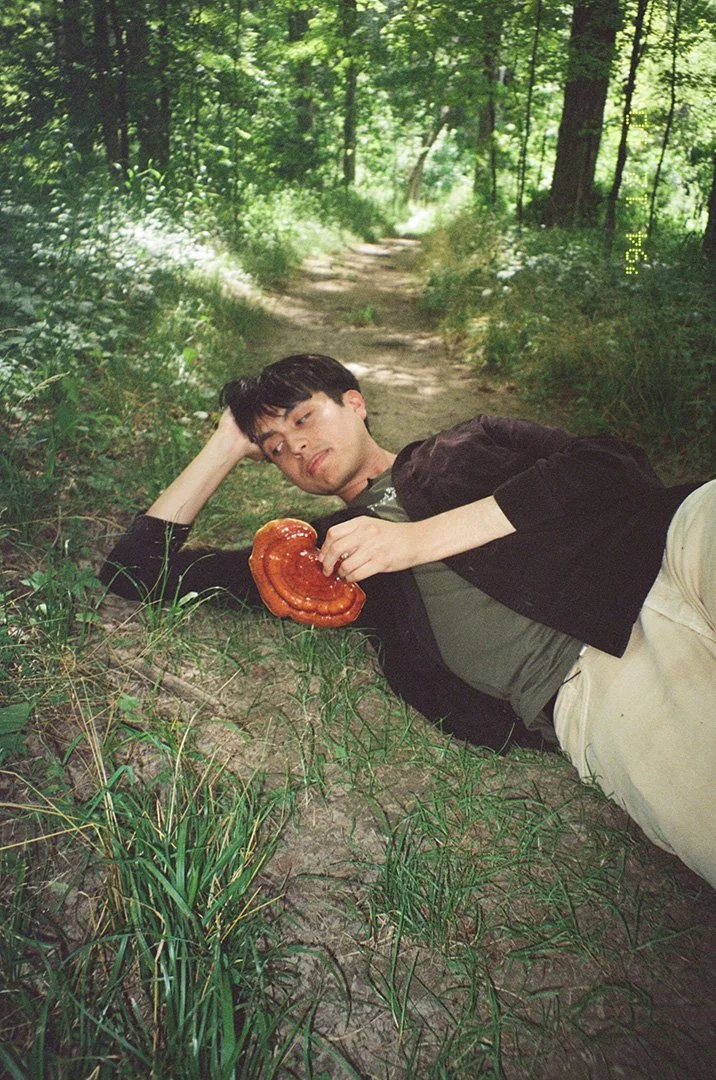
Isaias poses with a reishi mushroom. ©Isaias Hernandez
Many mushrooms are medicinal, some are poisonous, and the wisdom Dr. Kaishian shared is simple. Never consume a mushroom you cannot identify. Learn through books, build skills slowly, and join local foraging groups if you want to deepen your knowledge. My time with a mycologist shifted how I see fungi. It opened my eyes to the artistry, intelligence, and patience of a kingdom that holds our world together.