
Another Bumper Crop OʻTross
Mōlī Nest Count Sets a Record on Kauaʻi
By Safina Center Conservationist-in-Residence Hob Osterlund
No human knows exactly how many times Sol has sired a chick, but at thirty-one years of age, there could easily be a dozen or more. Henrietta, his current mate—and not likely his first—is a decade younger. Their eggs are typically among the first-laid in their colony. In 2023, since their chick hatched on the same day as the Eddie Aikau Big Wave Invitational, the babe was named after the human Eddie, a legendary lifeguard and surfer. In 2025 their chick was named after Rell Sunn, the “Queen of Makaha” and world surfing champion. Both of these offspring turned out to be female, and both were among the first to fledge in their colony.
Although Sol and Henrietta are among the older parents on the island, they have plenty of younger company. This season 457 pairs of Laysan albatross have nested on Kaua’i, the highest count ever recorded on the island. It exceeds last year’s record of 400 nests.
Solʻs egg is checked for fertility and returned. ©Hob Osterlund
Another returning pair is known as Stormy and Mr. H. When Stormy was about five months old her colony was attacked by loose dogs. Several chicks died, but five got rescued. Upon admission, Stormy was head-bit and lethargic. Then one night while she was in rehab at Save Our Shearwaters a big storm passed through, and she woke up. Years later she became a precocious nester, laying her first egg at age six. By 2025 she had already outsurvived two mates. Her current mate is named Mr. H (as in horny) because of his previous habit of hitting on pretty much everyone. Now, fortunately, Mr. H appears to have found his daddy groove and is faithfully incubating their egg.
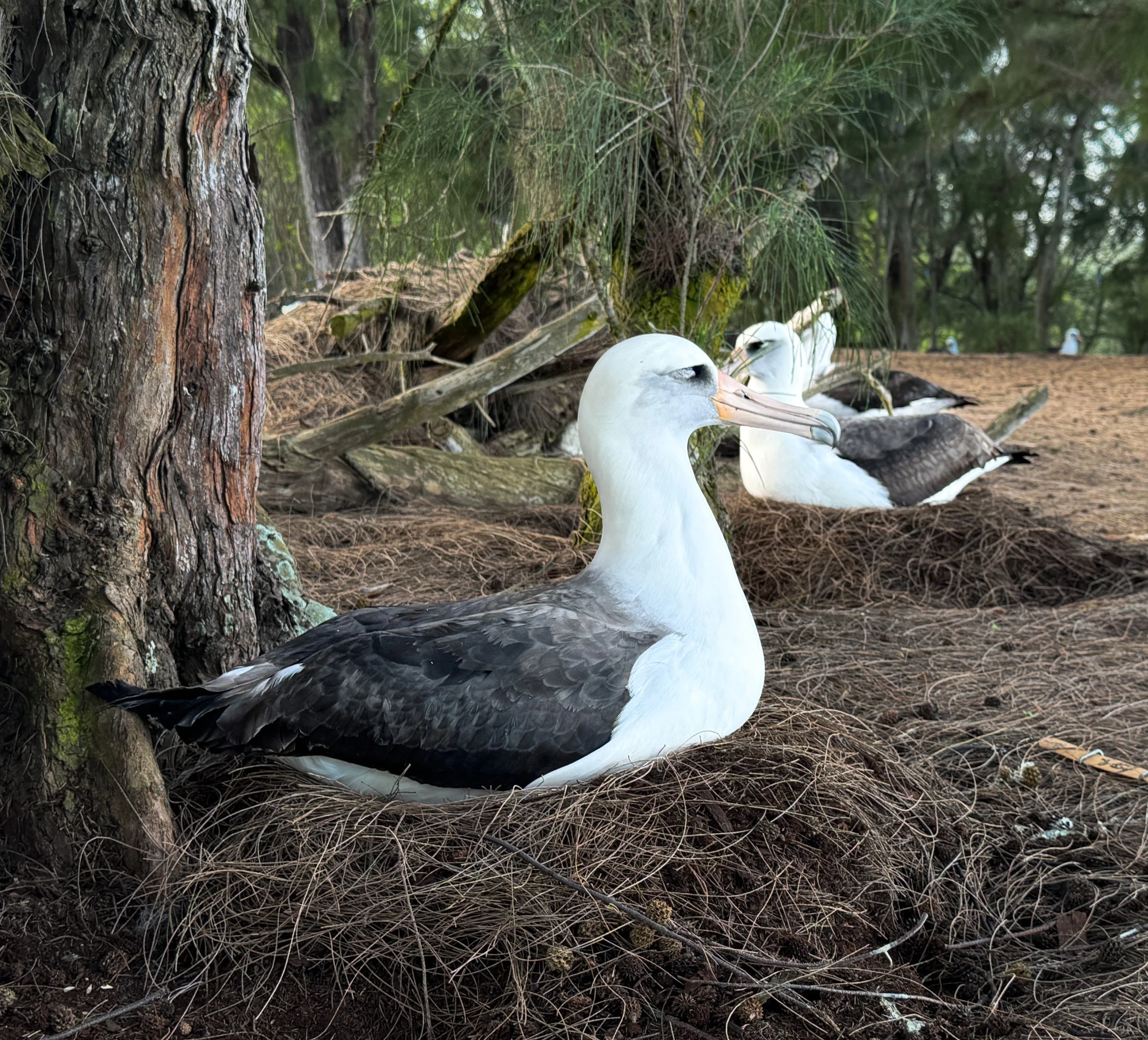
Mr H dutifully incubates egg. ©Hob Osterlund
Here are a few additional albatross short-tales to kick off Hatch Year 2026:
Kalama, star of “Kalama’s Journey” was seen briefly snuggling and dancing with her mate ‘Eleu. After raising a healthy chick last season, they have evidently opted to take this year off.
Mated mōlī pair dance. ©Hob Osterlund
Mango, co-star of the 2014 Cornell Lab of Ornithology TrossCam, is now nesting for the second time. Last year he and his bride faithfully incubated their egg but it failed to hatch. Best of luck, Mango.
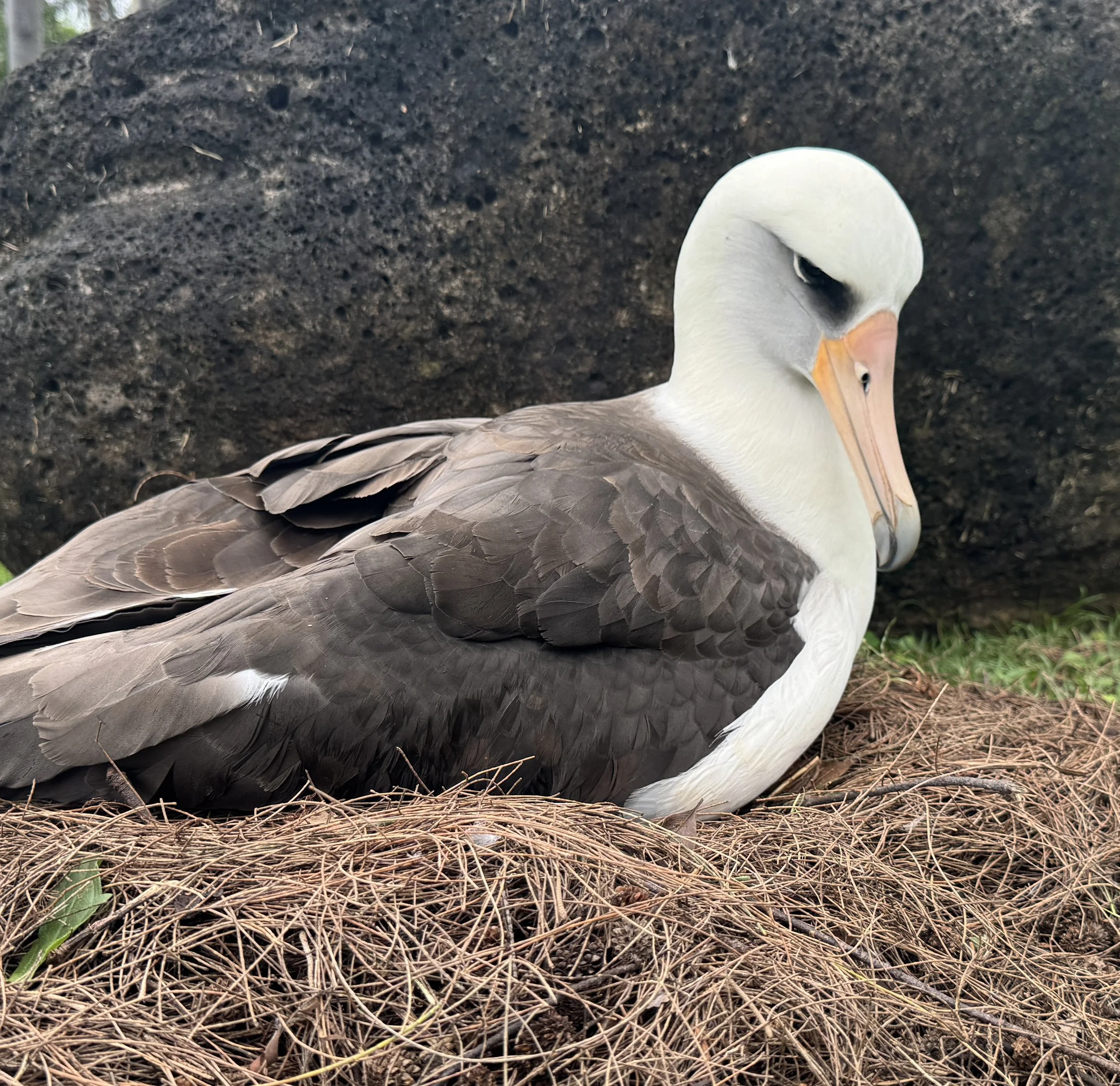
Mango incubates egg. ©Hob Osterlund
We have perhaps four sets of throuples this season. One of them includes Kaluakane, father of 2014 TrossCam co-star and children’s book hero, Kaloakulua. Kaluekane evidently has two unbanded female partners. Almost never can a male mōlī be found sitting on two eggs, but he managed to be just that special. Another throuple involves an established pair who have taken on an extra female. To make matters more “As The Mōlī Turns,” the three birds appear to be incubating the new girlfriendʻs egg.
Kaluakane, a male on two eggs, isnʻt ready to allow one of his two girlfriends to take over incubation duties. ©Hob Osterlund
One female-female pair has been nesting for three years, and each year their (presumably unfertilized) eggs have failed to hatch. This year their colony was approved for egg adoptions (many thanks to Pacific Missile Range Facility and Hawaii’s Division of Forestry and Wildlife) but guess what? They didn’t need one. They managed to score their own sperm donor and then accurately picked the fertile one of their two eggs.
Two females nuzzle. This year they didnʻt need an egg adoption. ©Hob Osterlund
Wrinkle Bill and Makamae had a long run of bad luck with their eggs failing to hatch or their chicks dying while attempting to hatch. A few years ago one of their chicks appeared to thrive but unexpectedly died of unknown causes at about two months of age. Mama Makamae stayed with their babe for about three days. When we finally buried her chick, she hung out a short while longer at the grave site. This year for the third time the pair has chosen to nest just inches from that grave.
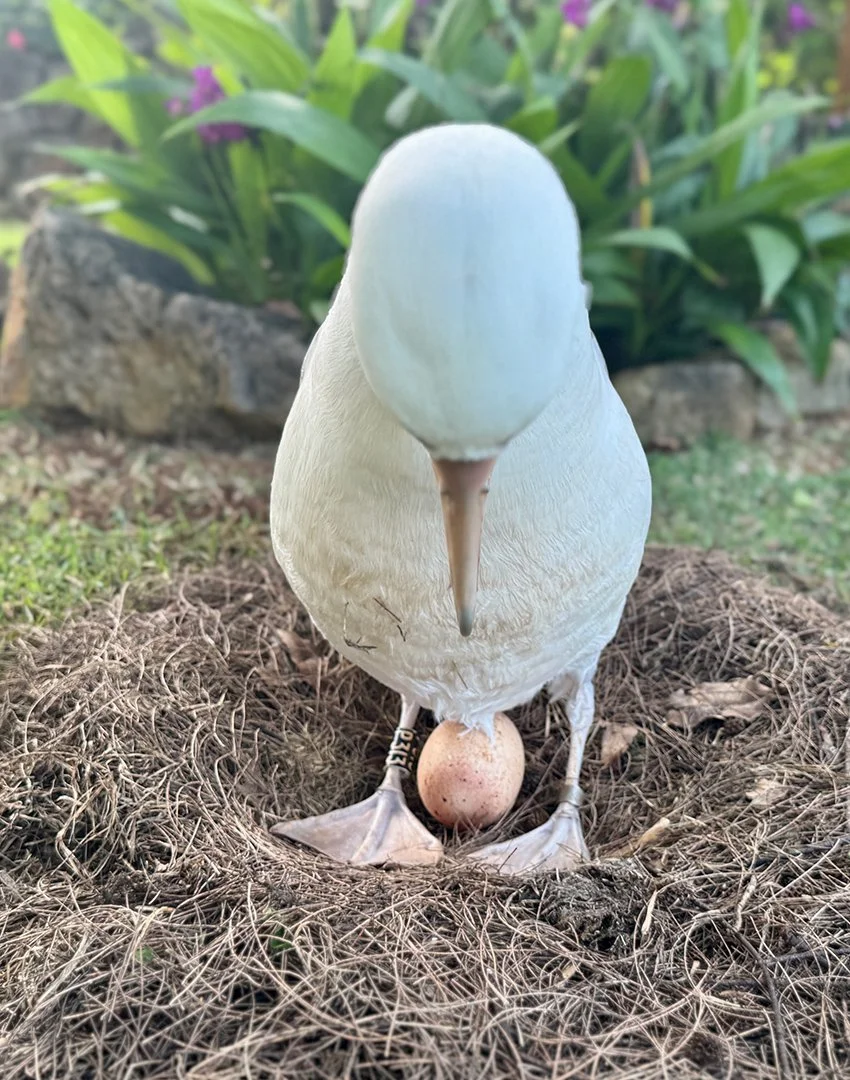
Makamae and her mate Wrinkle Bill chose to nest near grave of their lost chick. ©Hob Osterlund
Mokihana has the sweetest temperament of any albatross you ever saw. But man did she have a loser mate. For years Ikaika unpredictably and sporadically showed up to take his turn incubating their eggs or feeding their chicks. When he failed to appear altogether two years ago, Mokihana patiently waited for him. But this year we were delighted to see she has chosen a new mate, a veteran female, and together they are holding strong on their adoptive egg.
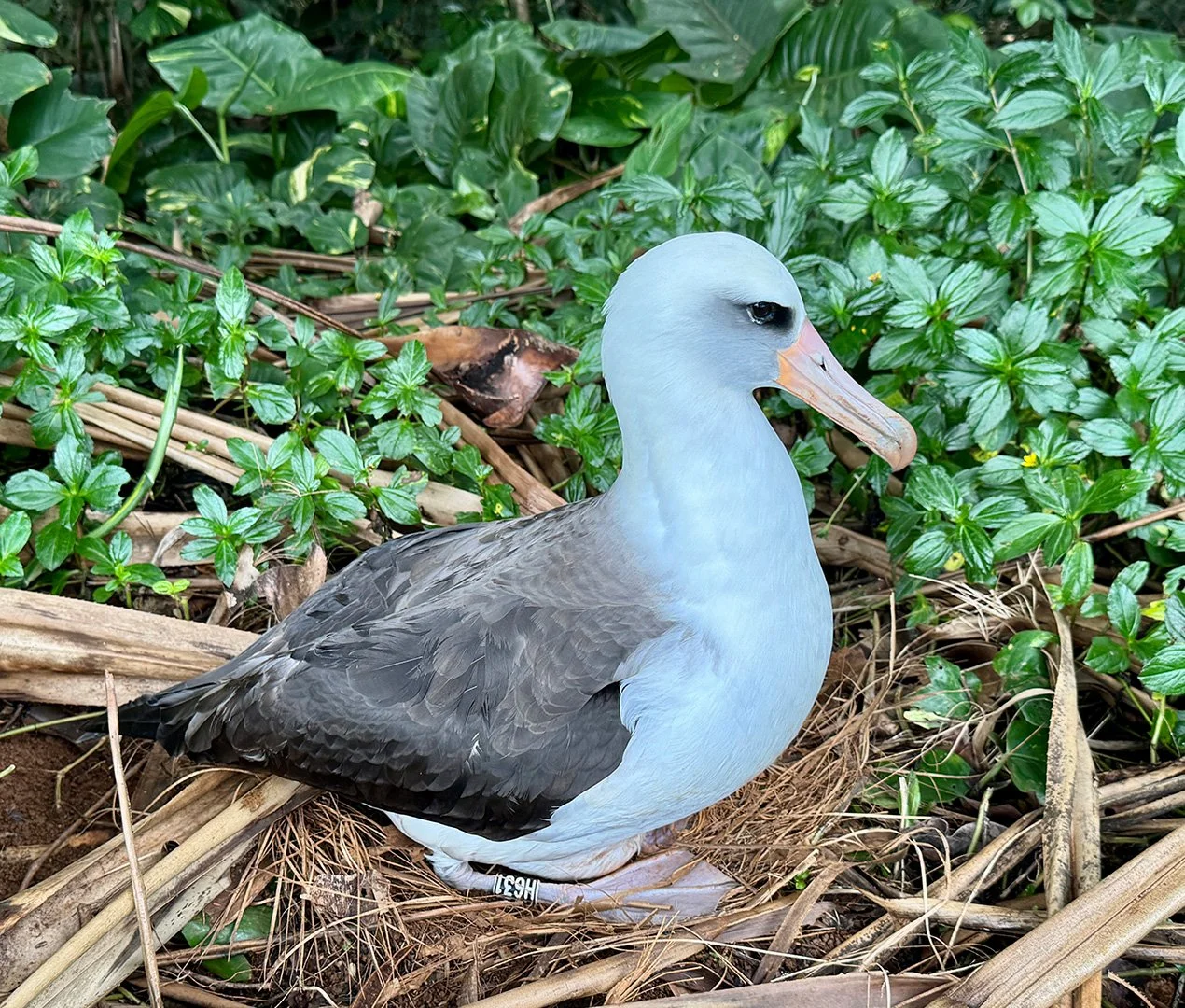
Mokihana has chosen a new mate, this time another female. ©Hob Osterlund
One albatross pair was in the heated act of creating the next generation when they got charged by a pair of nēnē (Hawaiian geese). After a quick nuzzle with his mate, the male mōlī shared his opinion about the concept of goose-us interruptus. The mōlī pair will not be nesting this time around.
Nēnē geese disrupt mōlī mating, male mōlī displeased. ©Hob Osterlund
This season we have at least four mōlī nesters who were banded as chicks on Tern Island about 900 miles away in the Northwestern Hawaiian Islands. We also have a Guadalupe Island (Mexico)-banded parent. Finding such bands is always a thrill for us tross-o-philes, especially the birds from low-lying atolls that are destined to be submerged with sea level rise.
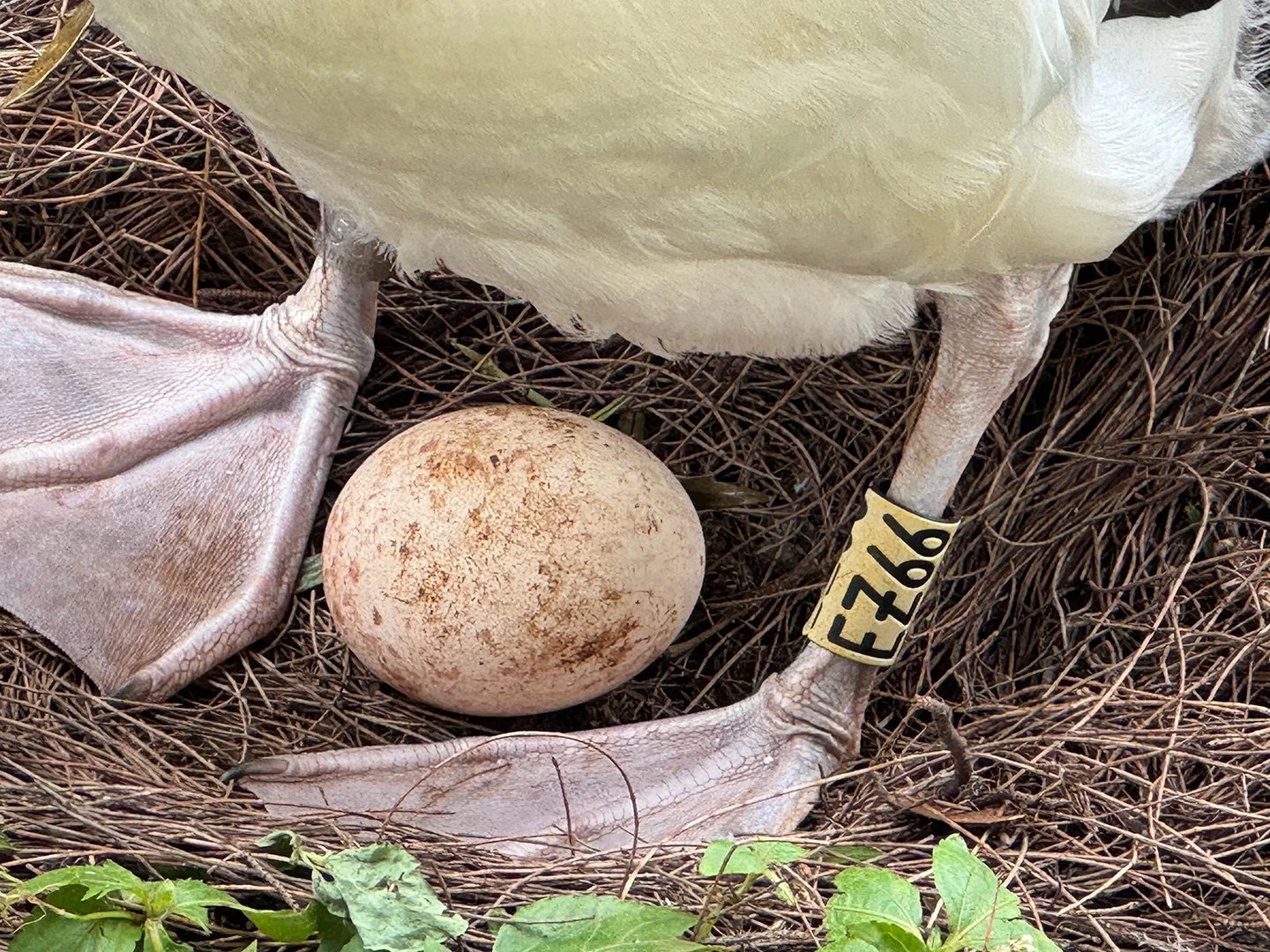
Leg band of albatross from Tern Island, 900 miles NW of Kauaʻi. ©Hob Osterlund
Hatch year 2026 is off to a good start for Sol, Henrietta, Mango, Mokihana and the many other mōlī of Kauaʻi. Long may these native nesters thrive.
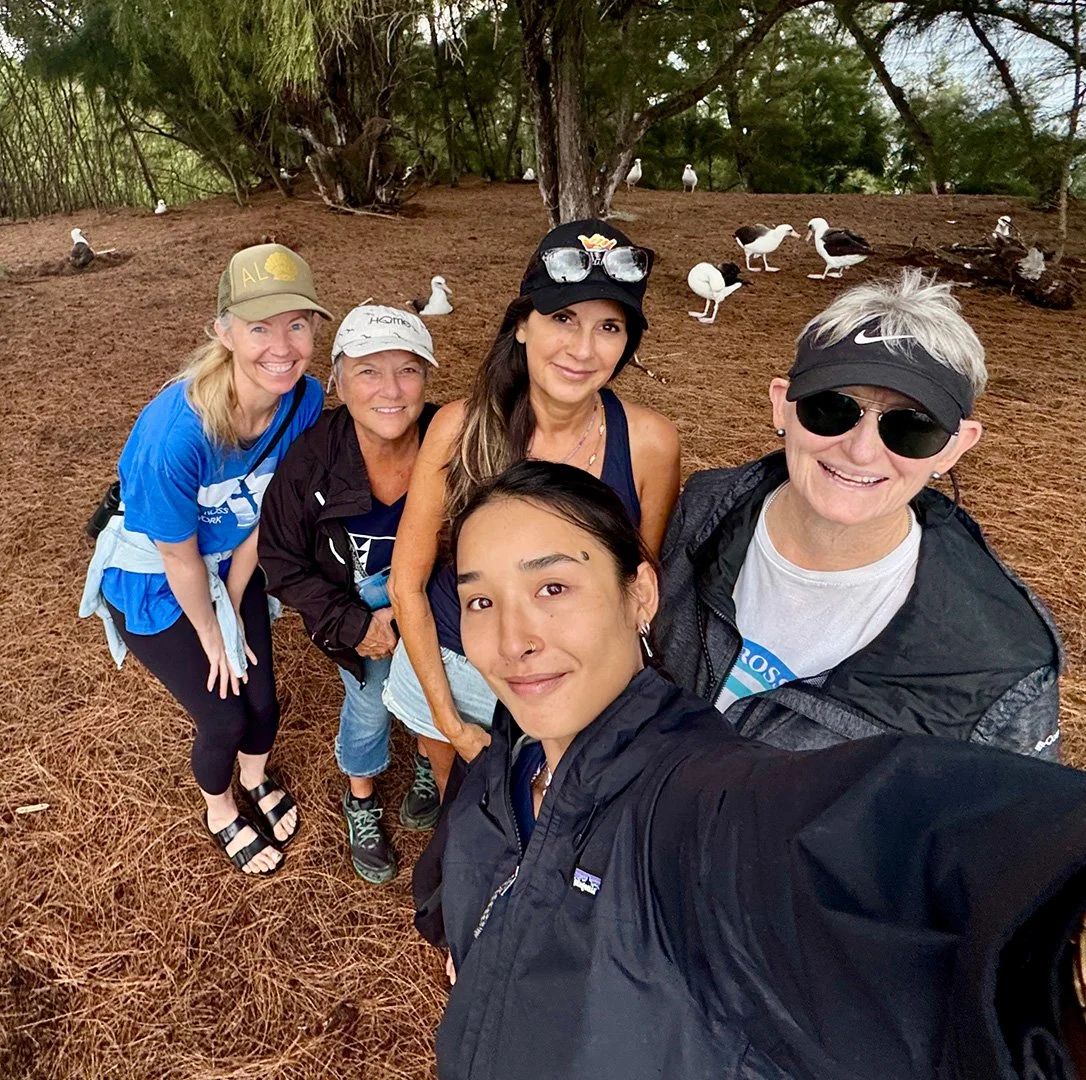
Team of Kauaʻi Albatross Network volunteers in a colony getting egg adoptions. ©Amber Chong