
On the Border in Calais
By Safina Center Community Organizing Fellow Mikaela Loach
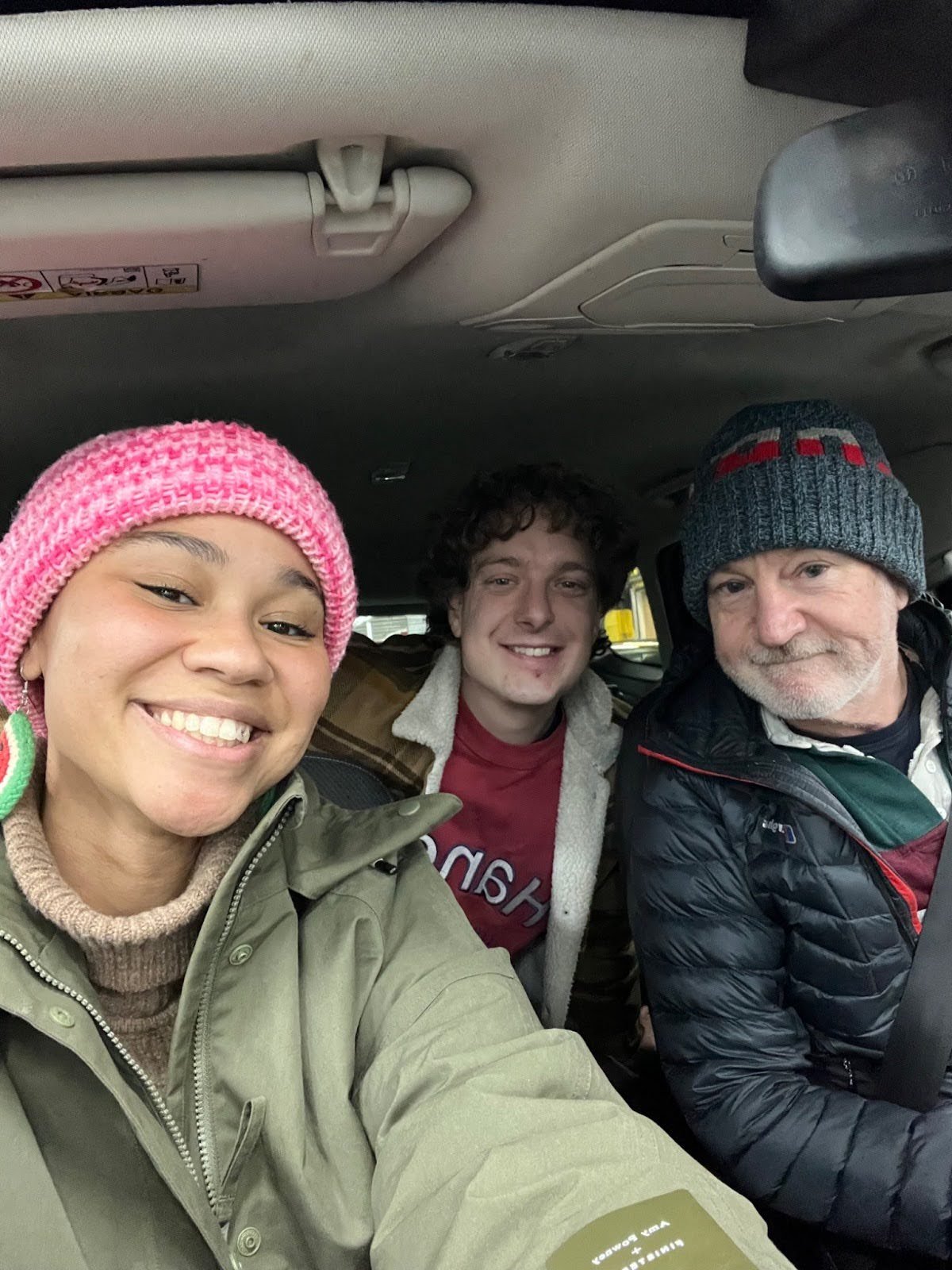
Me, my dad and my friend David on our way to Calais. ©Mikaela Loach
In my late teen and early adult years, I would gather family or friends to come along with me to Calais to chop wood, sort clothing donations and tents and help cook hot meals to support displaced people at the border. It became a ritual for me for those years: it always felt the best way to honor the birth of an Arab-Jewish baby born in hiding, to young refugee parents who were fleeing persecution, that we’re technically supposed to be celebrating this season. When the COVID-19 pandemic hit in 2020 and I was on medical school placements in geriatric wards, I didn’t want to put the high-risk patients I worked with at risk so I didn’t go to Calais that winter. Then life just seemed to happen and suddenly five years had passed since my last trip to the border. Despite my exhaustion from attending the chaos that was the UN’s COP30 in the Brazilian Amazon, I knew I didn’t want another year to end without returning to Calais. In wonderful serendipity, the incredible people at the Calais Appeal reached out to ask if I’d be up for coming to create media to raise awareness of the violence happening at the border—and the importance of financially supporting the grassroots groups working on the ground to support people on the move. My now-retired Dad agreed to drive so mere days later he, I and my fireman friend David I met on writing retreat earlier this year boarded an early morning ferry from the UK to France.
For us to cross the border was a simple affair: passports quickly checked, no questions asked, a quick check of our vehicle and then in a couple of hours our ferry docked into Calais. The same freedom is not allowed for all. Currently, there are very few safe and legal routes for people on the move to claim asylum in the UK. The routes that do exist are completely inaccessible for most people fleeing persecution, climate breakdown and other forms of violence. Because of this, many people who wish to come to the UK are forced to attempt an often-deadly journey in small boats across the Channel. Two thousand five hundred people are currently living in make-shift living sites in Calais - sleeping outside in sub-zero temperatures and violently “evicted” from any living site by police every 48 hours. During these evictions the police bring a “cleaning crew” to take belongings, tents and shoes from people on the move. During this trip in Calais, I joined a group called Human Rights Observers who legally observe these evictions to bring evidence for legal cases and to attempt to prevent the worst police violence. After the first eviction I witnessed, I saw a young Arab family who had just been evicted from that site walking down the road with all of their belongings in supermarket bags. The young mother had a baby strapped to her chest, and the father held the hands of his two young boys, one wearing a “Spiderman” jacket, whilst who I assume was a grandfather walked behind. My heart shattered in an instant witnessing those most similar to the protagonists of the Christmas story—the Jewish-Arab Mother Mary, baby Jesus and Joseph—being dehumanized in this way. This same day, many far-right activists had travelled from the UK simply to go and enact racist violence towards people on the move. The night before I’d taken a deep dive into these thugs’ social media accounts and saw that they were passionate about “putting the Christ back in Christmas.” Remembering this, whilst seeing this mother with her Christ-like baby strapped to her chest, made me shake with anger. If we really wanted to put the “Christ” back in Christmas we would be supporting and welcoming refugees, not attacking them.
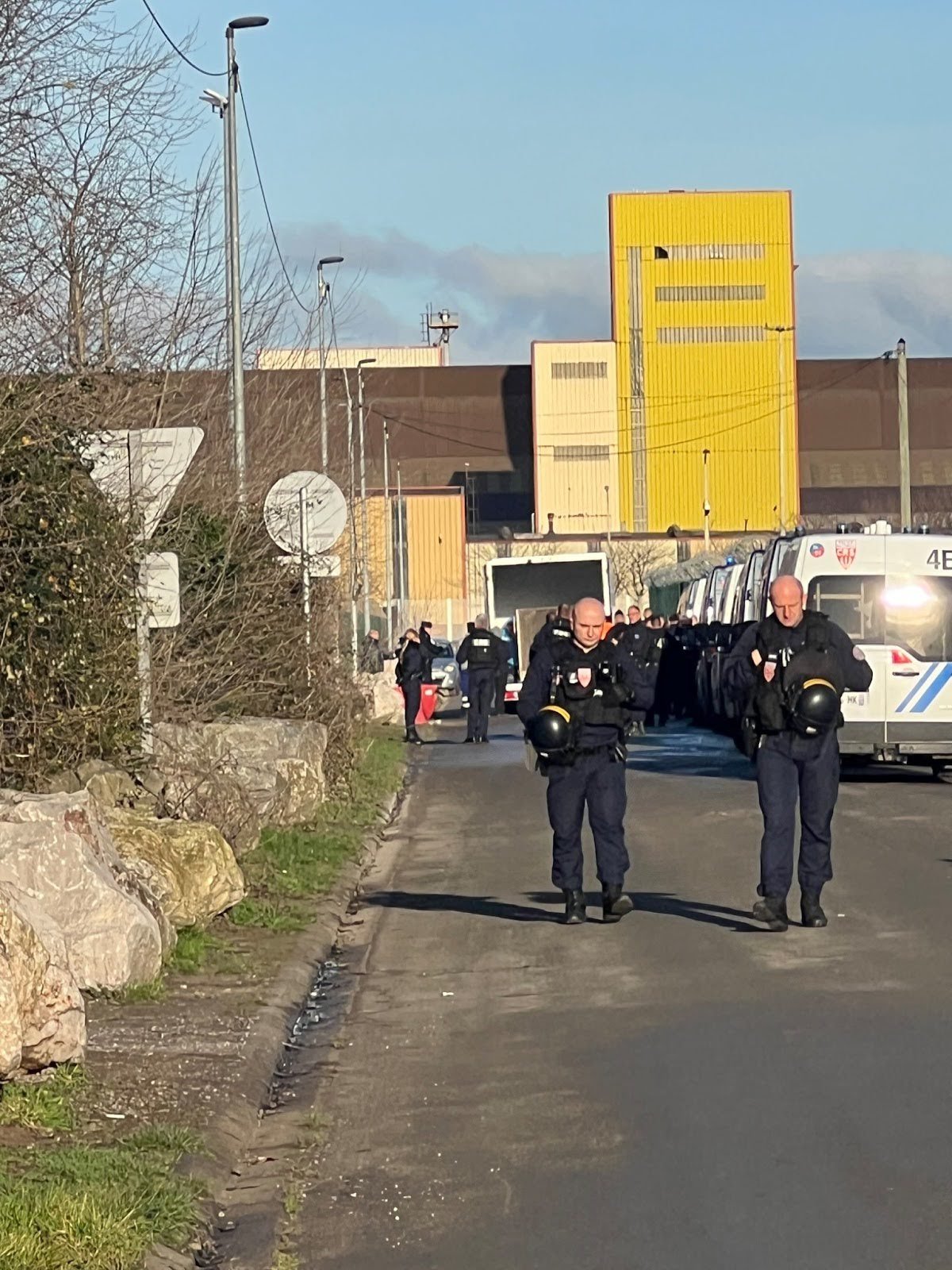
French Police at one of the evictions we witnessed with Human Rights Observers in Calais. ©Mikaela Loach
Calais is a place to channel this anger; a place where despair is simply not an option, a place where solidarity is not just a buzzword thrown around but is a deep and powerful force. In the face of truly stark state violence, ordinary people have chosen to come together to support our fellow humans. Grassroots organisations in Calais provide over 3 million litres of water (because the French state refuses to address this human right), millions of hot meals, food parcels, tents, sleeping bags, tonnes of firewood and spaces to play for children. It’s a mammoth amount of work, run almost entirely by volunteers. The amount that people make possible with so little resources in Calais—both people on the move and volunteers—is really quite remarkable. The work being done in Calais is without ego, it’s not flashy, it’s not self-important: it’s true solidarity. A choice to see our humanity as interconnected and to respond to the needs of our siblings from across the world simply because we are all deserving of dignity. I really find it quite hard to explain how important and impacting the work there is. I think you have to see it for yourself to really know.
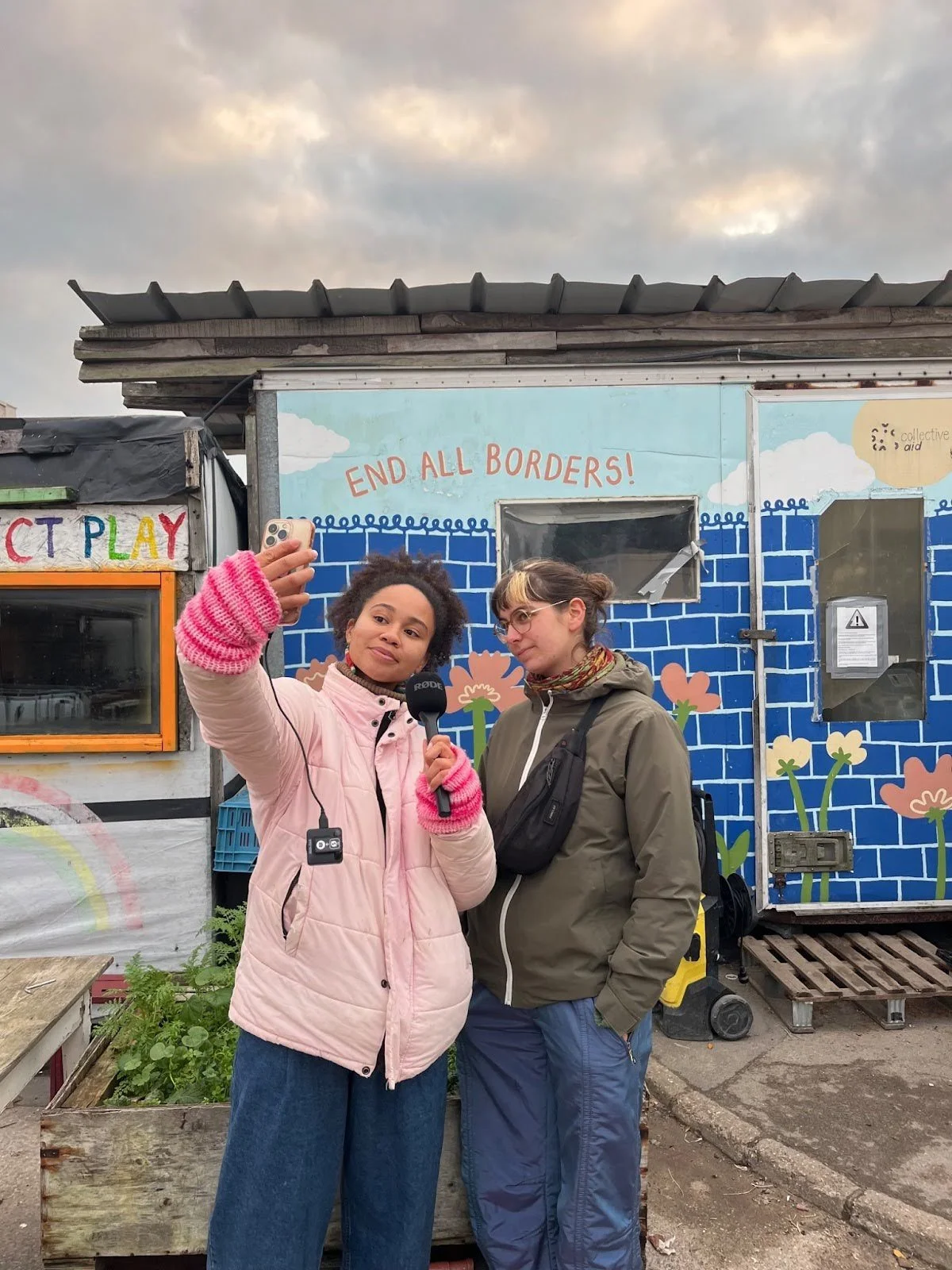
Recording a "Did You Know" video with Gaia from the Calais Food Collective
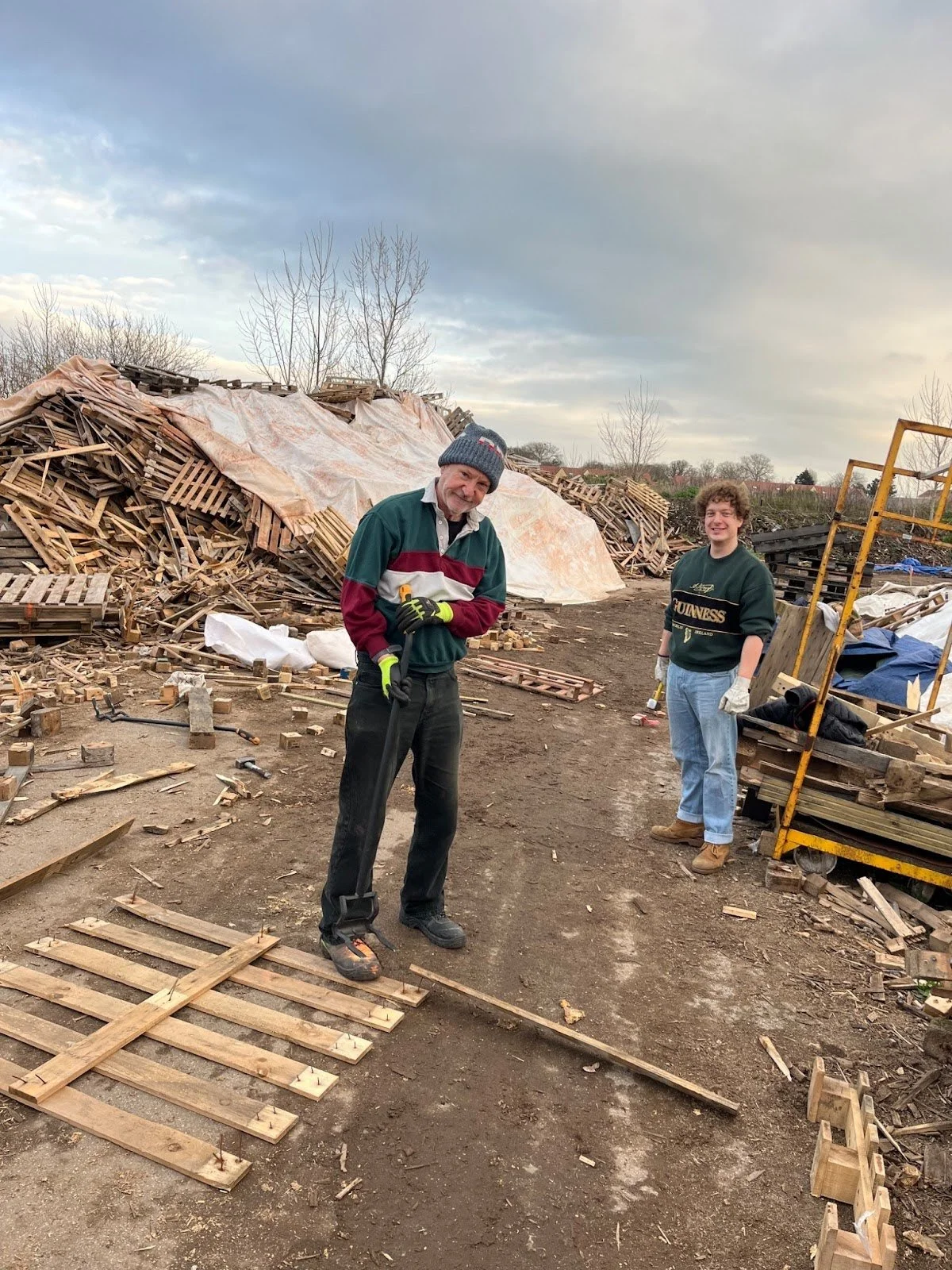
My Dad and David pulling apart pallets for firewood with the Calais Woodyard
Returning to Calais reminded me how much understanding solidarity in this way in such formative years of my life impacted me. I’m so grateful to be renewed in this understanding again, thanks to all of the incredible organisers working tirelessly every day in Calais. In my final blog for 2025, I wish that we will all understand the beauty, the power and the real practical meaning of solidarity in 2026. I honestly believe that if we all did, a better, freer, transformed world would already be here.
As someone who has migrated myself I know that migration is beautiful and natural. Like the birds and the water that fills our oceans and seas, like pelagic sharks and magnificent whales—migration has always been here and it’s not going to stop now. No matter what a billionaire owned media publication tells you.
Please support Calais Appeal’s important work by contributing to their Winter Fundraiser.