
Native Plants and the Theodore Payne Foundation
By Safina Center Conservation Videography Fellow Isaias Hernandez
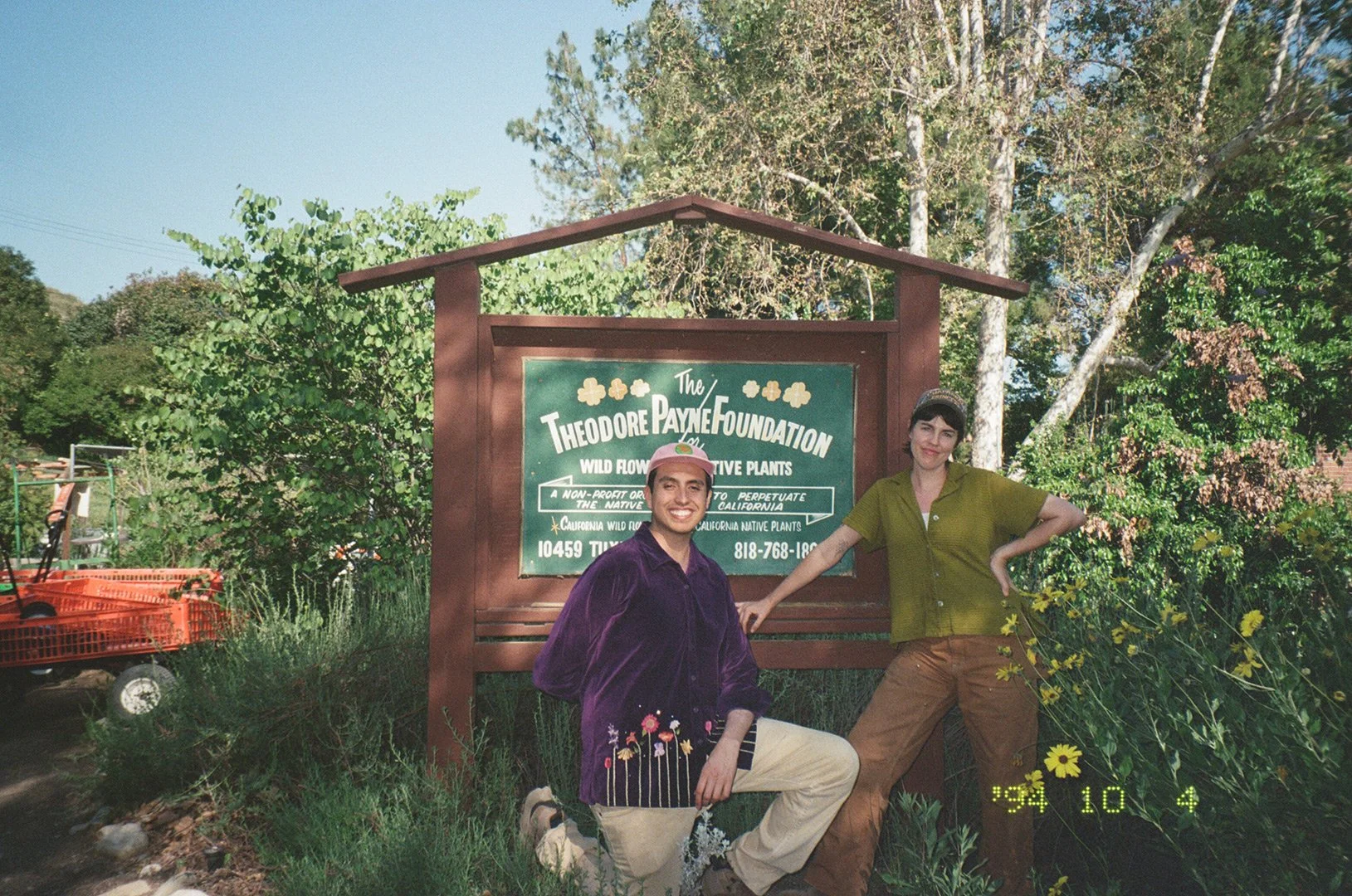
Isaias Hernandez and Katie Tilford, the Director of Development and Communications at the Theodore Payne Foundation. ©Isaias Hernandez
Native plants carry rich ecological histories, and for Season 2 of Teaching Climate Together—my independent web series—our team decided to focus on our own homes and the beauty behind native plant species.
Local ecology is about remembering that every place carries its own history of life. It’s the study and care of the relationships that exist right where we stand, including the flora, fauna, and fungi, as well as the stories that have shaped that land.
So much of the land we move through has been reshaped by human hands, and generations of ecological knowledge have been pushed aside. When that knowledge is flattened, we slip into a culture that forgets the living world that holds us. I keep asking myself how we rebuild that inheritance. How do we return to the plants that once taught our communities how to thrive?
I spent time at the Theodore Payne Foundation to learn through the lens of Southern California’s native plants. TPF is a nonprofit committed to helping people fall in love with the beauty and ecological power of California’s original flora. Their home sits on 22 acres of canyon in the San Fernando Valley, where a nursery, seed house, display gardens, trails, classrooms, and art spaces come together like a small ecosystem of their own.
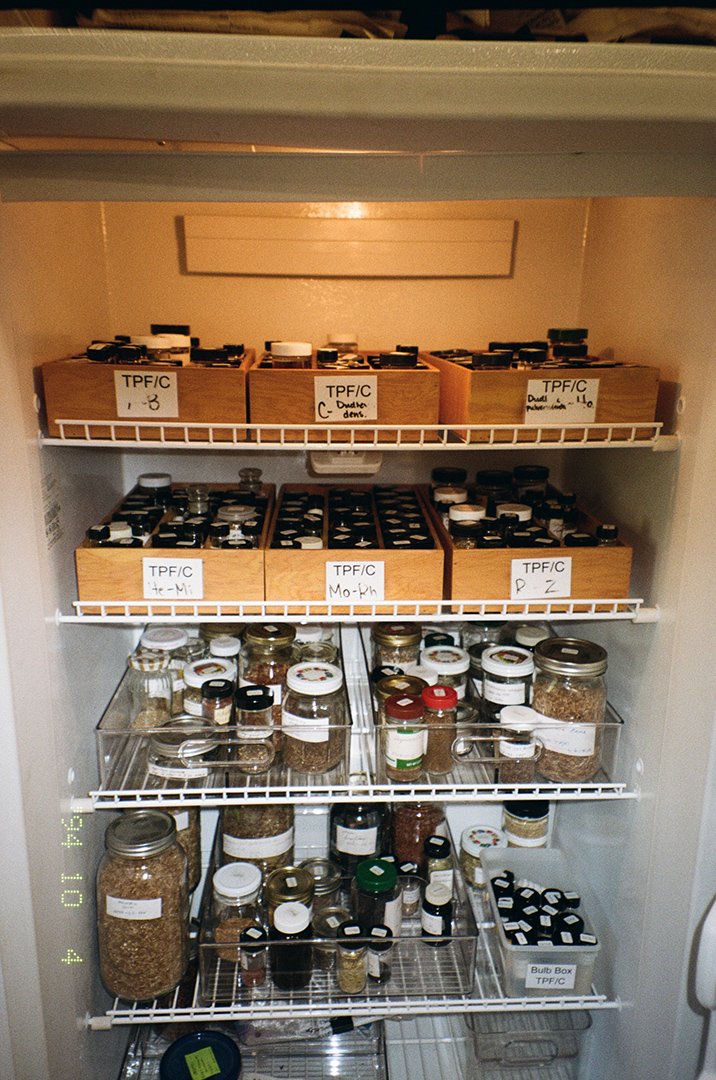
A refrigerated seed bank at the Theodore Payne Foundation. This is a “medium-term” storage. Short-term stored seeds are kept at room temperature, while long-term seeds are stored frozen.
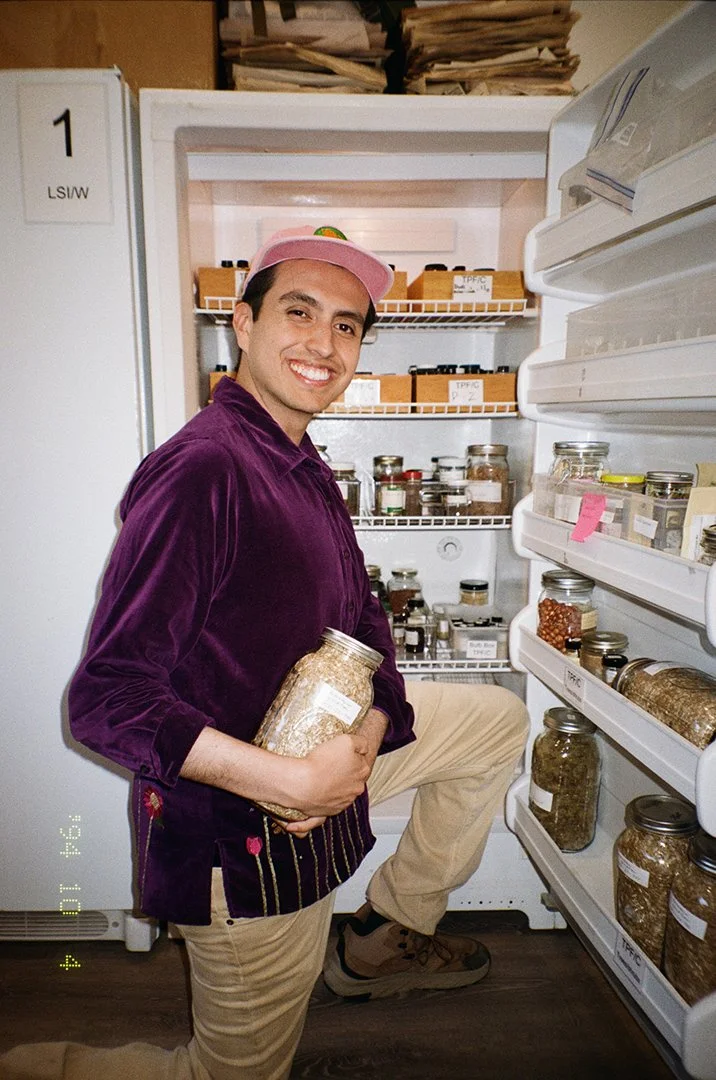
Isaias posing in front of one of the Theodore Payne Foundation’s refrigerated seed banks. ©Isaias Hernandez
California’s region can grow almost anything, which is both a gift and a challenge. The soil will accept plants that do not belong here, and many of those species push out the ones that evolved with this land. Black mustard, for instance, may look harmless, but it swallows space from native plants and reshapes fire cycles. Understanding which plants belong here is part of building a climate-resilient future
I grew up in Southern California and even I struggled to identify what was truly native to this place. But this is not about blaming individuals. It is about recognizing how cultural systems took root. Grass lawns once symbolized perfection in the 1950s and 1960s, spreading across the country like a quiet standard. Lawns are convenient and tidy, but they do not nourish habitat or invite reciprocity. They mirror a culture that prioritizes ease over relationship.
The good news is that solutions already exist and were implemented. Planting native species is one of the most powerful steps we can take. A bit of research can reveal which plants thrive in your local conditions. TPF offers guides to help you begin, and many regions now offer rebates to remove lawns. Native plants need care when they are young, but as they establish deeper roots they become low water companions. The effort in the beginning becomes a long-term gift to your watershed, your soil, and your local species. They also help reduce utility bills and there are tons of rebate programs to help transition your lawn into a native landscape.
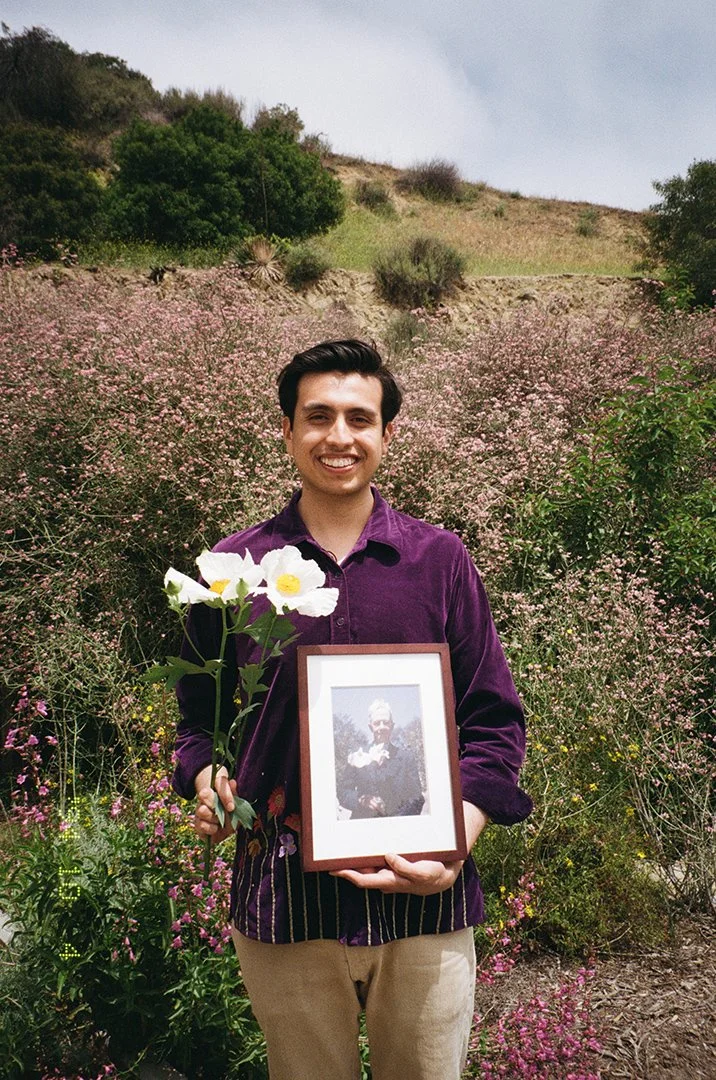
Isaias recreates a photo of botanist and horticulturist Theodore Payne holding Matilija poppies (Romneya coulteri), a plant native to Southern California. ©Isaias Hernandez
If you want to find out how the adventure went, watch the full episode below or directly on YouTube.