
Saving Two Birds With One Plan: Tubenose Cousins Get Protected on Kaua’i
By Conservationist-in-Residence Hob Osterlund
The volunteers couldn’t take it anymore. They kept finding bloody, torn-up shearwater carcasses on a wooded north shore property on Kaua’i. A head here, a wing there, a hollowed-out torso in between. They had tried and failed to stop the killing. They ended up burying or disposing of more than seventy shearwater bodies per year.
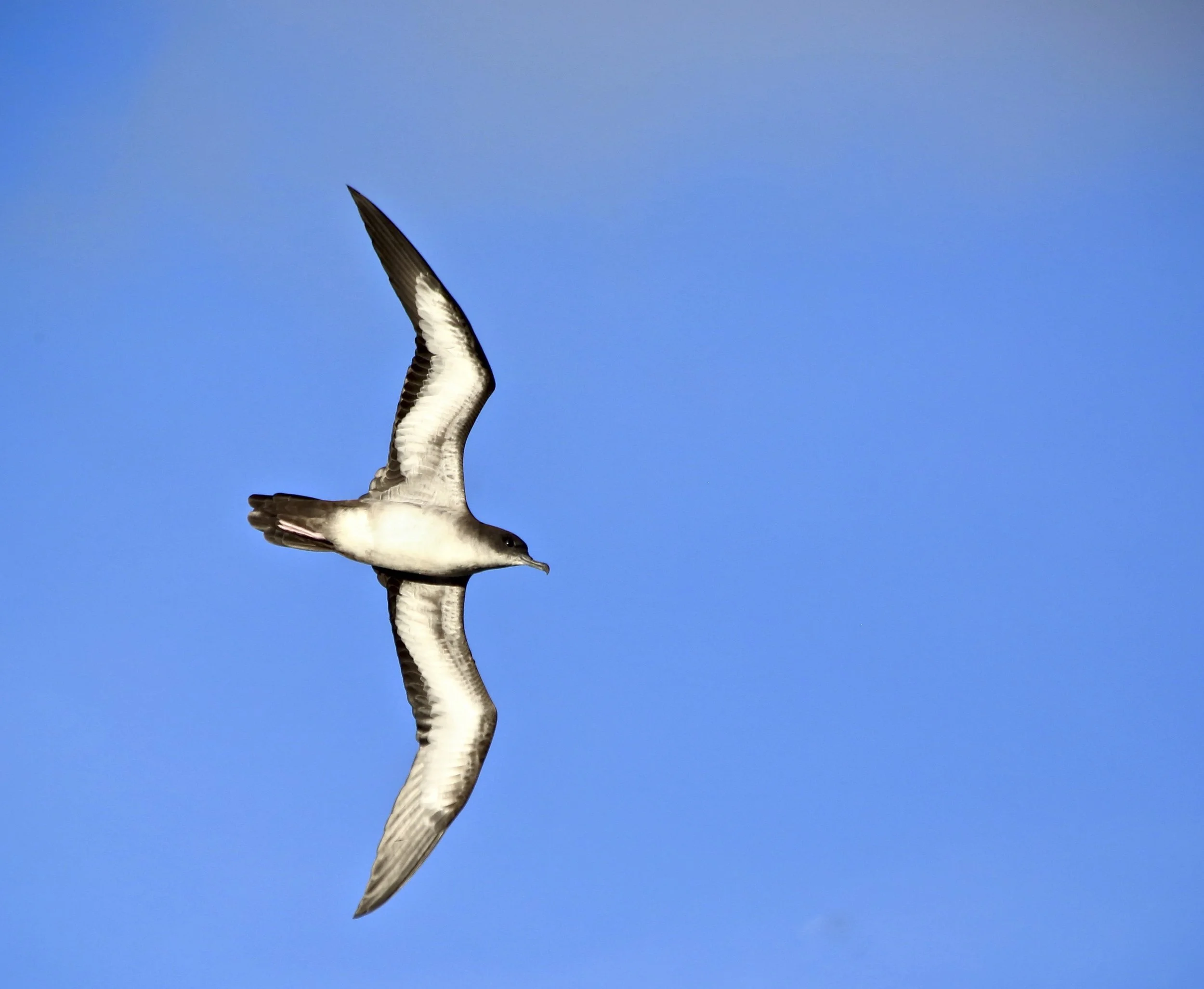
An ʻuaʻu kani in flight Photo by HO
Uaʻu kani (wedge-tailed shearwater) and mōlī (Laysan albatross) are both “tubenose” seabirds. Although they’re from the same family tree, their nesting seasons are on opposite schedules: one starts in the fall, one starts in the spring. Other than that, they have loads in common. They spend most of their lives at sea and find their prey, in part, because of a strong sense of smell. They visit Terra Firma solely for the purpose of reuniting with their long-term mates and raising a family, always one egg at a time, one chick at a time.
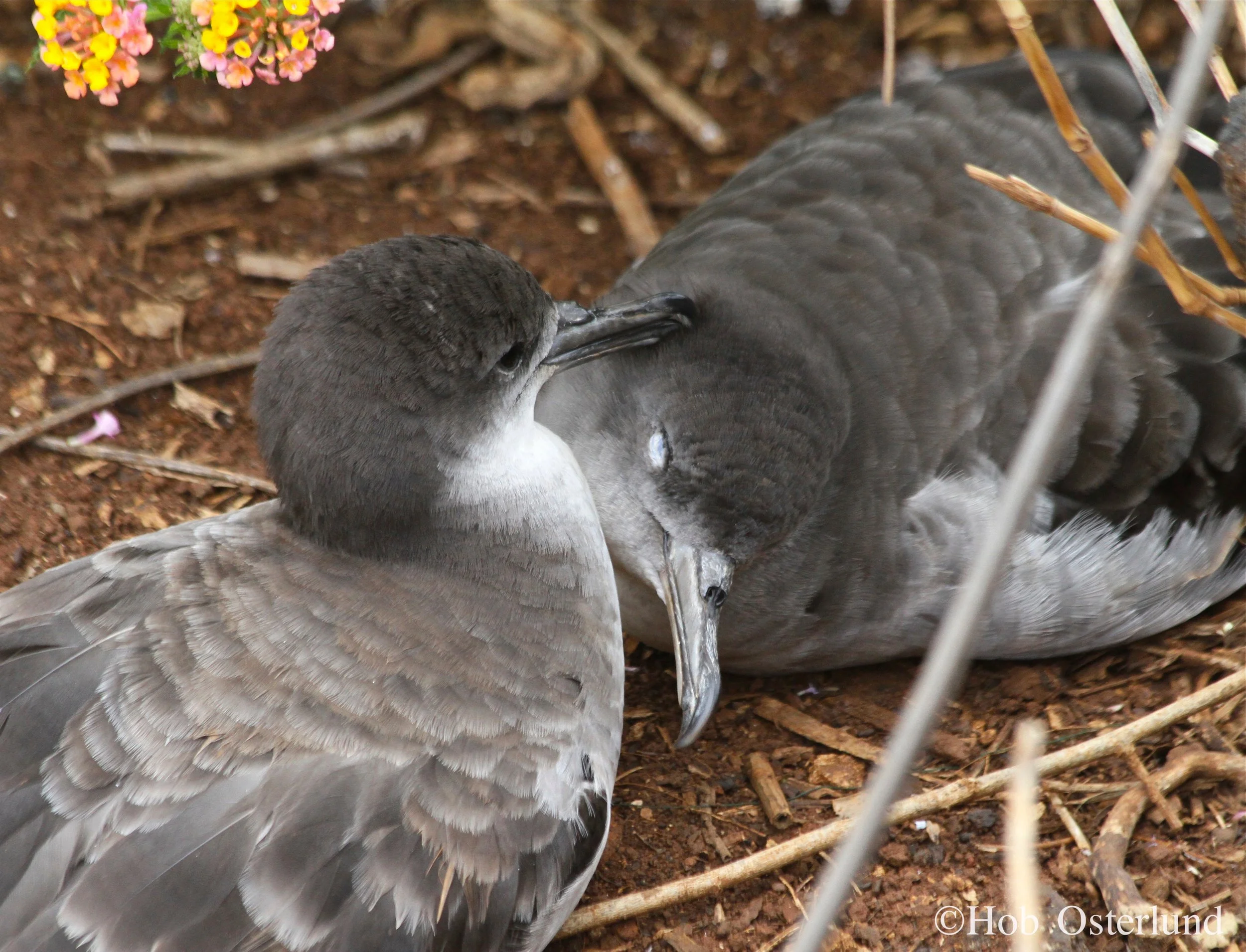
A shearwater pair reunites after months at sea Photo HO
Like the acreage the volunteers monitor, there are a few seabird colonies where the two species share common ground. On most of the “main” Hawaiian Islands (the ones inhabited by a significant population of people), ground-nesting native seabirds have several threats, and are often unsuccessful at nesting at all. But on Kauaʻi—where there are thankfully no introduced/invasive mongoose—they share one primary problem: feral cats.
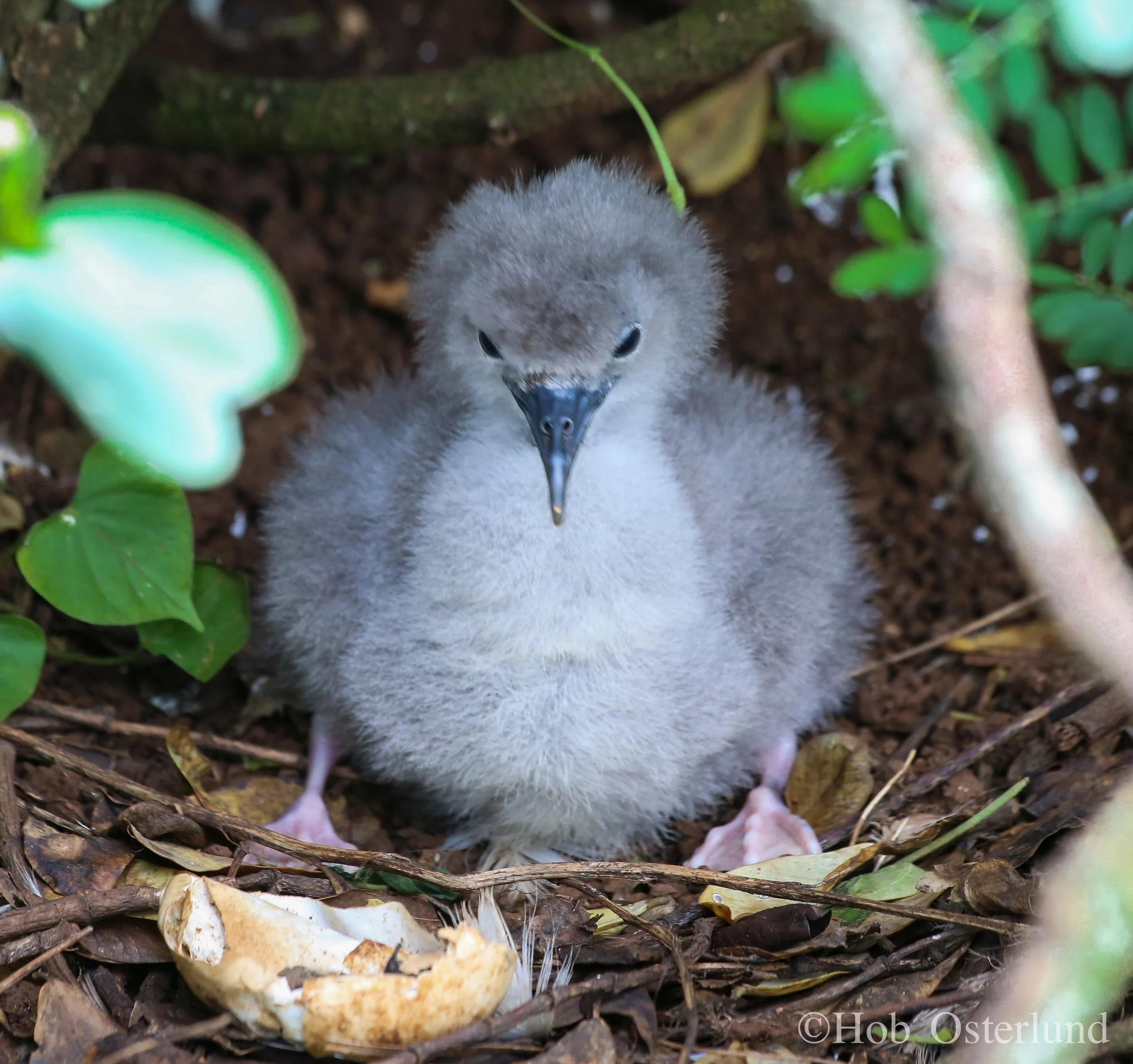
One-week-old ʻuaʻu kani chick Photo by HO
Introduced barn owls can be an additional threat, and free-roaming dogs and pigs can also do a lot of damage. But feral cats—fierce nocturnal hunters undeterred by most fences and sometimes fed by well-intentioned humans—are the biggest terrestrial threat to their survival. On the property monitored by the volunteers, mōlī chicks have been spared due to highly focused trapping. And of course, the chicks share another advantage over the shearwaters: size. Once albatross chicks reach one month old, they become less vulnerable to cats. Older albatross chicks and full-grown adults are not as attractive as shearwaters, which can be killed at any age, size, or breeding status.
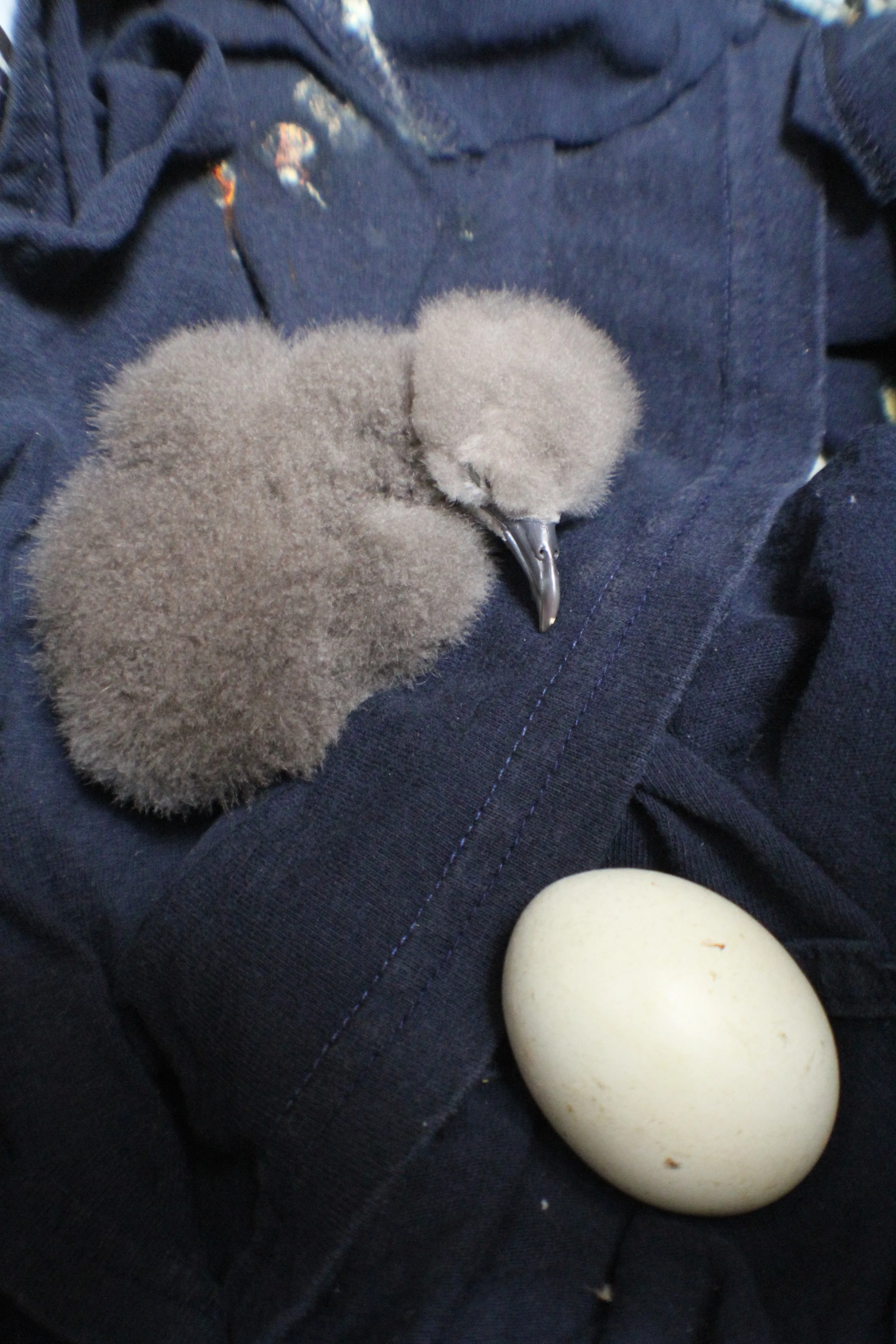
shearwater chick hatched after mom killed by a cat. He was raised by licensed humans and survived to fledge. (The egg is for size comparison) Photo by HO
Toward the end of the season last year, some trailcams and more focused trapping were effective at the site, but only for the mōlī. Because of the history there, a new seabird project has been initiated by Archipelago Research and Conservation (ARC). It includes concerted trapping at the beginning of the shearwater season. The idea is to chart the anticipated recovery of the 'ua'u kani colony. “Monitoring equipment has been deployed, including cameras placed at active burrows to assess both seabird and predator visits,” said Dr. Andre Raine, Science Director for ARC.
“There is also an acoustic sensor, which will measure the change in call rates over time to chart population growth,” he said.
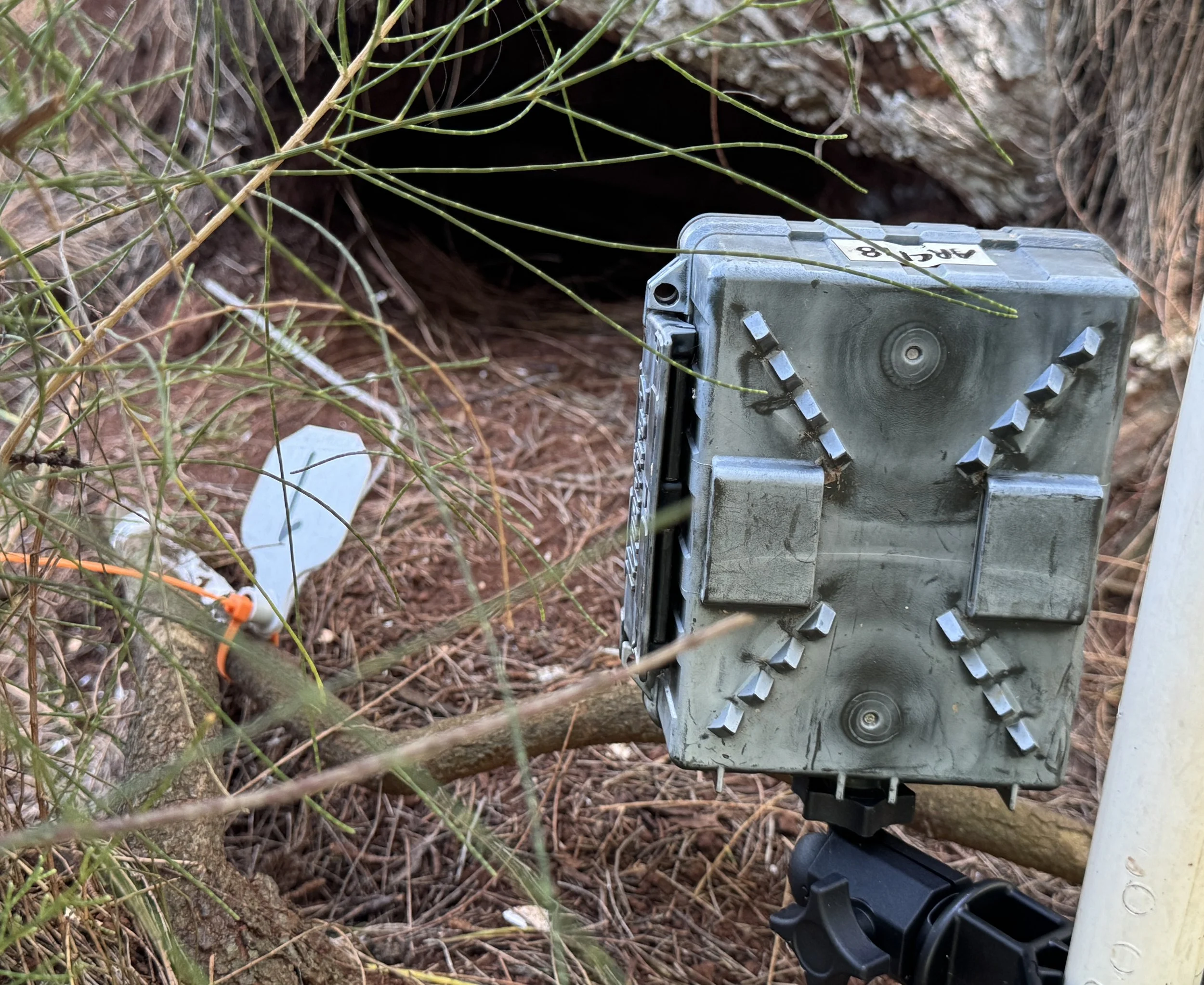
Camera set up on shearwater burrow to document birds and predators. Photo by Hob Osterlund
The plan is to label a total of fifty active shearwater burrows. The burrows will be visited by ARC several times during the season (March-November) to assess reproductive success rates. There will also be site-wide colony evaluations to do censuses of the number of birds breeding on the property.
“This monitoring will help gauge the effectiveness of predator control and will also provide an early warning system,” said Andre. “That way our control options can be more targeted.”
The project is also anticipated to provide useful data on the life cycle stages of the 'ua'u kani, a species which has not yet been well-studied on Kauaʻi.
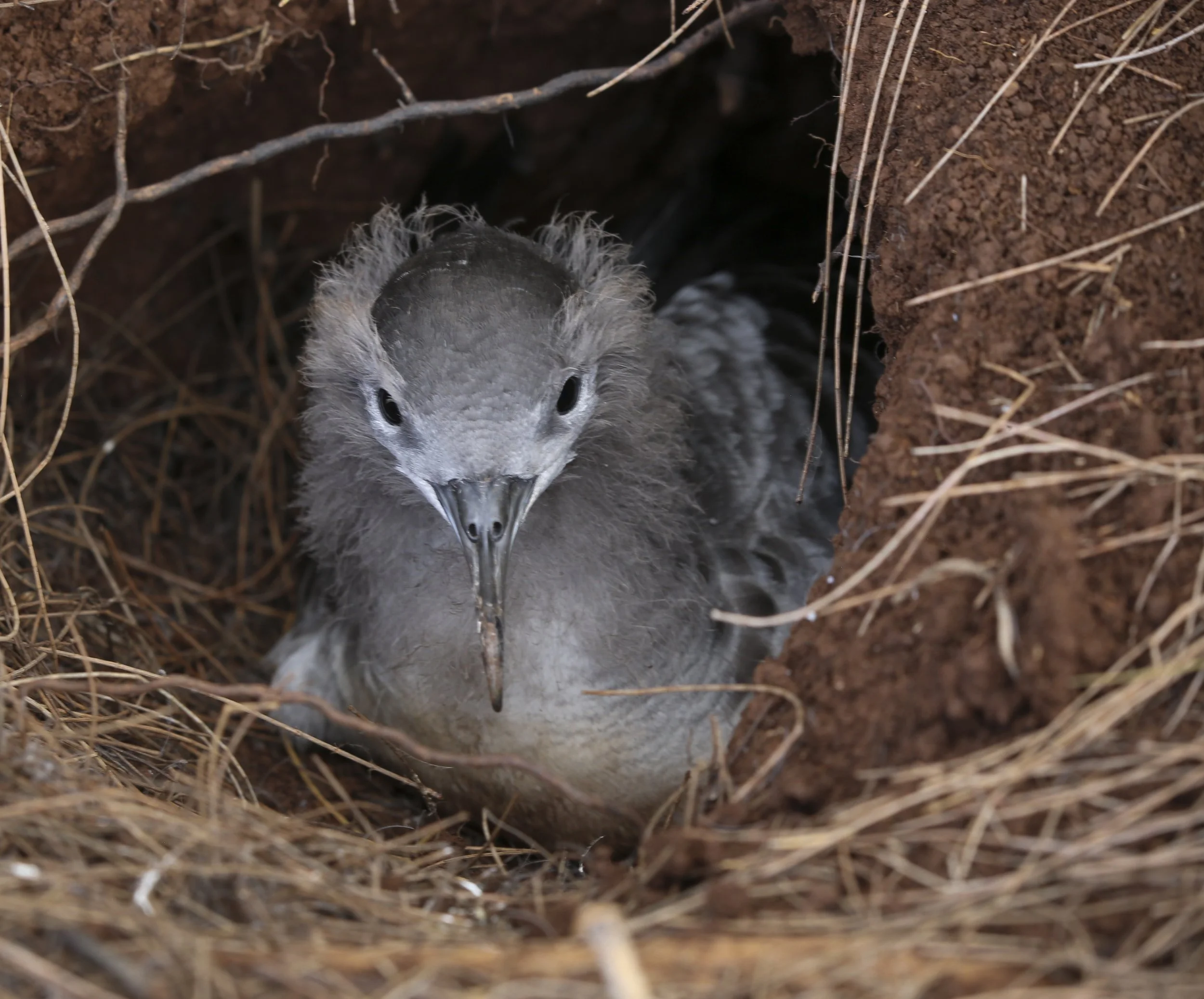
A shearwater fledgling considers emerging from the burrow Photo by HO
What else? The project is also good news for the next mōlī season. Preventing predators from habituated hunting now will help keep the albatross chicks safe later. It will also protect other ground-nesting native seabirds —such as koaʻe kea (white-tailed tropicbirds)—who happen to choose this location to raise their young.
And as an aside, the volunteers will feel a whole lot better, too.
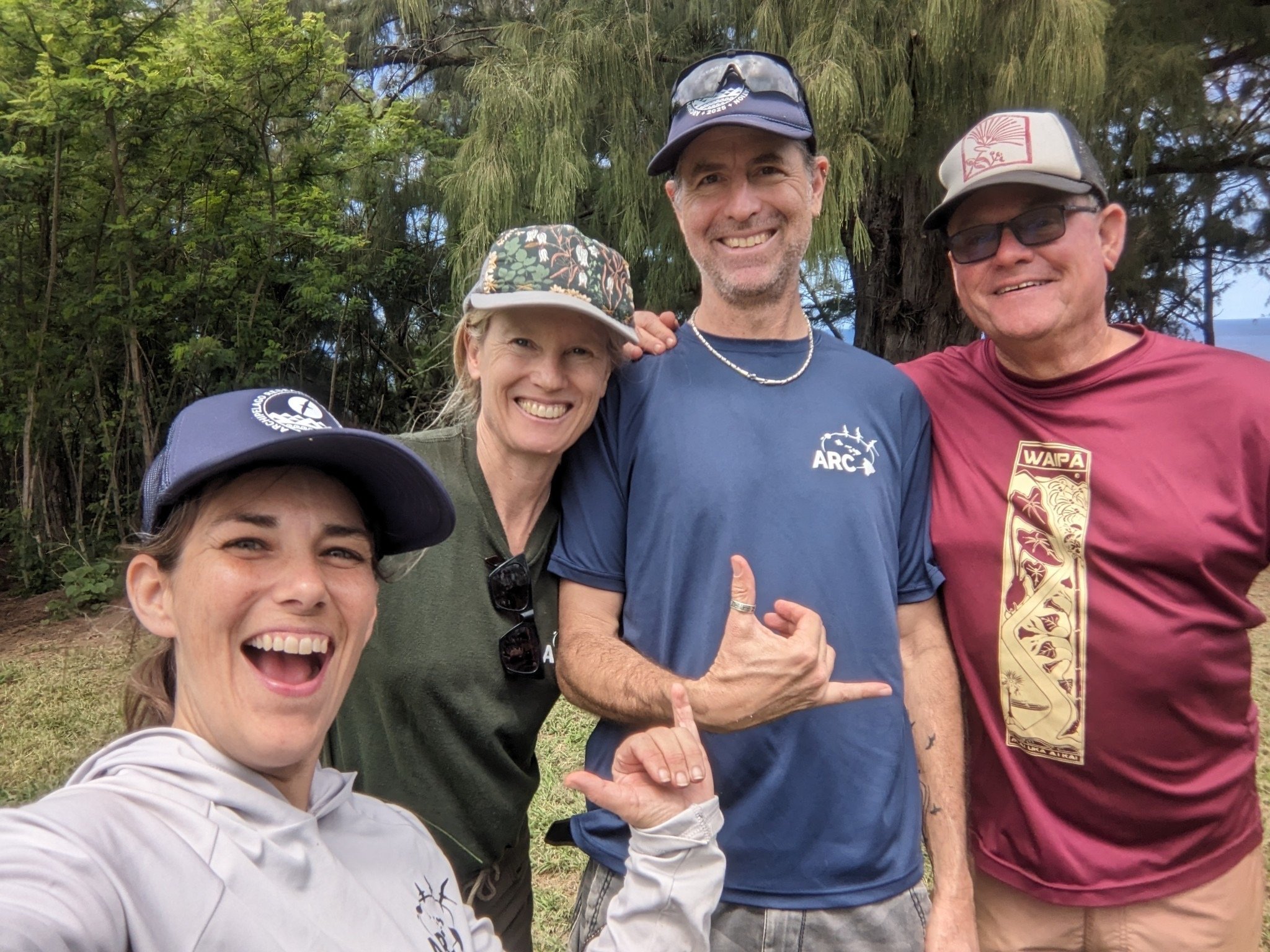
Archipelago Research and Conservation team Photo courtesy ARC