
Why Fishermen Should Flip the Senate
By Writer-in-Residence Paul Greenberg
Fishing is one of the world’s most dangerous professions, and the last thing American fishermen need is a government that adds to their stress level. But that is exactly what Republicans in power have done over the course of the last two years. Boat fuel has hit record highs, tariffs are eating into profits, and the Trump administration is moving to narrow Clean Water Act protections that have helped make American fish and shellfish some of the most desired in the world.
Fortunately, in an unusual election year, small-scale local fishermen have a chance to flip the Senate.
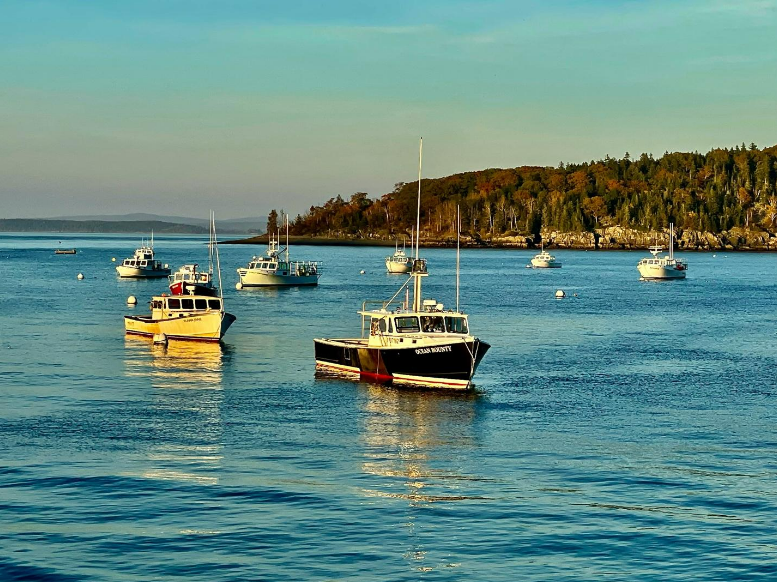
The most likely fish flip could happen in Maine. Susan Collins might claim she is lobstermen’s woman in Washington, but her continued backing of Donald Trump cancels out whatever good her lobbying efforts may have done. After the Trump administration imposed 50 percent tariffs on some Canadian goods, Canada announced retaliatory tariffs that included a 25 percent levy on American lobster. Only strong protests from the seafood industry got Canada to drop seafood from its list. The scare showed how exposed Maine is. Its lobstermen send roughly half of their fall catch to Canadian processors, and bait, fuel, and gear have to cross the border freely. Lobsters themselves are oblivious to human borders, so international cooperation is essential. To her credit, Collins has opposed the Canada tariffs (“there’s just nothing good you can say about them,”) she said in a September 2nd interview. Nevertheless, she has voted in line with the President’s wishes 92% of the time during his second administration, according to the nonpartisan CQ Roll Call. Lobstermen do not eat rhetoric. They eat margin, and a future round of tariffs and counter-tariffs could very much put their livelihoods at risk.
In Alaska, small-scale salmon fishermen are up against a fleet of industrial pollock trawlers, many of them based out of state, that accidentally catch tens of thousands of king salmon and hundreds of thousands of chum salmon. The salmon bycatch issue has become a defining issue in the race between Republican Dan Sullivan and Democrat Mary Peltola. Sullivan, the incumbent, has taken about $300,000 in contributions from the pollock industry. In June, he introduced a Bycatch Reduction Act, which he called the most comprehensive bycatch bill ever. Critics, including in the anti-trawl movement, say it falls short of real limits. Peltola has made bycatch the signature issue of her career. She grew up in Western Alaska salmon country and has long argued that rural families went without salmon while the trawl fleet kept fishing. It is one of the purest class fights left in American politics: subsistence villages against an industrial fleet.
So that’s two Senate seats fishermen can flip. Four are needed. Where else might they lend a hand? In North Carolina, shrimpers who saw diesel rise from about $3.50 a gallon to more than $5 are watching an open Senate seat, left by retiring Senator Thom Tillis and contested by Democrat Roy Cooper and Trump-backed Republican Michael Whatley. In Michigan (technically a hold more than a flip), the open seat left by Gary Peters’s retirement will be fought partly in the shadow of Line 5, the aging Enbridge pipeline beneath the Straits of Mackinac. A rupture could devastate the whitefish and lake trout fisheries and the tourism economy built around them. Ohio offers its own aqua disaster: the algae blooms that periodically choke Lake Erie’s walleye fishery are fed by agricultural runoff that clearly needs a more stringent regulation that is unlikely to come from the right. Meanwhile, every one of America’s export-oriented fisheries, even Alaska pollock, is watching the destabilization of their industry in Trump’s stick- and-bigger-stick tariff policy.
Overarching nearly every one of these fishy issues is the fact that Trump 2.0 is threatening to endanger the very places where fish and shellfish spawn and rear. The EPA has proposed drastically narrowing the Clean Water Act, which The Natural Resources Defense Council and others estimate could strip federal protection from 60 to 95 percent of the nation’s wetlands. To anyone paying attention to our coasts, it’s obvious that this red-meat administration does not much care for seafood.
But the men and women who bring American fish and shellfish to our tables do care. Especially when they feel they are being treated unfairly. Fortunately, there are enough of them in small states to possibly un-tip a ship of state that has listed dangerously far to the right.
Paul Greenberg is the author of the James Beard-award winning Four Fish, and, most recently, A Third Term.