
At the Intersection of Art, Culture and Conservation
Majestic Mosaic Mural Installed on Kauaʻi
Hob Osterlund, Conservationist in Residence
Kat Ho is a highly respected artist, photographer, and cultural advocate on the island of Kauaʻi. She recently installed her biggest and most impressive works so far: an eighty-foot mosaic mural at Kīlauea Point National Wildlife Refuge (KPNWR).
_______________________________________________________
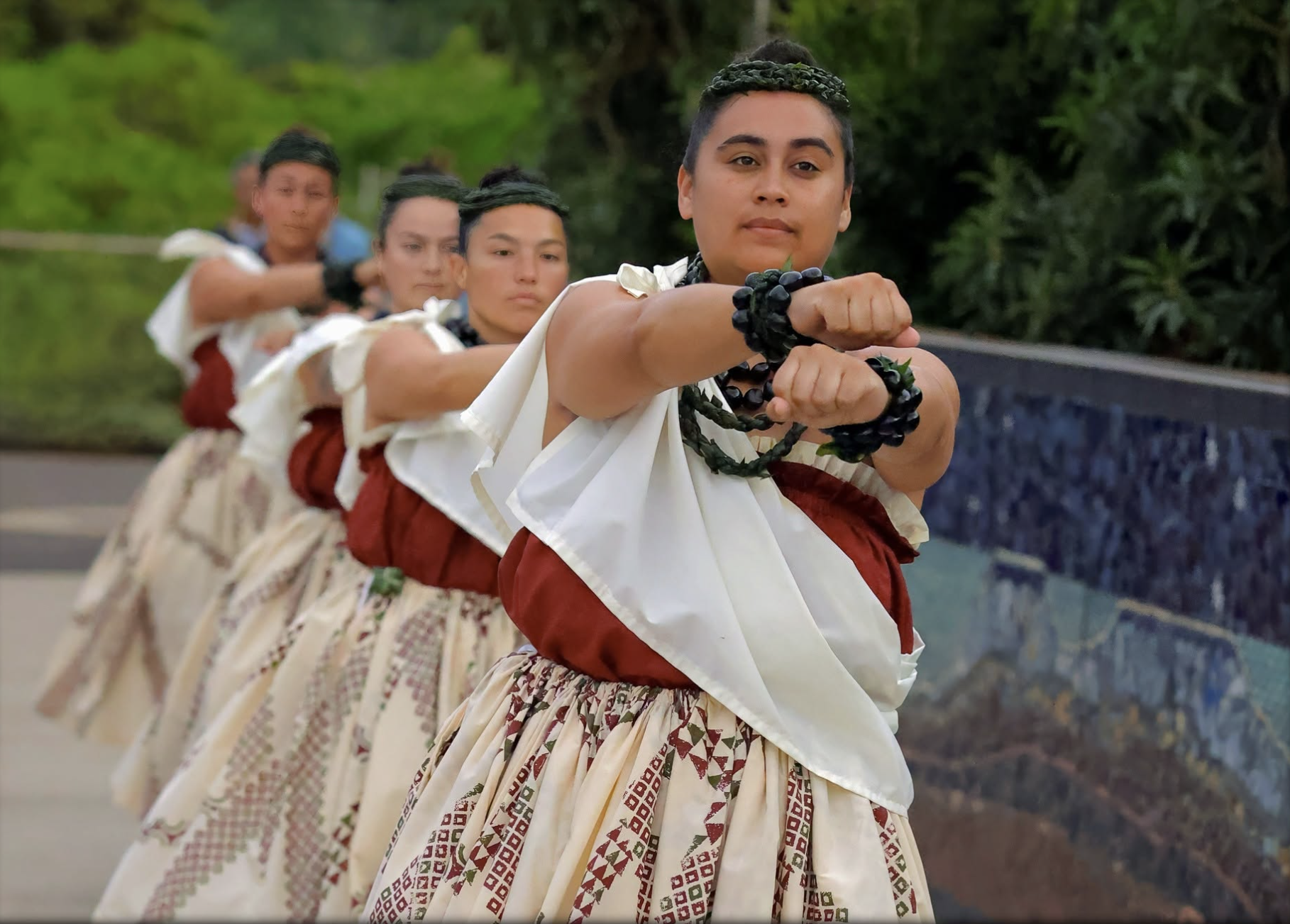
Dancers of Halau Palaihiwa O Kaipuwai photo by Mike Teruya
Hob Osterlund: Kat, your Ka Pae 'Aina o Hawai'i Nei mosaic mural is a true masterpiece. Not only is it stunning art, but it is also packed with history, science, and Hawaiian culture. What was the initial spark to put such a complex project together?
Kat Ho: This project was inspired ten years ago. My friend Jen Waipa, now a former ranger at KPNWR, asked me if I would like to create a mosaic for a retaining wall at Kīlauea Point. The wall was one hundred feet long, four feet high, and built with fresh white cement. It did not easily blend into the refuge. I had been blessed to be part of the Nā Kiaʻi o Nihokū group that makes observations during solstices and equinoxes at KPNWR. These special times allowed me to witness the primal power of Ka Lae o Wowoni, Kauaʻi’s northernmost point. The design idea came to me to showcase the entire fifteen hundred miles of the Hawaiian Archipelago. The below-water part could illustrate a single volcanic hotspot that created the deep connection of our island chain. The above-surface part could show how we reside at the tips of huge mountains. Kīlauea Point, since it is accessible to all, could allow the public a glimpse of the kūpuna (elder) islands and how they are becoming submerged.
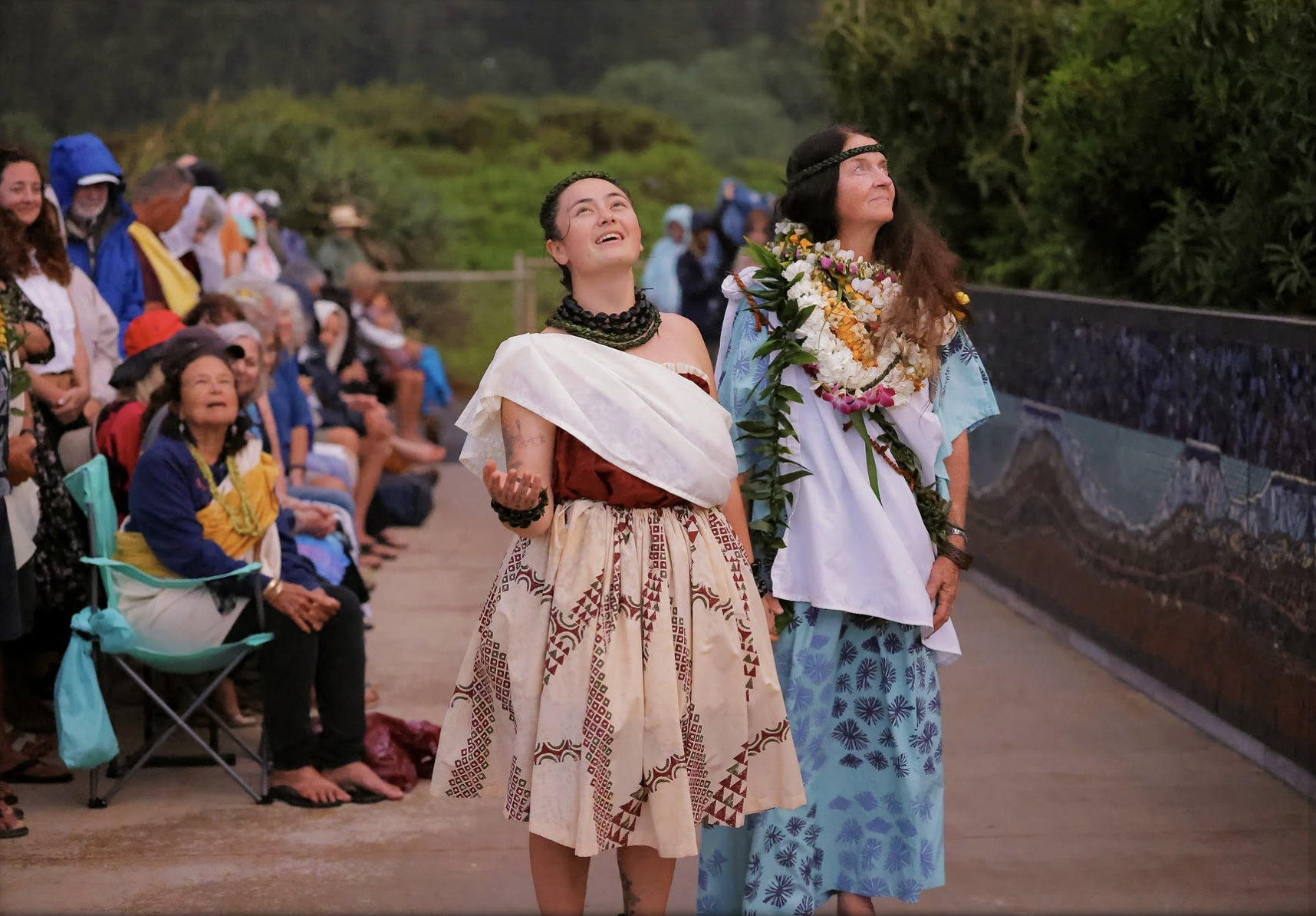
Mural artist Kat Ho (R) and daughter Aliana Ho at mural blessing photo by Mike Teruya
HO: You had many participants in the mural’s creation. Tell us more about how they informed your design and what would be included in it.
KH: More than two hundred people participated in twenty workshops on Kaua’i. Since the basic design was already created, the task was how to have so many diverse people have ownership in this massive undertaking. It was about creating temporary and portable substrates, being organized, and building an awesome team to help everyone have a fun and productive time. The workshops consisted of two parts; in the first half, cultural practitioners led by kumu (teacher) Kēhaulani Kekua shared their knowledge of Papahānaumokuākea Marine National Monument. These moʻolelo (stories) inspired greater understanding of wahi pana (legendary places). In the second half of the workshops, participants put all that knowledge and energy into the hands-on mosaic process. The design was a collaboration of many different artists. Placement of navigational constellations, seabirds, and the strata movements below the surface all came together in a very organic way. It was not complete until it was installed and assembled. Nothing was set in stone until it literally was set in stone.
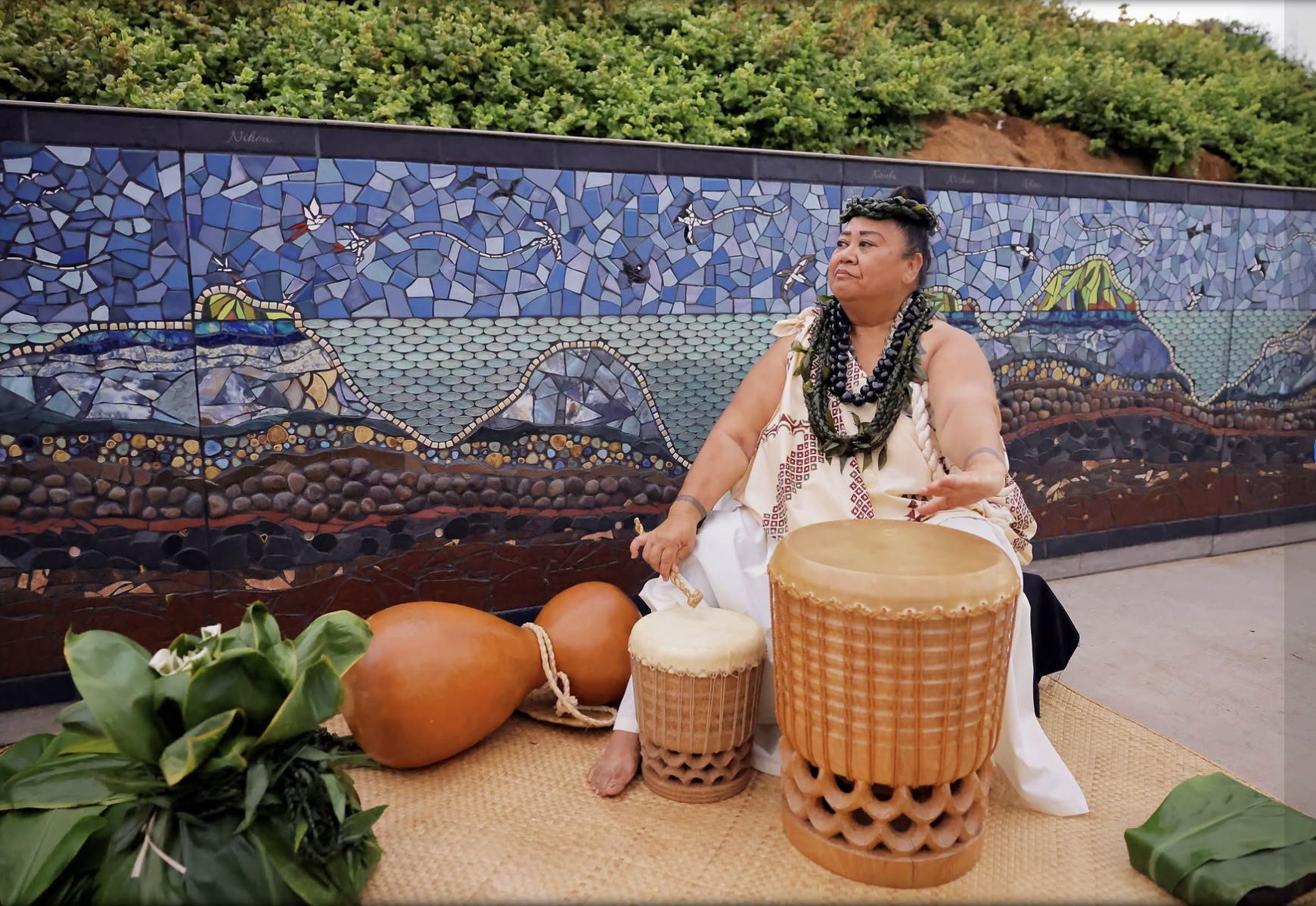
Kumu (teacher) hula Kēhaulani Kekua photo by Mike Teruya
HO: When you step back from the wall, you get a visceral sense of the entire Hawaiian archipelago, the elevation and erosion of each island, and of deep time. How did you manage to do that?
KH: The sketch itself was based on an old bathymetric map, which is the underwater equivalent of a topographic map. I found it ten years ago. Of course, the mural is not a one-to-one ratio. If the mosaic was one-to-one and four feet high, it would have to be over two miles long. It does look a bit squished, but still relatable. We broke the design into sixteen panels, each four by five feet. Every layer of tile, texture, and color was chosen to help express the archipelago's unique formation. But it was not until all the panels were installed on the wall that they came together for the very first time. From the powerful mixture of intention, support and energy, the mosaic was born.
HO: How did you find funding to make the mural a reality?
KH: The first part of the journey had some dramatic starts and stops. It would never have manifested without the tenacious support of Carol Yotsuda of the Garden Island Arts Council (GIAC). During Covid, I had the courage to show Carol a twenty-five-foot print of the original design. As I rolled it across the floor of her studio, she got a look on her face I did not understand. About a year later, she started sending emails suggesting possible grants. That really launched the journey. Unsuccessful early attempts ultimately led to an award from the Hawaiʻi Tourism Authority (HTA) Kūkulu Ola program with enough funding to start talks with Thomas Daubert at Friends of the Kauaʻi Wildlife Refuges (FKWR). Then FKWR partnered with GIAC, and we received support from U.S. Fish and Wildlife (USFWS), Atherton Family Foundation, Hawaiʻi Community Foundation, and the BoroBoro Boutique ladies. For five years, the BoroBoro women got together at Carol’s studio to sew one-of-a-kind upcycled garments. They sold their wares at craft fairs and events, which helped offset the mosaic’s financial needs. Just as importantly, it wove together a larger community of connection to this project and its intention to inspire stewardship.
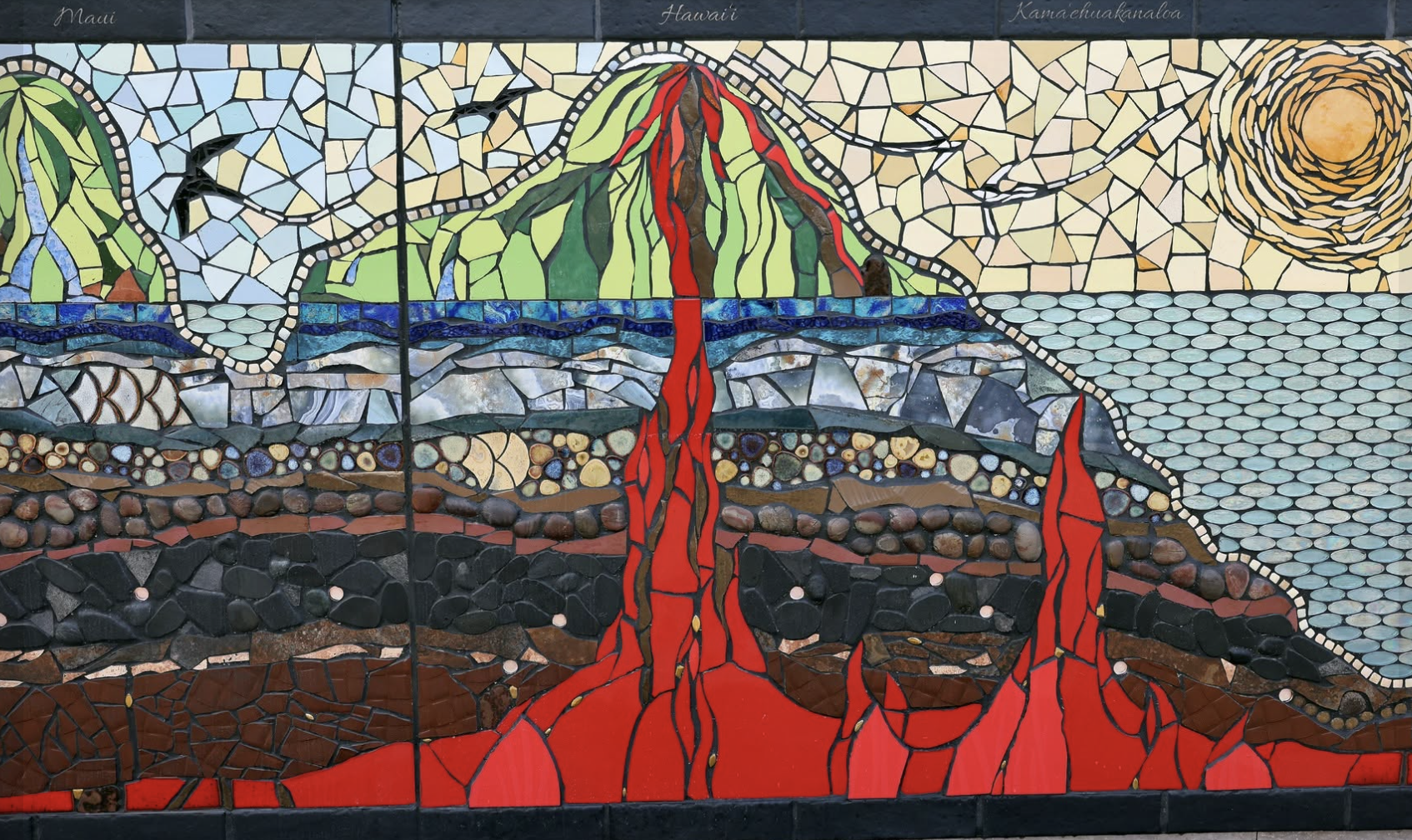
Section of mural focused on Hawaiʻi Island (“Big Island”). Spike of magma (R) depicts a not-yet-emerged island photo by Mike Teruya
HO: What previous projects have given you the vision for the mural?
KH: I have led five other community mosaic projects. All of them are culturally based and installed in public places on Kauaʻi. The largest was three by twelve feet, so not even close to the complexity and size of Ka Pae ʻĀina o Hawaiʻi Nei. The design came easily enough, but the details were huge, including consideration of cultural elements, geologic features, and the latest mosaic techniques. Each step had so many problems that were way out of my comfort zone. Some answers came to me in dreams, some through research, and some from the expertise of others. Phyllis Hopeck, an amazing artist and long-time friend, really helped in the quality of the work and tile color selections. Tommy and Anita Cook of Gizmo Grafix helped to create the graphic design and templates that we used to roughly follow.
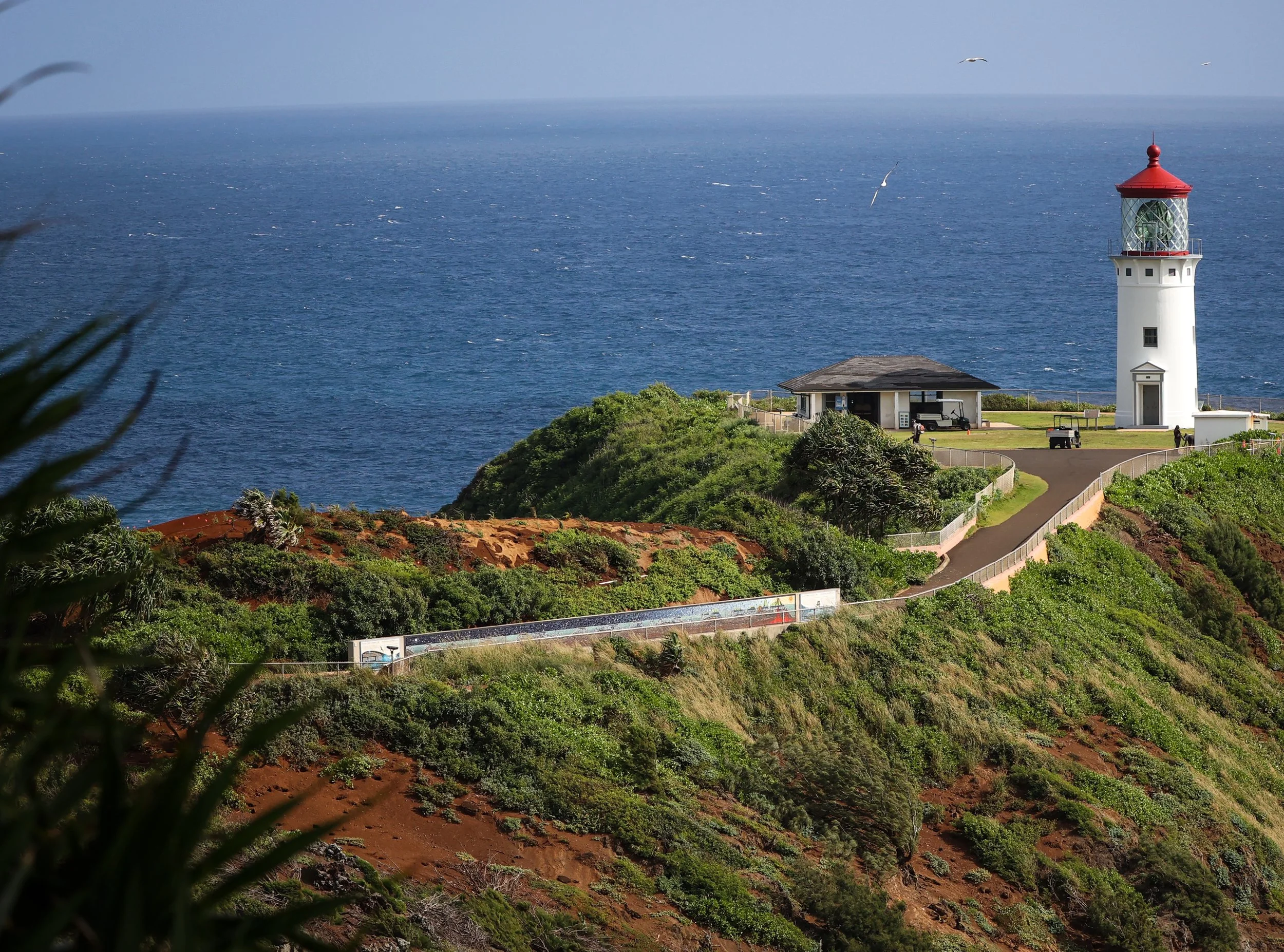
Eighty-foot-long mural along path at Kīlauea Point NWR. photo by Hob Osterlund
HO: Tell us about the ʻAha hoʻolaʻa dedication ceremony of traditional Hawaiian rituals and protocols by Halau Palaihiwa O Kaipuwai and kumu hula Kehau Kehaulani Kekua to consecrate the mural.
KH: Kumu Kēhaulani Kekua served as a cultural consultant from its formative stage. I knew she would take it to a deep level both culturally and spiritually. She created a dedicated team to carry this out. To prepare, the Pālamaʻike core group attended the live offering of the Kumulipo (Hawaiian creation chant, more than two thousand lines long) at Iolani Palace to remind us of the kuleana (responsibility) of stewardship, to cherish all life forms, and our place as humans in it. Kumu Kēhau selected mele (songs), pule (prayers), hula and rituals that called upon guidance to align with nature and activate the mosaic's purpose. The ʻAha Hoʻolaʻa ceremony blended the power of the simultaneous sunset and rise of the full moon as well as the return of hundreds of seabirds. The arrival of the ʻuʻau kani (wedge-tailed shearwaters) deeply dramatized the program. Their acrobatic skills gave us the feeling that they were receiving this mosaic and would be messengers to carry its message into the future.
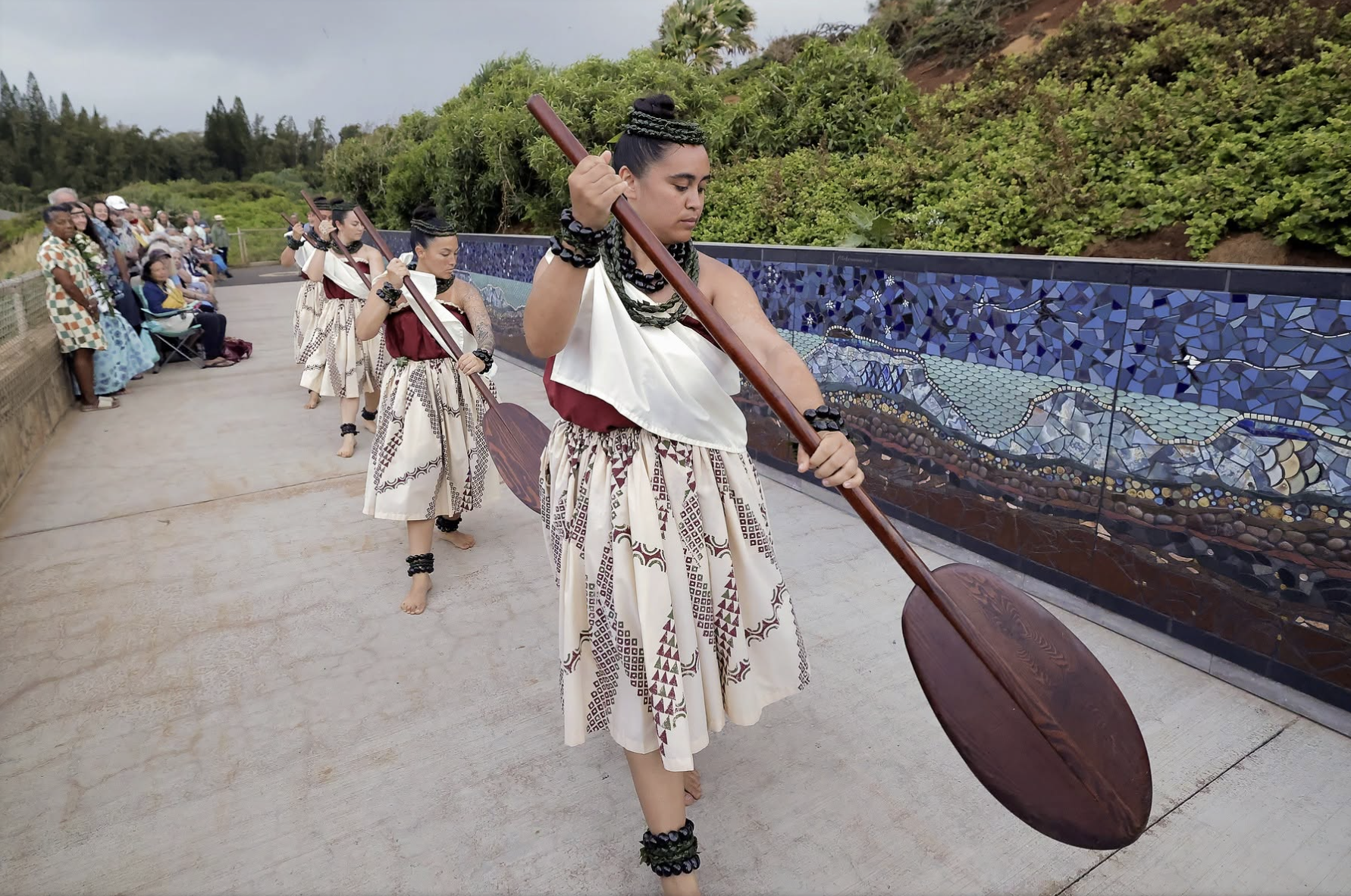
Dancers of Halau Palaihiwa O Kaipuwai photo by Mike Teruya
HO: The signs on either side of the mosaic are themselves a work of art.
KH: Tommy and Anita Cook of Gizmo Grafix created the two signs. We worked together using Sabra Kauka’s kapa (traditional bark cloth) as a backdrop representing Ao, day. We included Kahi Ching’s “Kumulipo” artwork. Tommy overlaid a few of the first lines of the Kumulipo, bringing its essence to help illustrate Po, the night, and the beginning of life. The text was a collaboration of writers. From the beginning stages of the design, we knew it was important to introduce the essence of the Kumulipo. The text was carefully reviewed by refuge staff before it was approved. Our intention was to simply and clearly communicate the essence of the mosaic. It was also important to have Hawaiian as the first language. Kamaka Gallagher did the interpretation. Not verbatim, but with ʻōlelo (Hawaiian language) thinking.
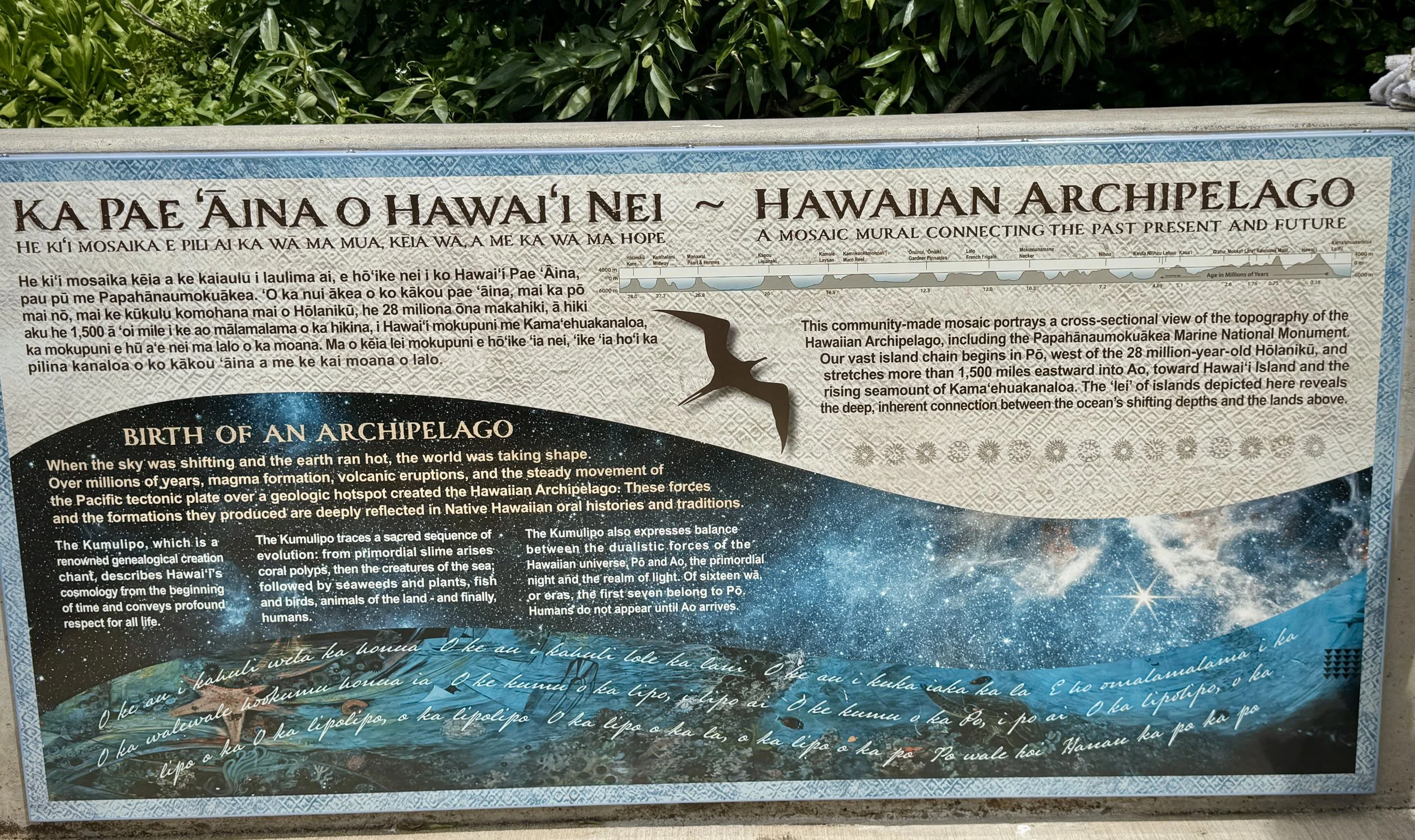
One of two signs bookend the mural photo by Hob Osterlund
HO: What would you like to see this mural inspire in people?
KH: Belief in this project, perseverance, and magic brought it to life. This really was a place-based, inspired design of the ancestral islands of Papāhanaumokuākea Marine National Monument, where millions of seabirds nest and new life forms are being discovered. With constant political and environmental changes and landmass being submerged, we primarily want it to inspire greater awareness and protection.
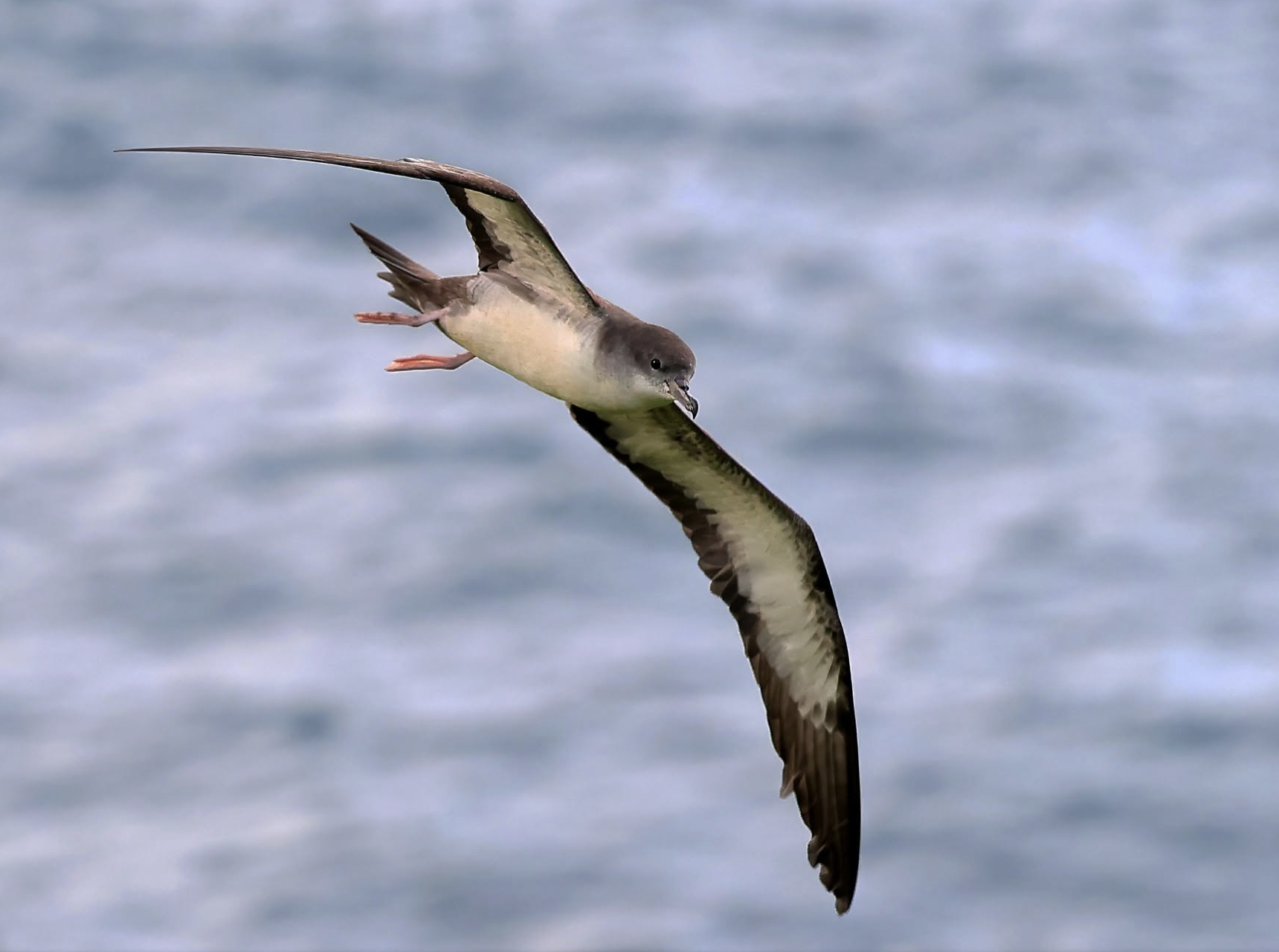
ʻUaʻu kani (wedge-tailed shearwater) photo credit to Mike Teruya