
Winter in New York City Pushes Humans Indoors, but Brings Seals and Seabirds to the Harbor
Last winter, environmental journalism fellow Marlowe Starling joined two local naturalists on the Hudson River to see the city’s lesser-known seals and wintering seabirds.
By Marlowe Starling
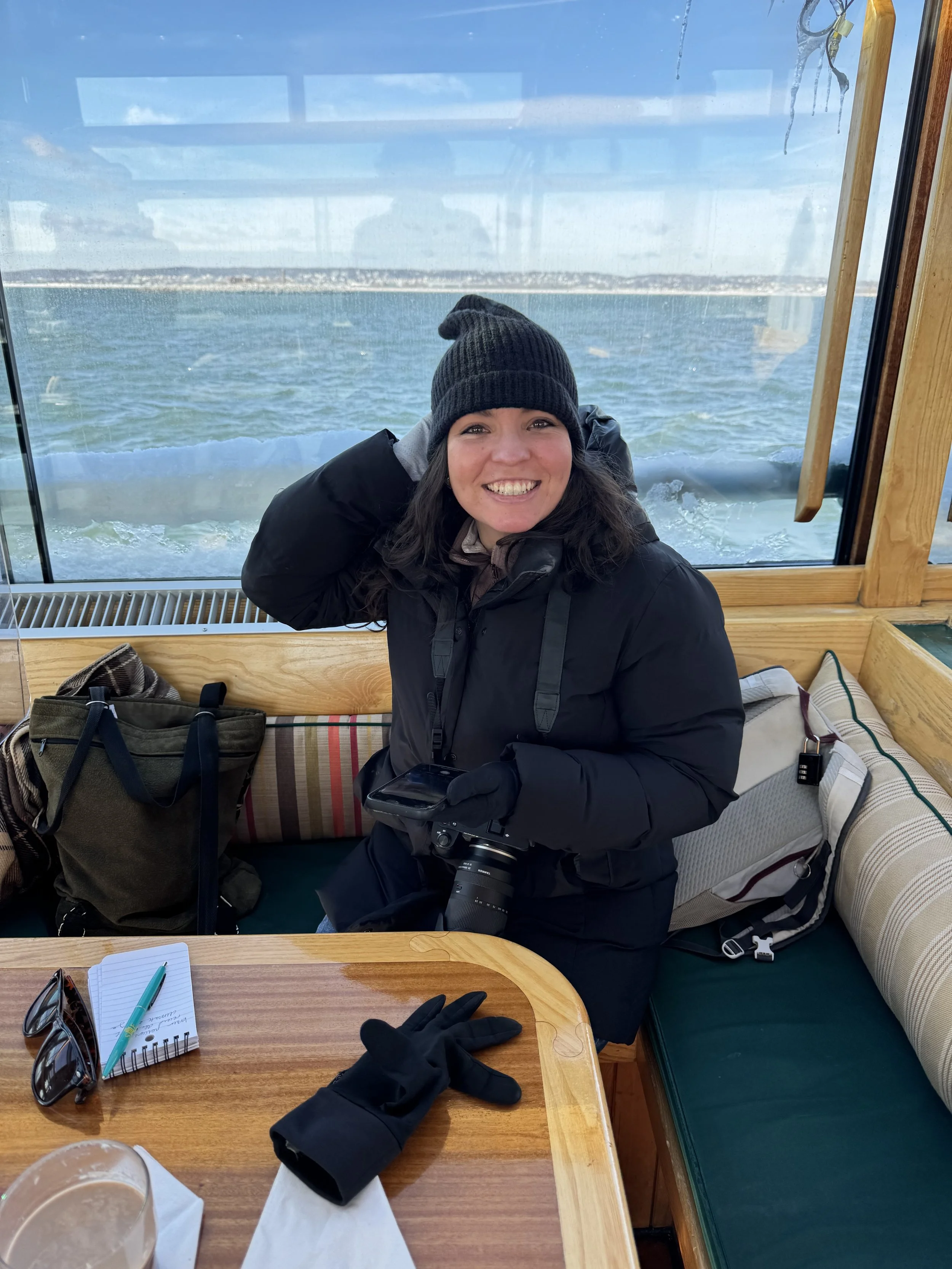
On an icy, blue-skied day in December, I bundled up in my best outdoor layers and a beanie to see seals in New York City.
I was invited to join two urban naturalists on a tour of the Hudson River with a special mission: to view, from a safe and respectful distance, the arctic visitors few New Yorkers know about. Every year, seals and arctic seabirds make their way from more northern latitudes seeking warmth in the New York Harbor. This year, an ecotourism and day-cruise company, Classic Harbor Line, led its first winter wildlife tour to take visitors and locals alike to see these incredible critters for themselves.
People often think of ecotourism as wildlife-focused ventures in faraway countries, such as African safaris or lodges in Costa Rica, said Gabriel Willow, an urban naturalist and local wildlife tour leader in New York City who co-led the Classic Harbor Line excursion with Russell Jacobs. But people are less inclined to associate ecotourism with experiences in the U.S. — let alone in an urban area.
(Note: The term “ecotourism” is both multifaceted and fraught. It can sometimes be used as a way to market tourist operations as eco-friendly — when in reality, many of them are not eco-friendly nor beneficial to local communities. In this case, Willow’s use of the term applies to a tourism experience that claims to be as minimally invasive to the harbor ecosystem as possible while minimizing its environmental footprint, such as by using low-wake and shallow watercrafts and avoiding single-use plastics onboard.)
“A lot of my programs are for folks visiting New York from out of town, but many of them — the majority, I would say — are for folks who live in New York,” Willow told me. “It's nice that you can kind of feel like a tourist, in a sense, that you can feel like you're traveling the world without leaving New York City.”
He means that in the sense that you can experience dozens of different cultures, languages, and cuisines within a mere 10-mile radius, but he also means that people can see and experience wildlife in ways they might not expect. “You can go out on a boat in the harbor, and you can see seals, or if you go out from Coney Island or the Rockaways, you can see whales on a regular basis,” he said.
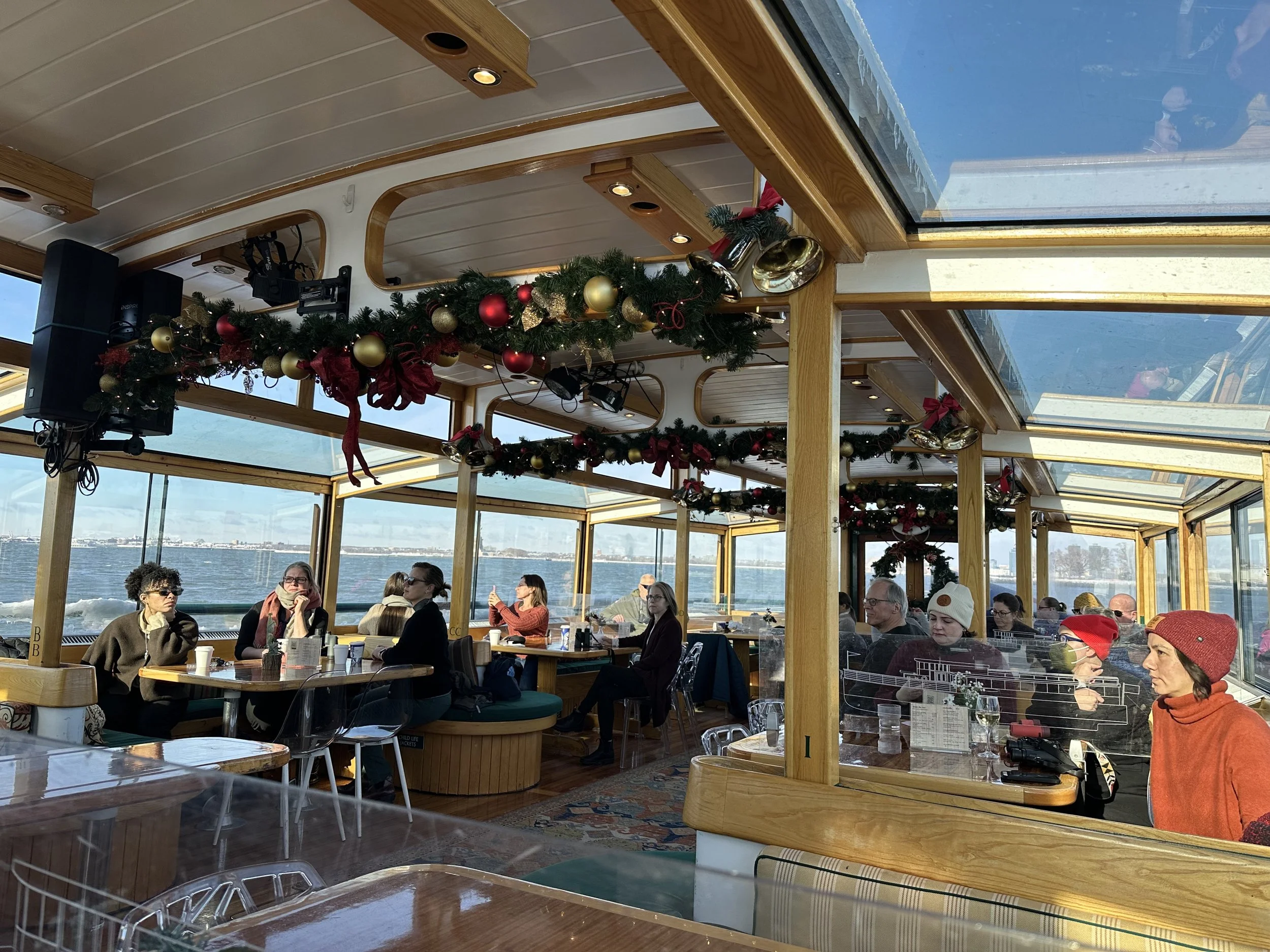
Indeed, as the Classic Harbor Line yacht pulled away from its dock at Chelsea Pier and slowly floated out into the harbor, the typical sights and sounds of the city melted away, too. As we made our way toward Hoffman and Swinburne islands, Willow gave us a brief history of the bay: its water quality woes, how the Billion Oyster Project helped restore it, how the original stewards (the Lenape people) of this area lived, and the variety of animals that call the Hudson River home despite decades of industrial activity. He told us about how this landscape formed, too, dating back to the Wisconsin glaciation — the most recent glacial period in North America that started roughly 75,000 years ago.
“We tend to forget that we're on islands,” he told me on a call. “I think we sometimes lose touch with that, and there's no better way to re-emphasize that than seeing it from the water, from a boat, and then to draw attention to this wildlife around us.”
On our way out, we saw plenty of arctic seabirds: Iceland gulls, surf scoters, glaucous gulls, buffleheads, and more. Once — though not on this day — Willow even spotted a snowy owl. Most surprisingly, we floated past a few brown pelicans, large coastal birds that typically stay south of Chesapeake Bay. As climate change continues to warm the atmosphere and water temperatures, Willow said he wouldn’t be surprised to see brown pelicans nesting in New York Harbor in the next few years.
Finally, we reached our ultimate destination: Swinburne and Hoffman islands. These islands aren’t natural, and their origins are a whole lot darker than the cute, chubby seals that rest on them today. They were built in the 19th century as quarantine islands for immigrants and people in the lower-class who contracted diseases such as yellow fever, typhoid, and other contagious illnesses, Willow explained. By the 1930s, they were mostly abandoned and haven’t been used since, except for in a few rare cases during World War II.
The boat kept a safe distance from the seals — harbor seals, mostly, though sometimes a couple of gray seals appear, too — enough so that my phone photos could barely make out their bald heads bobbing on the water’s surface. But even as my fingers froze around my binoculars, it was heartening to see them here. Federal legislation such as the 1972 Marine Mammal Protection Act, Willow added, “has been instrumental in the recovery of these seal populations. It's great for people to see the results of important environmental laws and learn about that arc of history.”
If you’re interested in joining a Classic Harbor Line ecotour in the future, you can learn more at their website: https://sail-nyc.com/eco-tours/
Transparency Note: The Safina Center does not sponsor or endorse Classic Harbor Line, nor vice versa. Starling was offered a media ticket to attend the winter cruise experience in December 2025. Starling was not obligated to write about the experience as a result of participating.