
Fishing the Gulf Oil Rigs
By Writer-in-Residence Paul Greenberg
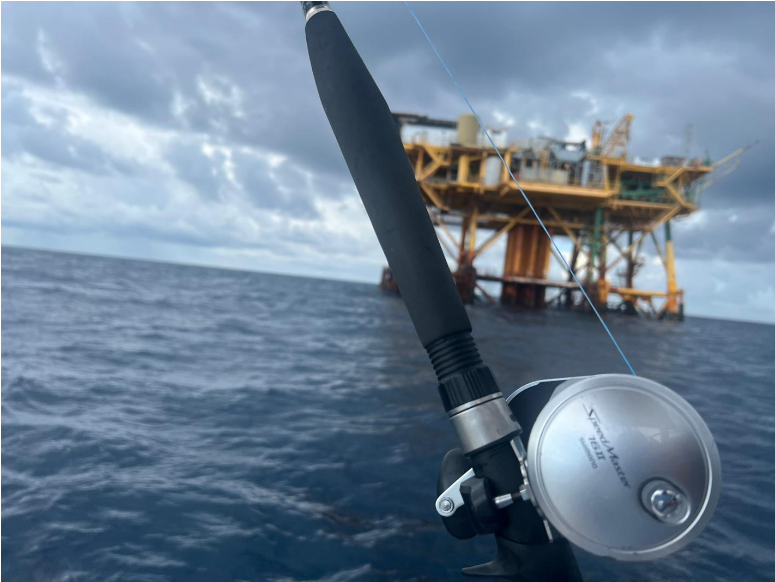
An oil rig off the Texas coast ©Paul Greenberg
"Whither the rigs, or wither the rigs?" This was the question I used to end my recent essay in Texas Highways magazine about oil rigs in the Gulf of . . . (well, let's not get into it here).
Anyway, a year ago this September I got the chance to fish the oil rigs of Texas. This had been a childhood dream of mine, ever since reading about it in a book compiled by the great outdoor writer A.J. McClane. Oil rigs present a unique angling opportunity and, at the same time, a frustrating conservation conundrum. On the one hand, a Gulf oil rig is a structure in a largely structureless place. As such, they attract plankton and smaller fish, which in turn draw in the biggest gamefish out there. On the other hand, oil rigs in the Gulf present a significant environmental hazard, as we all learned when BP's Deepwater Horizon rig blew in the spring of 2010. The oil infrastructure inland in the marshes of Louisiana and coastal Texas has also been severely damaged by years of canalization and pollution.
What I did find was indeed an exciting angling opportunity. Just as I wrote in my Texas Highways article, it is all a bit like a supermarket, with different fish using different depths as their aisle of habitat. But this also presents quandaries. Perhaps the most desired fish that lurks around the rigs is the American red snapper. But in federal waters, the snapper season can be only a few weeks long. The rest of the year, anglers seeking other fish that are in season (grouper, e.g.) often have to weed through hundreds of snapper before they get a keeper. Of course, bringing a big snapper up from the depths is stressful to the fish, and as I learned in my research, unless you use a "venting tool" to allow gases to vent from the fish's swim bladder or use a "descending device" to return the snapper to the correct depth, the chances of mortality are close to 100%.
And there's a third problem with rig fishing, which comes back to my initial question of wither the rigs or whither the rigs. It turns out that a great number of spent oil rigs are being removed by the very same oil companies that put them out there in the first place. They're not doing this because of any significant environmental pressure. Rather, they are yanking them up or blowing them over for both liability and balance sheet reasons. This in turn causes something of a cascade effect. With many, many boat owners out there in the Gulf, especially since COVID, there are fewer rigs for them to fish. So the question arises whether this is putting undue fishing pressure on an ever more concentrated population of fish.
It is all, like most fisheries issues, a conundrum. If you’d like to pick through it some more, you can find the full Texas Highways Magazine article here.
My follow-up interview about the adventure can be found on the site of KCRW’s national public radio show Good Food here.