
Stories of the Sea: Human conflict, ecology, and the fragile ocean
By Safina Center Senior Fellow Raffi Khatchadourian
Despite its horrific consequences, war can sometimes be a gift to the natural world. Over many decades, the Demilitarized Zone between North and South Korea has evolved into a kind of animal sanctuary. In the nineteen-eighties, the Iran-Iraq war offered the endangered Persian leopard a reprieve in the no-man’s land between the two countries. World War II brought pelagic whaling to a near-total stop and allowed some North Atlantic fisheries a chance to recover from intensive exploitation. War can, of course, devastate the environment, too. The use of chemical agents and explosives, to say nothing of atomic weapons, can scar nature as easily as it can harm civilization.
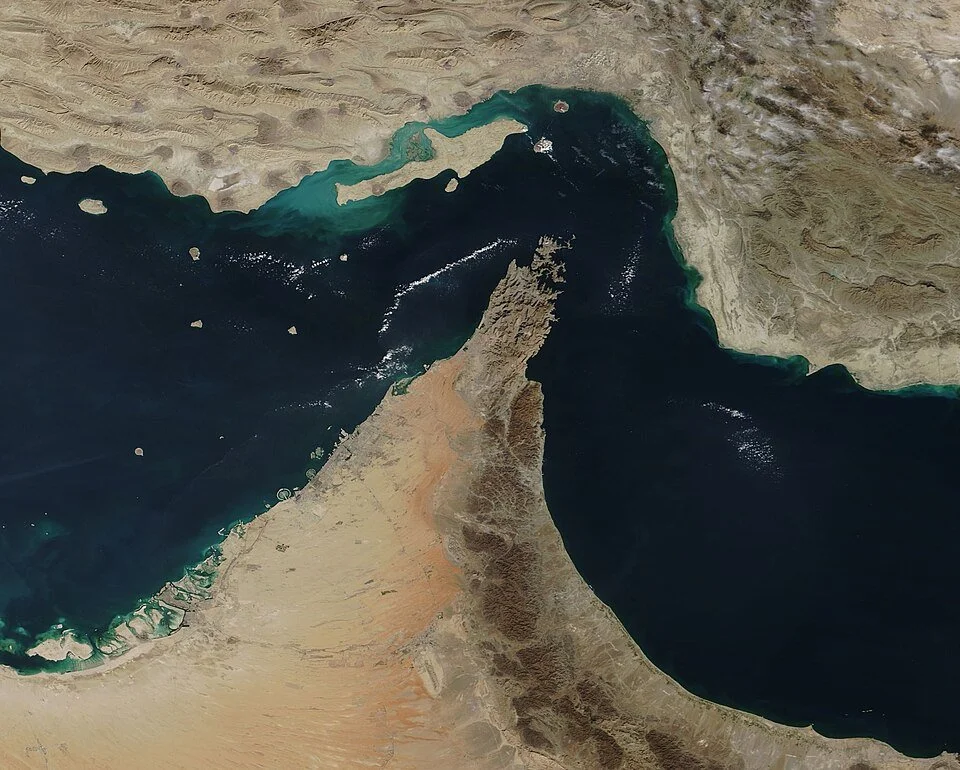
Creative Commons Image provided by https://en.wikipedia.org/wiki/Strait_of_Hormuz#/media/
How has the current war with Iran affected the marine ecology in the Strait of Hormuz? Because of ongoing hostilities, the details are scant. Prior to the war, a hundred and sixty ships could pass through the strait in a day. Now, the traffic is a tiny fraction of that. Threats from industry have receded, but mines, oil spills, and attacks on desalinization plants suggest countervailing risks.
In May, Scientific American published a piece by Meghan Bartels, titled, “How the war in Iran could endanger one of Earth’s most unique ecosystems.” Unfortunately, it doesn’t really say. But it does offer a background sketch of the strait’s ecological fragility. We may think of the Middle East as the land of the ancients, but I learned from the article that, geologically speaking, the strait is relatively new, with some shallow portions of it formed only six-thousand years ago. “The corals are so young they haven’t had time to build extensive reefs,” Martels writes, noting that they must survive under harsh conditions: intense summers, cool winters, and water very high in salinity. The Persian Gulf’s resilient marine ecology, she argues, might tell us how the sea will look in a century.
Akram Eissa Darwich, at IFAW, notes that the region is also home to about a hundred critically endangered Arabian Sea humpback whales, but he also offers few hard facts about whether the war has elevated harms to them. “Naval traffic, sonar use, and explosions introduce intense and unfamiliar noise into the water—sounds that overlap with the frequencies whales and dolphins rely on to communicate, navigate, and find food,” Darwich writes. “When that acoustic environment is disrupted, animals may stop feeding, abandon habitat, or become disoriented.” But which disruption is worse: the commercial activity or periodic acts of war? The answer is unclear.
One issue is unambiguous: the large collection of oil tankers immobilized by the conflict has raised the risk of significant oil spills, or the release of other toxins, into the marine environment. Greenpeace has built an interactive map to keep track of the vessels, noting that four oil tankers were attacked in the Persian Gulf since the map was last updated, on May 8. TRT World lists some of those attacks in greater detail, including strikes on ships that aren’t tankers. So does the Times. Some of the spills are visible from space, or have been captured with tragic immediacy by phones.
Oil in the water is never a good thing, but the scale of environmental harm from an oil spill depends upon myriad factors—from the oil’s chemical composition, which can vary greatly, to the types of bacteria in the seawater. (“Petroleum degrading bacteria in Iran are capable of biodegradation at a high level,” one study notes.) Considering just the volume of oil is not enough. At some point, when peace is achieved, it will be possible to conduct an assessment of the war’s effect on the marine ecosystem; the researchers who do this work will have to decide how widely to set their parameters. Do they look just at the strait, or at the Gulf, or at the strain that this conflict has placed upon ecosystems globally? In March, an Iranian frigate, the IRIS Dena, was torpedoed in international waters off the coast of Sri Lanka, releasing a 20km-long patch of oil slick in the water.
Closer to home, in the United States, the White House has sought to accelerate offshore drilling in the Gulf of Mexico by implementing a number of regulatory measures—among them the lifting of protections for a highly endangered species, the Rice’s whale, which scientists assess to be no greater than fifty in number. (The New York Times just published a stunning multimedia illustration of the implications.) According to a detailed piece in the Tampa Bay Times, the oil industry has long chafed at the protections that the government has afforded the Rice’s whale, suggesting that the closure of the Strait of Hormuz was as much a pretext for a long-desired regulatory change as it was a direct rationale. Environmental harm during wartime does not always flow from explosives or pollutants; it can also be caused by the unleashing of opportunists, in an atmosphere of emergency, seeking to usher into existence pet policy ideas. Testifying before Congress, the Commerce Secretary questioned the science about the Rice’s whale; it needed to be restudied, he said: “We need to stop the nonsense of treating something as if it’s endangered when, of course, it’s plentiful.”
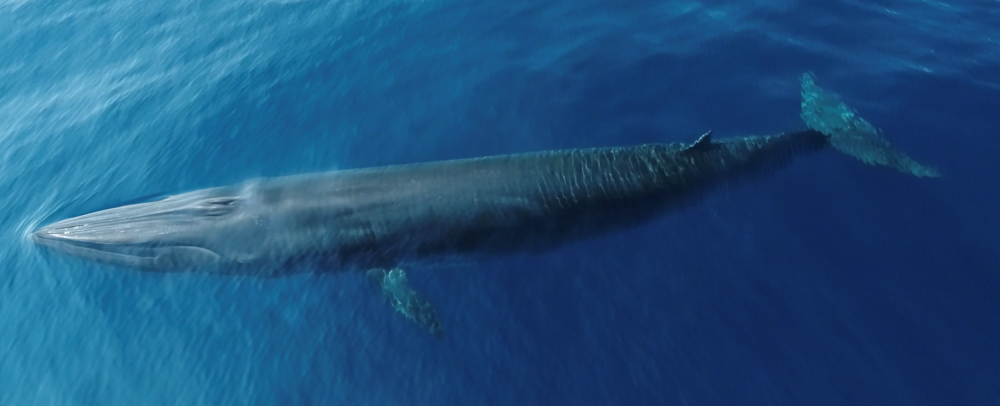
By NOAA Fisheries/Ocean Alliance (Permit #21938) - https://www.fisheries.noaa.gov/feature-story/using-drones-and-tags-study-rices-whales, Public Domain, https://commons.wikimedia.org/w/index.php?curid=192436057